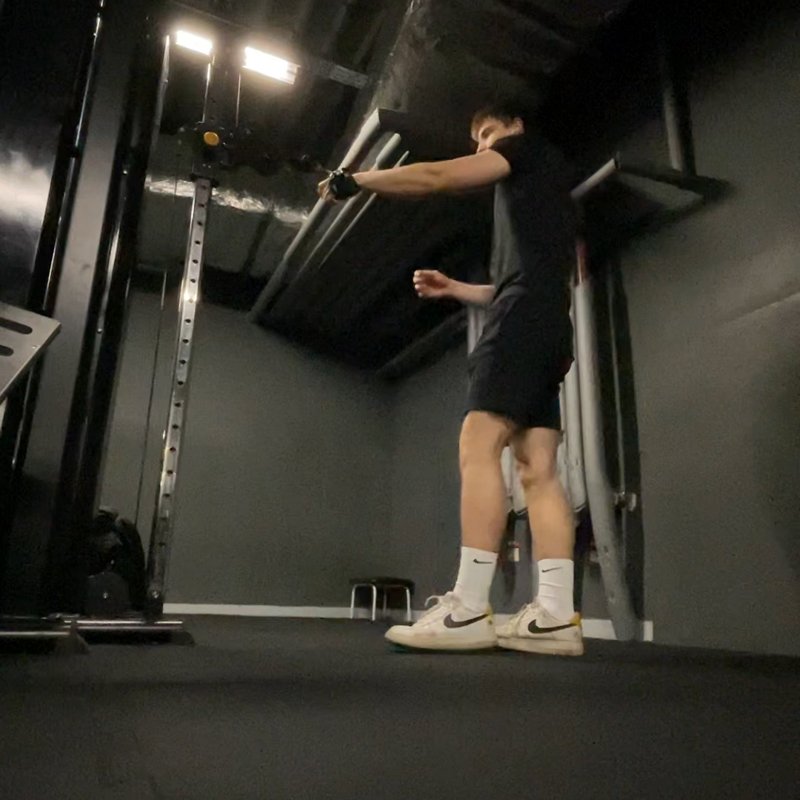
How to Do Straight-Arm Pulldowns
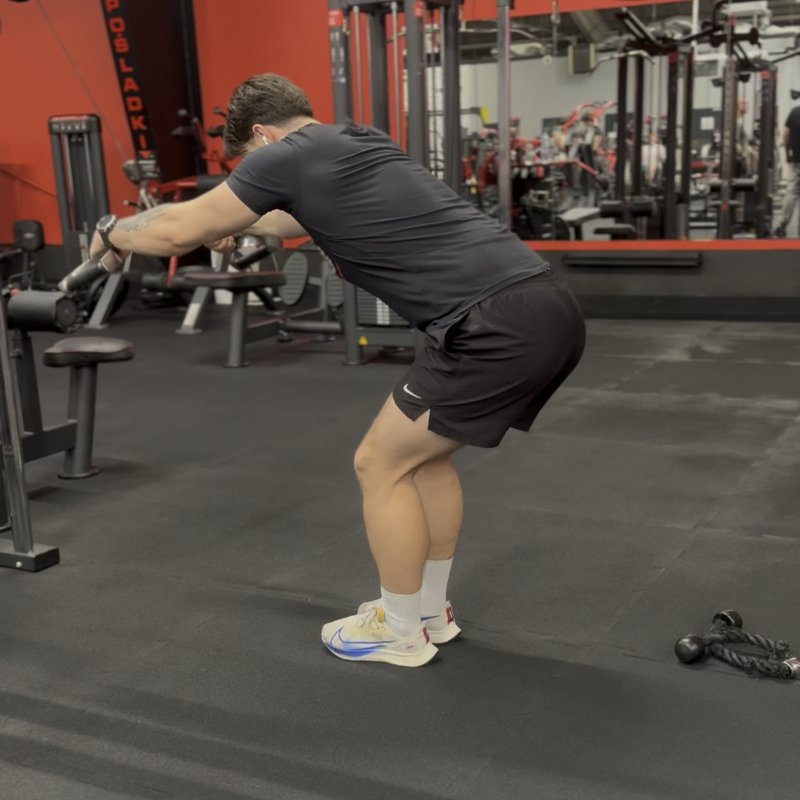
A straight-arm pulldown is a lat isolation exercise on a high pulley. Stand tall facing the stack and sweep a straight bar or rope from head height down to your thighs, elbows slightly bent and fixed. It trains the lats and teres major, with the triceps long head helping. Most lifters do 3 sets of 10 to 15 reps.
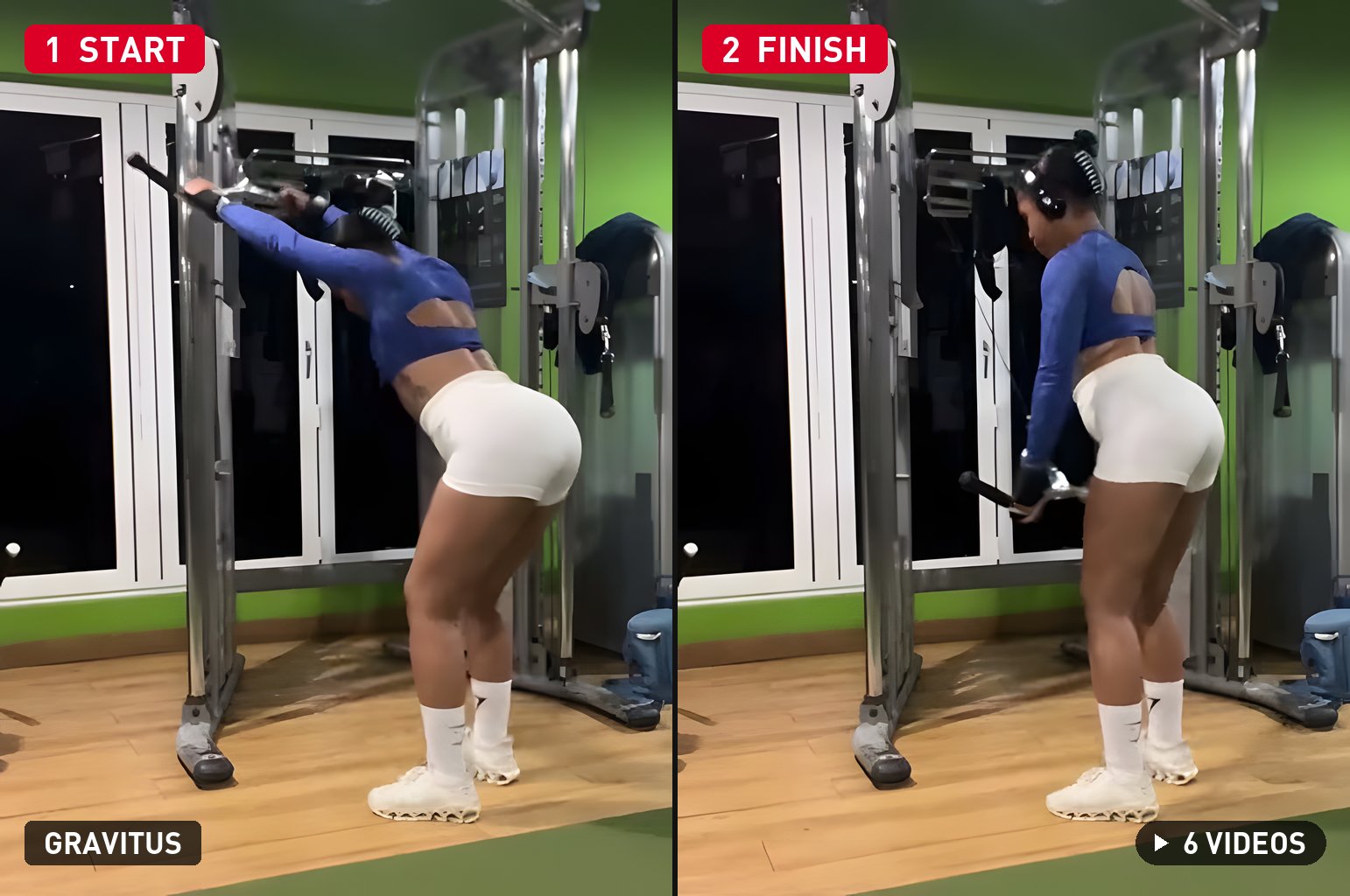
- 1Start. Pulley on the top setting, straight bar, overhand grip. Step back until the weight lifts, arms reaching up toward the pulley with a slight bend in the elbows.
- 2Finish. Sweep the bar down in an arc to your thighs, moving only at the shoulders, then let it rise under control.
Watch 3 video demonstrations
Find more video demonstrations in the Gravitus app
How to do a straight-arm pulldown
- Set the pulley to the top notch and clip on a straight bar or a rope.
- Grab the bar overhand at shoulder width. Take one or two steps back so the weight lifts with your arms reaching up toward the pulley at about head height.
- Stand tall with soft knees and at most a slight forward lean. Brace your abs, pull your shoulders down and unlock your elbows slightly. Keep that bend for the whole set.
- Sweep the bar down in an arc until it touches the front of your thighs. Only your shoulders move; your torso stays still.
- Let the bar rise over 2 to 3 seconds until your arms are back at head height and you feel a stretch under your arms.
Upright or hinged: pulldown vs pullover
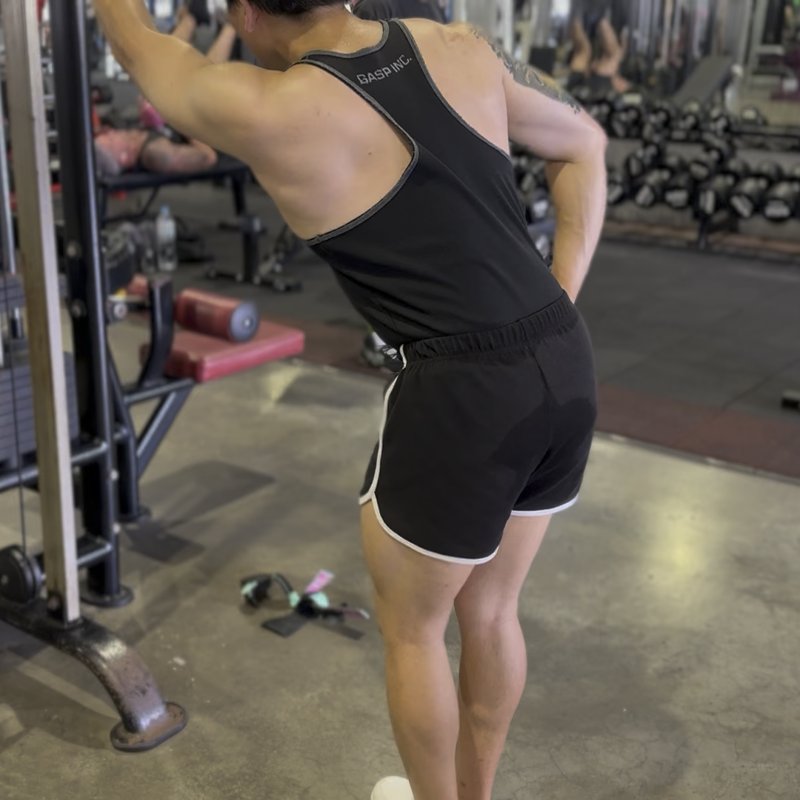
The straight-arm pulldown and the cable lat pullover use the same pulley and the same shoulder movement. The difference is your torso. Stand tall and your arms start in front of you at about head height, so the rep runs from your face to your thighs. Hinge 30 to 45 degrees and your arms start overhead, in line with your torso, which adds a longer stretch at the top. In testing, lat activity followed the same pattern in a pullover and a pulldown, while chest activity changed with shoulder angle (Teixeira 2022). Pick the torso angle for the range you want to train.
How much weight should you use for straight-arm pulldowns?
On Gravitus, the median man lifts 75 lb (35 kg) for 10 reps on the straight-arm pulldown, and the median woman 45 lb (20 kg).
- Most lift
- 55 to 110 lb
- Top 10% lift
- 135 lb or more
- Starting out
- under 55 lb
- Most lift
- 30 to 65 lb
- Top 10% lift
- 80 lb or more
- Starting out
- under 30 lb
- Most lift
- 25 to 50 kg
- Top 10% lift
- 60 kg or more
- Starting out
- under 25 kg
- Most lift
- 14 to 30 kg
- Top 10% lift
- 35 kg or more
- Starting out
- under 14 kg
Muscles worked
Back or triceps? What the research says
The straight-arm pulldown is a lat exercise first. In 20 adults, it drew more lat and triceps activity than a lying barbell pullover at the same load, while the lying pullover drew more chest and ab activity (Muyor 2022). That held with the hands at shoulder width and at 1.5 times shoulder width. A narrative review of lat EMG studies came to the same view: the lying pullover is not a first choice for the lats (Di Fonza 2026).
Three common claims the research does not back:
- The triceps only hold the arm straight. The triceps long head crosses the shoulder and helps pull the arm down, and its activity was highest in the straight-arm pulldown (Muyor 2022).
- Cables give constant tension. The pull on the cable stays the same, but its leverage on your shoulder changes as your arms move and as you step closer or further back.
- A band version loads the stretch. A band anchored high is shortest with your arms up and longest at your thighs, so it is hardest at the finish, not at the stretch.
Straight-arm pulldown vs cable pullover vs lat pulldown
| Attribute | Straight-arm pulldown | Cable pullover | Lat pulldown |
|---|---|---|---|
| Torso | Upright, slight lean at most | Hinged 30 to 45 degrees | Seated, leaning back slightly |
| Arms start | At head height | Overhead, in line with the torso | Overhead |
| Elbows | Fixed, slight bend | Fixed, slight bend | Bend fully |
| Works most | Lats, teres major, triceps | Lats, teres major, triceps | Lats, biceps, mid-back |
Keep the lat pulldown as your main lat lift, since it moves more weight and trains the biceps too. Add one straight-arm move after it. The pulldown and the pullover overlap, so pick one: upright to stay strict, hinged for more stretch overhead.
Sets, reps and progression
Do straight-arm pulldowns after your pulldowns and rows, or first as a lighter warm-up for the lats. Stop each set 0 to 2 reps short of failure. Sets taken close to failure build muscle across a wide range of reps (Schoenfeld 2021), so pick a range you can keep strict.
Add reps before weight. When every set reaches 15 with your torso still, move up one pin and drop back to 10.
Common mistakes
-
Bending and straightening the elbowsYour triceps or biceps take over and it turns into a pushdown or a row. Set a slight bend at the top and keep it to your thighs.
-
Hinging as you pullYour hips push back and your chest drops to move the bar, so your body does the work. Stay tall and go lighter.
-
Shrugging at the topYour shoulders ride up to your ears in the stretch. Pull them down before each rep.
-
Stopping at your waistThe bottom of the arc goes untrained. Finish every rep with the bar touching your thighs.
-
Letting the bar fly upTake 2 to 3 seconds on the way up. The stretch at the top is part of the rep.
Straight-arm pulldown variations
Questions people ask
What muscles do straight arm pulldowns work?
The lats and teres major, with the triceps long head, rear delts and lower chest helping. The core holds your torso still.
Is straight arm pulldown a compound exercise?
No. Only the shoulder moves, so it is an isolation exercise. The lat pulldown, where the elbows bend too, is the compound version.
Does straight arm pulldown work triceps?
Yes, the long head. It crosses the shoulder and helps pull the arm down, and its activity was higher in the straight-arm pulldown than in a lying pullover (Muyor 2022).
What is the difference between a straight arm pulldown and a cable pullover?
Torso angle. The straight-arm pulldown is done standing tall, with the arms starting at head height. The cable pullover hinges 30 to 45 degrees, so the arms start overhead and get a longer stretch. The muscles worked are the same.
Is the straight arm pulldown better than the lat pulldown?
Not as a main lift. The lat pulldown moves more weight and trains the biceps too. The straight-arm pulldown works the lats without the biceps, so add it after pulldowns or rows.
Should I lean forward or stand upright on straight arm pulldowns?
Stand upright with at most a slight lean for the straight-arm pulldown, and keep that angle all set. A 30 to 45 degree hinge turns it into a cable pullover, which starts with the arms overhead for more stretch.
How much weight should I use for straight arm pulldowns?
For 10 reps, the median on Gravitus is 75 lb (35 kg) for men and 45 lb (20 kg) for women. The strongest quarter lifts 110 lb (50 kg) and 65 lb (30 kg) or more.
Log every set and see your percentile on every lift, straight-arm pulldown included.
Get Gravitus