Seated Cable Row: The Ultimate Guide
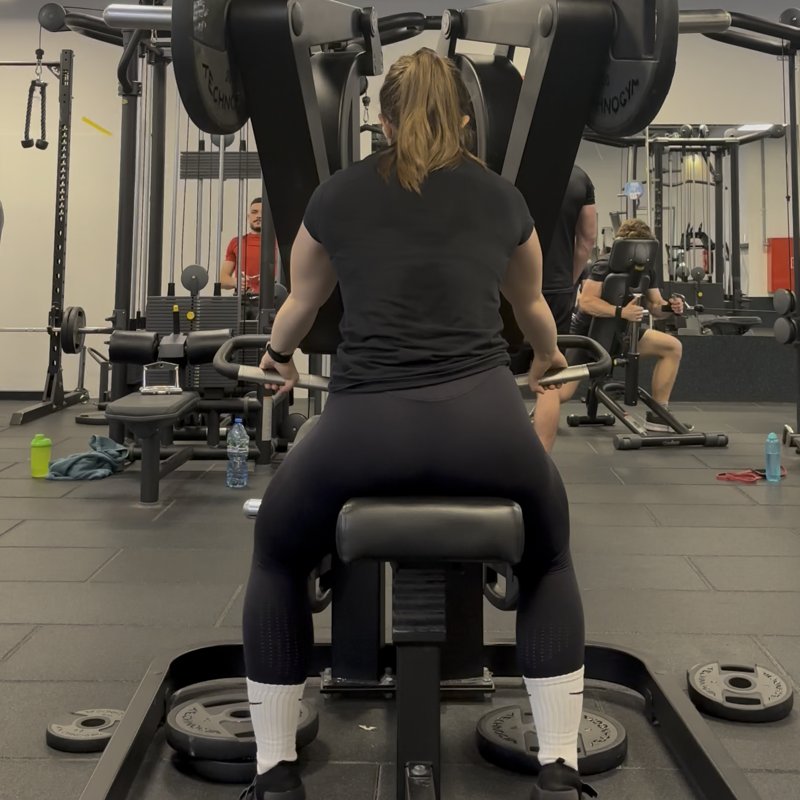
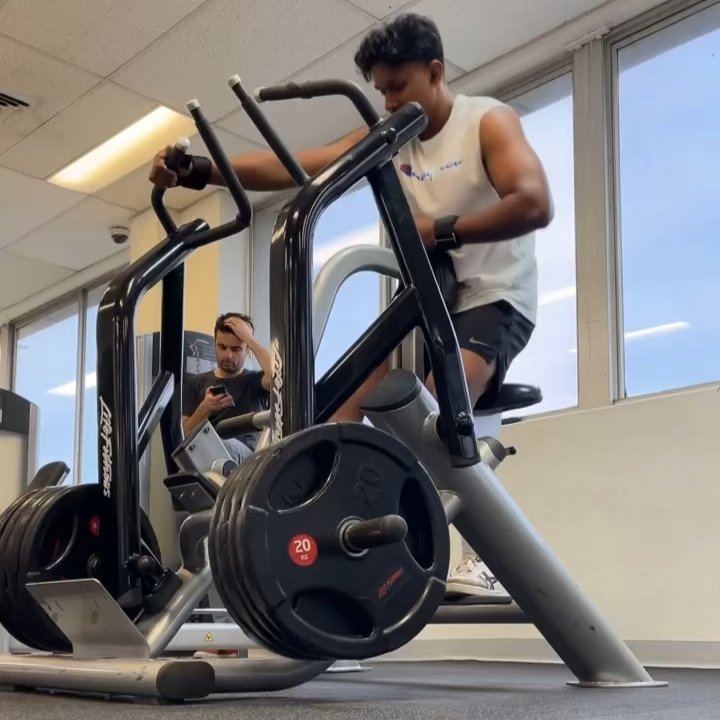
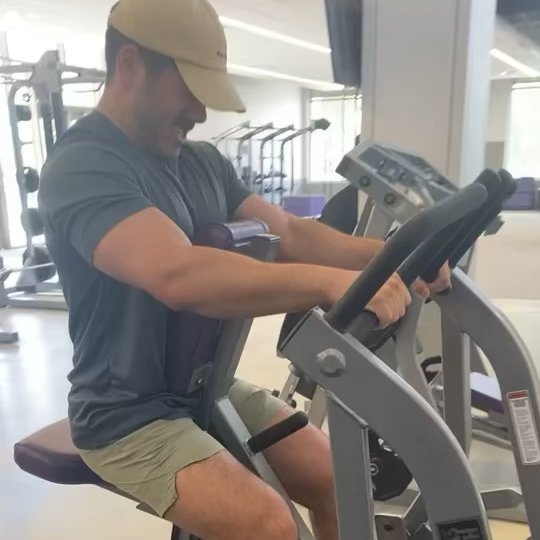
A seated cable row is a horizontal back exercise on a low pulley. Hold a V-handle, sit upright and pull the handle to your stomach with your elbows along your sides. It trains the lats, mid traps, rhomboids and rear delts. Reach forward a little at the stretch, but do not lean back to finish. Most lifters do 3 to 4 sets of 8 to 12 reps.
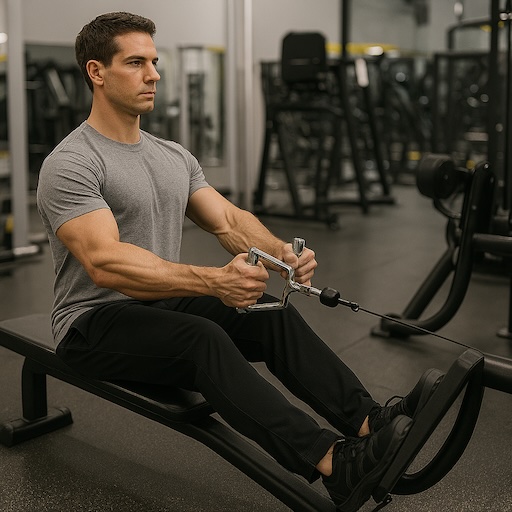
- 1Reach. Feet on the platform, knees soft, V-handle in both hands. Let your arms straighten and your torso tip forward a little so your shoulder blades reach toward the stack.
- 2Row. Sit back to upright, then drive your elbows back along your sides and pull the handle to your stomach.
Watch 3 video demonstrations
Find more video demonstrations in the Gravitus app
How to do a seated cable row
- Clip a V-handle to the low pulley of a seated row station. The pulley sits near the footplate, so you set up by where you sit, not by moving it.
- Sit with your feet on the platform and your knees slightly bent. Grab the handle with your palms facing each other and slide back until the weight lifts with your arms straight.
- Let your arms straighten and your torso tip forward slightly, so your shoulder blades reach toward the stack. Keep your chest up.
- Sit upright, then drive your elbows back along your sides until the handle touches your stomach. Squeeze your shoulder blades together.
- Let the handle go forward over 2 to 3 seconds until your arms are straight, without leaning back or letting the plates touch.
How far should you lean back?
| Attribute | Lean forward 30° | Upright | Lean back 20° |
|---|---|---|---|
| Upper traps, % of max | 16% | 15% | 42% |
| Middle traps, % of max | 59% | 61% | 52% |
| Lower traps, % of max | 61% | 50% | 37% |
| Use it for | The stretch at the front of each rep | The pull, on every rep | Avoid it. The upper traps take over. |
Sit upright for the pull and allow a small forward reach at the stretch. When 23 adults did a narrow-grip cable row at three fixed torso angles, leaning back 20 degrees nearly tripled upper trap activity and cut lower trap activity by a quarter compared with sitting upright (Park 2022). The table shows each muscle's activity as a share of its maximal contraction. Leaning back also turns the pull toward a shrug, which fits the extra upper trap work, and the angle between your upper arm and torso may decide which back muscles work most (Di Fonza 2026). If you have to lean back to finish a rep, the weight is too heavy.
Elbow path and what it trains
Your elbow angle decides what the row trains more than the handle does. With the elbows 30 degrees from the body, lifters produced the most force and the most lat activity; at 60 and 90 degrees the upper and middle traps and rear delts worked harder (Vasconcelos 2023). A narrow grip drew more lat activity than a wide grip on both the pull and the return (Padovan 2025a). For the flared version, see the wide-grip seated row. To train one side at a time, see the one-arm seated cable row.
How much weight should you use for seated cable rows?
On Gravitus, the median man lifts 135 lb (60 kg) for 10 reps on the seated cable row, and the median woman 70 lb (32.5 kg).
- Most lift
- 105 to 165 lb
- Top 10% lift
- 200 lb or more
- Starting out
- under 105 lb
- Most lift
- 55 to 85 lb
- Top 10% lift
- 105 lb or more
- Starting out
- under 55 lb
- Most lift
- 47.5 to 75 kg
- Top 10% lift
- 90 kg or more
- Starting out
- under 47.5 kg
- Most lift
- 25 to 40 kg
- Top 10% lift
- 47.5 kg or more
- Starting out
- under 25 kg
Muscles worked
Three seated row claims the research does not back
- A close grip trains the lower lats. No row study shows a grip moving work to one region of the lats. A narrow grip drew more lat activity overall than a wide one (Padovan 2025a).
- Cables keep constant tension. The stack pulls with the same force all rep, but your leverage changes. With your arms straight the cable pulls along them, and the pull on your shoulders builds as your elbows come back to your sides.
- You must squeeze your shoulder blades before you bend your arms. Rows with the shoulder blades held back and rows with them free to move produced similar overall muscle activity, with small differences on the return (Padovan 2025b). In a held row, actively squeezing the shoulder blades did not raise middle trap or rhomboid activity (Lehman 2004). Let them move with the pull.
Seated cable row vs barbell row vs lat pulldown
| Attribute | Seated cable row | Barbell row | Lat pulldown |
|---|---|---|---|
| Pull | Horizontal | Horizontal | Vertical |
| Lower back | Holds you upright | Holds you bent over, the most load | Little work |
| Works most | Lats, mid traps, rhomboids | The whole back, lower back included | Lats |
| Best for | Heavy rowing without lower-back fatigue | Barbell strength | Back width and pull-ups |
Pair the seated row with a vertical pull rather than choosing one. In a comparison of four lat exercises, the seated row drew the most middle trap and rhomboid activity, and a lat-to-biceps ratio as high as the wide-grip pulldown (Lehman 2004). The bent-over row put the most load on the lower back of three rows tested (Fenwick 2009), so use it when you want that work.
Sets, reps and progression
Use the seated row as a main back exercise, early on a pull day or right after your pulldowns. Stop each set 0 to 2 reps short of failure. Sets taken close to failure build muscle across a wide range of reps (Schoenfeld 2021), so pick a range you can keep strict.
Add reps before weight. When every set reaches 12 with your torso upright, move up one pin and drop back to 8.
Common mistakes
-
Leaning back to finish the repYour hips swing the weight and the upper traps take over (Park 2022). Sit upright and go lighter.
-
Rounding over at the stretchA small forward reach is fine. Letting the stack pull your lower back round is not. Keep your chest up as you reach.
-
ShruggingYour shoulders ride up toward your ears. Keep them down as you pull.
-
Flaring the elbows on a V-handleThe row drifts toward an upper back exercise and you lift less. Keep your elbows brushing your sides.
-
Pushing with your legsYour knees straighten and your whole body slides back. Keep the knees soft and still.
-
Letting the stack pull you forwardReturn over 2 to 3 seconds without letting the plates touch.
Seated row variations and grips
Questions people ask
What muscles does the seated cable row work?
The lats, middle and lower traps and rhomboids, with the rear delts and biceps helping. Your lower back and core hold you upright.
How far should you lean back on a seated cable row?
Little or not at all. Sit upright for the pull, and let your torso tip forward a little at the stretch. Leaning back 20 degrees nearly tripled upper trap activity and cut lower trap activity compared with sitting upright (Park 2022).
Should elbows be tucked or flared on seated cable row?
Tucked, for the standard V-handle row. Elbows close to the body produced the most force and the most lat activity. Flaring them 60 to 90 degrees shifts the work to the traps and rear delts (Vasconcelos 2023), which is the wide-grip row.
Do seated rows work traps?
Yes, mostly the middle and lower traps. Sitting upright or leaning slightly forward trains them best; leaning back shifts the work to the upper traps (Park 2022).
Is the seated cable row better than the barbell row?
Neither is better overall. The seated row lets you load the lats and mid back without holding a bent-over position. The barbell row trains more of the whole back and puts more load on the lower back (Fenwick 2009).
How much weight should I seated cable row?
For 10 reps, the median on Gravitus is 135 lb (60 kg) for men and 70 lb (32.5 kg) for women. The strongest quarter lifts 165 lb (75 kg) and 85 lb (40 kg) or more.
Log every set and see your percentile on every lift, seated cable row included.
Get GravitusRelated exercises
- Park and Kim 2022. J Musculoskelet Sci Technol 6(1):22-31.
- Vasconcelos et al. 2023. Int J Strength Cond 3(1).
- Padovan et al. 2025a. J Hum Kinet, published online September 2025.
- Padovan et al. 2025b. J Funct Morphol Kinesiol 11(1):6.
- Di Fonza et al. 2026. J Funct Morphol Kinesiol 11(3):315.
- Lehman et al. 2004. Dyn Med 3:4.
- Fenwick, Brown and McGill 2009. J Strength Cond Res 23(2):350-358.
- Schoenfeld et al. 2021. Sports 9(2):32.