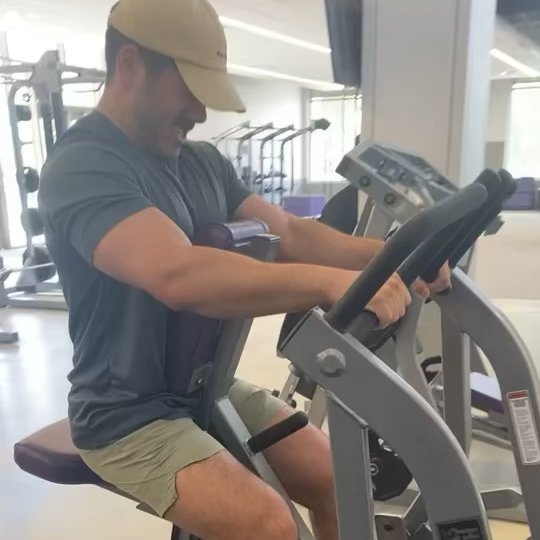
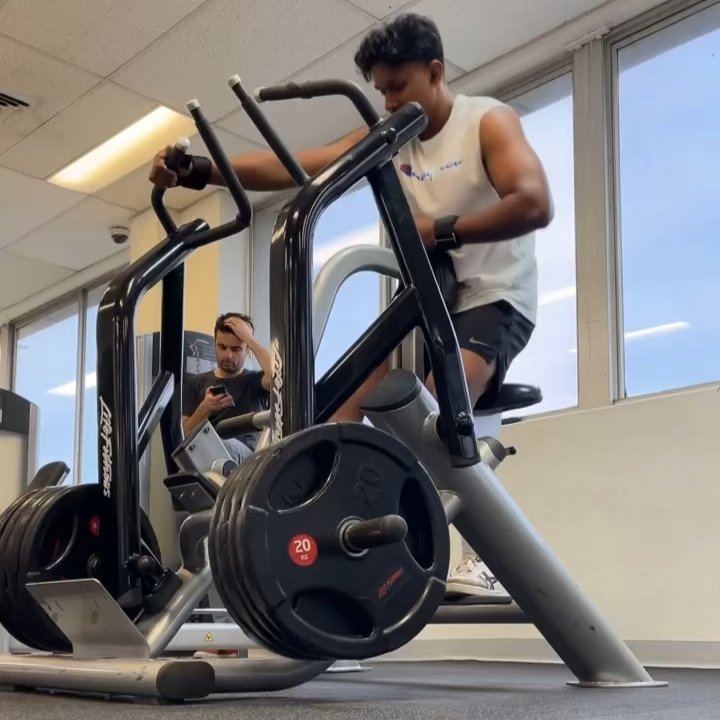
Wide-Grip Seated Row: The Ultimate Guide
A wide-grip seated row is a cable row with a long bar held overhand, hands outside your shoulders. Pull the bar to your lower chest with your elbows out to the sides. The wide grip shifts work from the lats to the traps, rhomboids and rear delts. Most lifters do 3 to 4 sets of 8 to 12 reps.
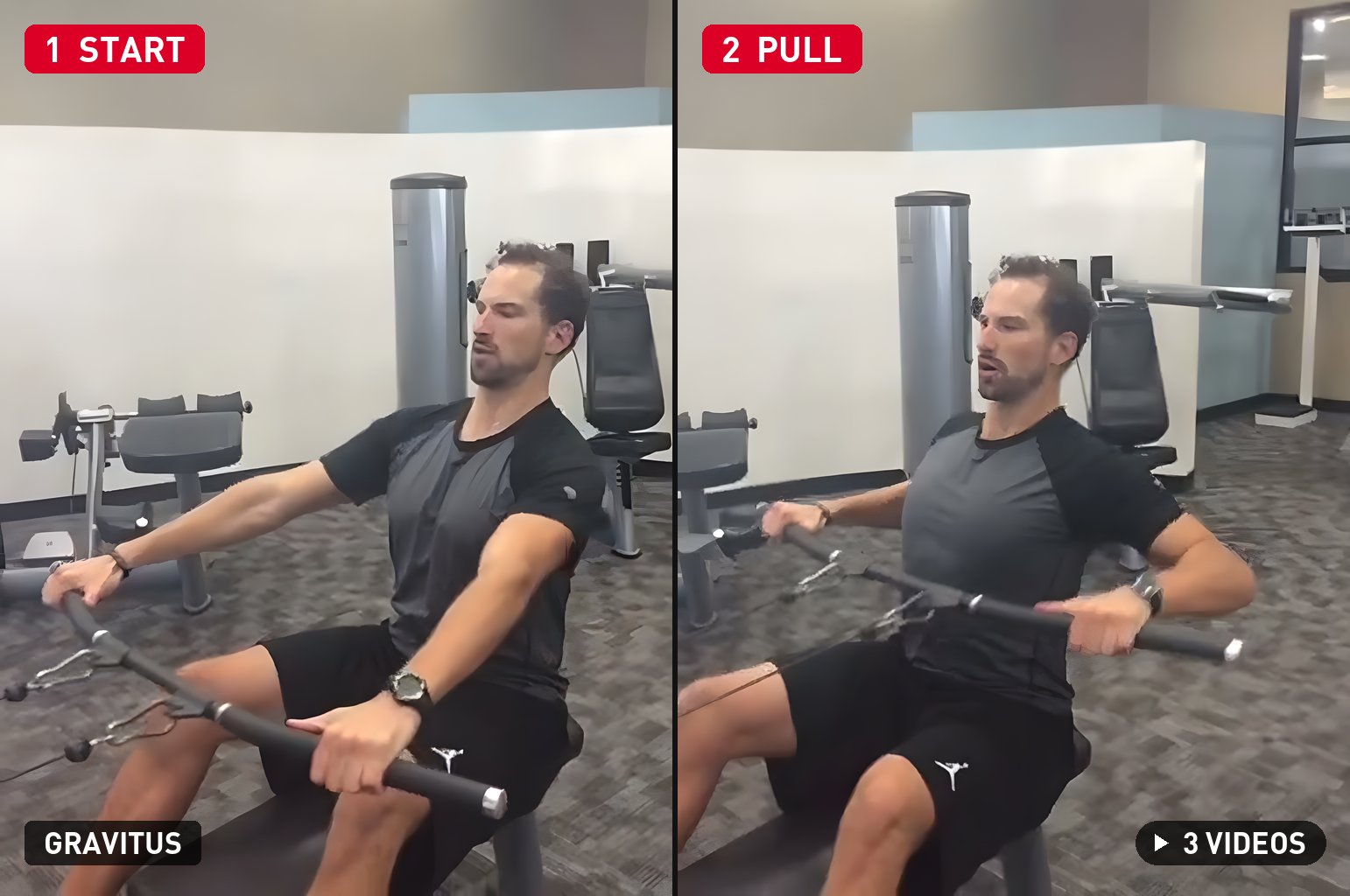
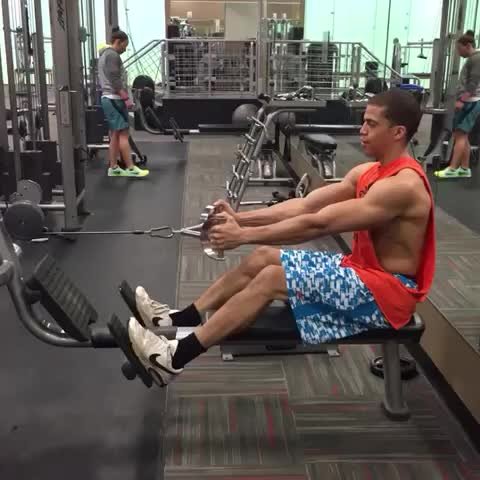
- 1Start. Sit tall with your feet on the platform and knees soft. Hold the long bar overhand, hands well outside your shoulders, arms long.
- 2Pull. Drive your elbows out and back and pull the bar to your lower chest, then let it go forward under control.
Watch 3 video demonstrations
Find more video demonstrations in the Gravitus app
How to do a wide-grip seated row
- Clip a long straight bar, or a lat pulldown bar, to the low pulley of a seated row station.
- Sit with your feet on the platform and your knees slightly bent. Grab the bar overhand with your hands about 1.5 times shoulder width apart.
- Sit tall with your chest up and your torso upright or leaning back slightly. Start with your arms straight and your shoulder blades reaching forward.
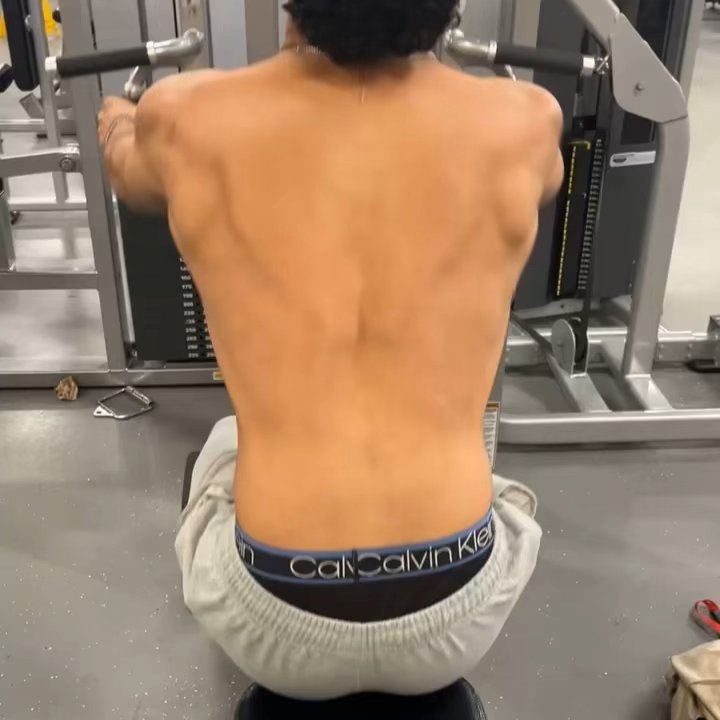
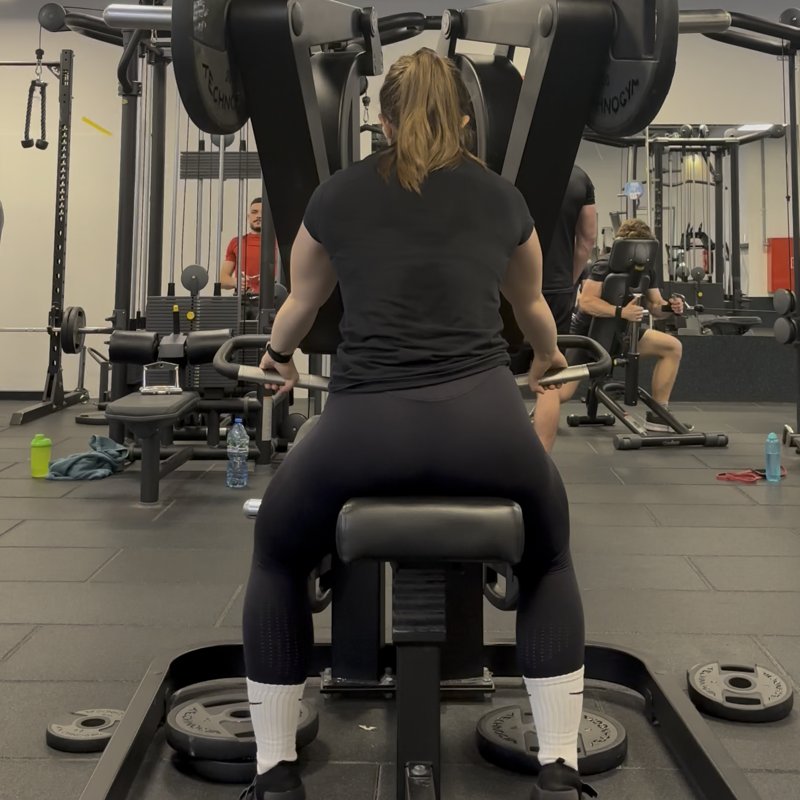
- Pull the bar to your lower chest by driving your elbows out and back, a little below shoulder height. Squeeze your shoulder blades together at the end.
- Let the bar go forward over 2 to 3 seconds until your arms are straight, without rocking your torso.
Grip width and handle
Your elbows, more than the handle, decide which muscles work most. Rows with the elbows flared 60 or 90 degrees from the body drew more upper trap, middle trap and rear delt activity. Rows with the elbows close to the body drew more lat activity and more force, whether the grip was overhand, underhand or neutral (Vasconcelos 2023).
Wide bar vs close V-handle vs wide neutral grip
| Attribute | Wide bar | Close V-handle | Wide neutral |
|---|---|---|---|
| Elbows | Out, a little below shoulder height | Tucked at your sides | Partway out |
| Works most | Traps, rhomboids, rear delts | Lats, then mid-back | Between the two |
| Weight | Lightest | Heaviest | Between the two |
| Best for | Upper back and rear delts | Lats and pulling strength | A wide row with neutral wrists |
Use both. A narrow-grip row drew more lat activity, and a wide-grip row drew more activity from all three parts of the traps (Padovan 2025). If you only have one handle, set your elbows for the muscle you want to train.
How much weight should you use for wide-grip seated rows?
On Gravitus, the median man lifts 130 lb (60 kg) for 10 reps on the wide-grip seated row, and the median woman 65 lb (30 kg).
- Most lift
- 105 to 155 lb
- Top 10% lift
- 185 lb or more
- Starting out
- under 105 lb
- Most lift
- 55 to 85 lb
- Top 10% lift
- 105 lb or more
- Starting out
- under 55 lb
- Most lift
- 47.5 to 70 kg
- Top 10% lift
- 85 kg or more
- Starting out
- under 47.5 kg
- Most lift
- 25 to 37.5 kg
- Top 10% lift
- 47.5 kg or more
- Starting out
- under 25 kg
Muscles worked
Does a wide grip build a wider back?
No. The wide-grip row is an upper back exercise. When the two grips were compared directly, the narrow-grip row drew more lat activity, while the wide grip drew more from the upper, middle and lower traps and the side delts (Padovan 2025). The lats are what make a back look wide, so pulldowns, pull-ups and close-grip rows do more for width. The wide grip builds the upper back and rear delts.
Two common claims the research does not back:
- A wide grip trains the outer lats. No row study shows that grip width moves work to one part of the lats, and the narrow grip drew more lat activity overall.
- The wide row lets you lift more. Rows with the elbows flared produced less force than rows with the elbows close to the body (Vasconcelos 2023). Expect to use less weight than on a close-grip row.
Sets, reps and progression
Do the wide-grip row after your heavier pulldowns or close-grip rows, or as the main upper back exercise on a pull day. Stop each set 0 to 2 reps short of failure. Sets taken close to failure build muscle across a wide range of reps (Schoenfeld 2021), so pick a range you can keep strict.
Add reps before weight. When every set reaches 12 without rocking your torso, move up one pin and drop back to 8.
Common mistakes
-
Rocking the torsoYour hips and lower back move the weight. Stay upright or lean back slightly, and go lighter.
-
ShruggingYour shoulders ride up and the upper traps take over. Keep your shoulders down as you pull.
-
Pulling the bar to your stomachYour elbows drop to your sides and it turns into a close-grip row. Pull to your lower chest with your elbows out.
-
Cutting the reach shortLet your arms straighten and your shoulder blades move forward on every rep.
-
Bending the wrists backKeep your wrists straight and the bar low in your palms, so your back does the pulling.
Wide-grip seated row variations
Questions people ask
What muscles does the wide grip seated row work?
The middle and lower traps, rhomboids and rear delts, with the lats, side delts and biceps helping. The lower back and core hold you upright.
Is wide grip seated row better than close grip seated row?
Neither is better overall. The close grip trains the lats more and moves more weight. The wide grip trains the traps and rear delts more (Padovan 2025, Vasconcelos 2023). Most programs use both.
Does a wide grip row build back width or upper back?
The upper back. A narrow-grip row drew more lat activity, and the lats are what make a back look wide (Padovan 2025). For width, add pulldowns or pull-ups.
How do I do a wide grip seated row?
Hold a long bar overhand with your hands well outside your shoulders. Sit tall, pull the bar to your lower chest with your elbows out, then let it go forward until your arms are straight.
How much weight should I use for wide grip seated row?
For 10 reps, the median on Gravitus is 130 lb (60 kg) for men and 65 lb (30 kg) for women. The strongest quarter lifts 155 lb (70 kg) and 85 lb (37.5 kg) or more.
Log every set and see your percentile on every lift, wide-grip seated row included.
Get Gravitus