How to Do Incline Dumbbell Curls
An incline dumbbell curl is a biceps curl done lying back on a bench set to 45 to 60 degrees, so your arms hang behind your body. Keep your upper arms still and curl the dumbbells to your shoulders. It trains the biceps in a stretched position, plus the brachialis. Most lifters do 3 sets of 8 to 15 reps.
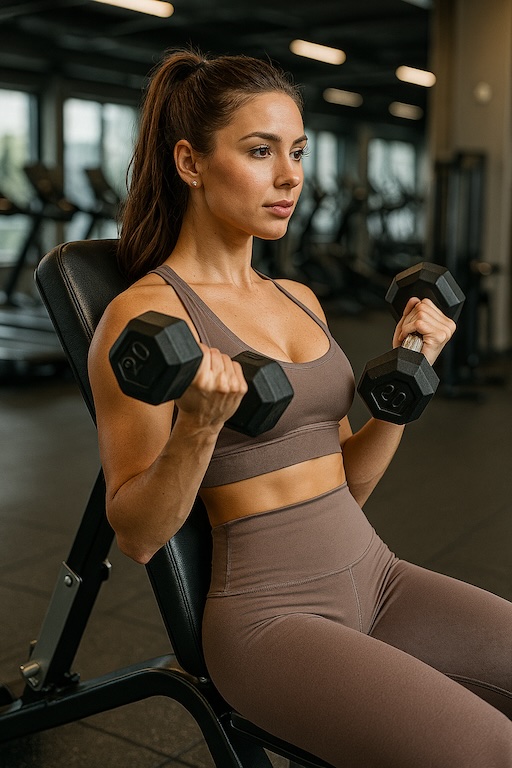
- 1Start. Bench at 45 to 60 degrees, back and head on the pad, arms hanging straight down from your shoulders.
- 2Top. Keep your upper arms still and curl the dumbbell toward your shoulder, then lower until your arm is straight.
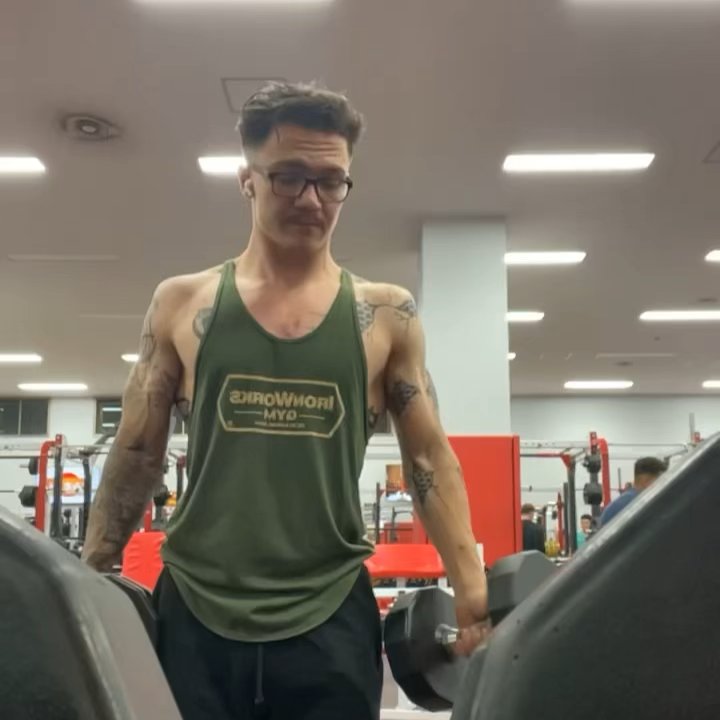
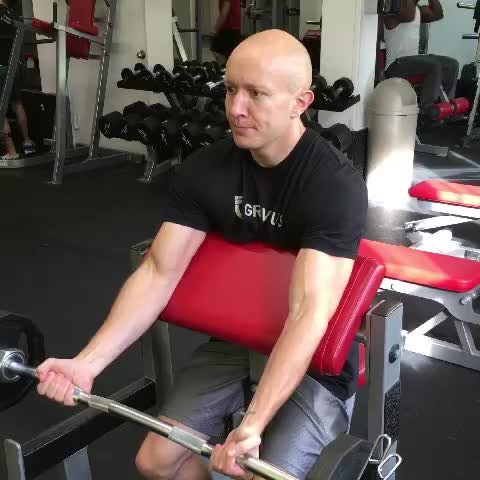
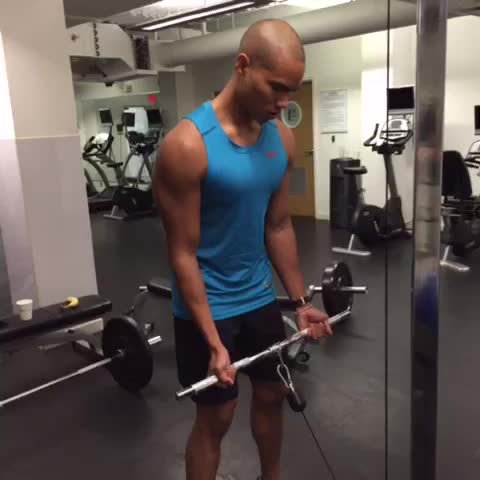
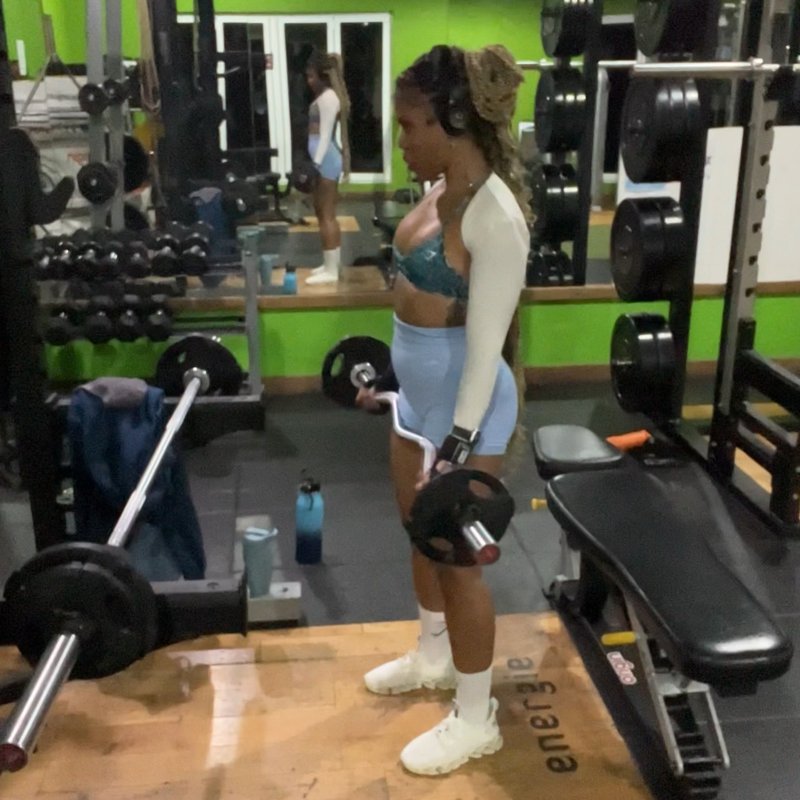
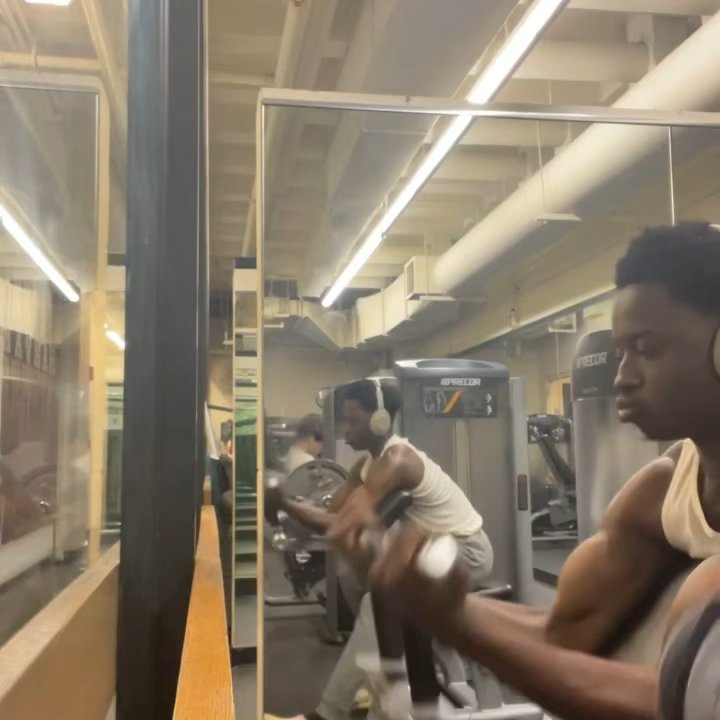
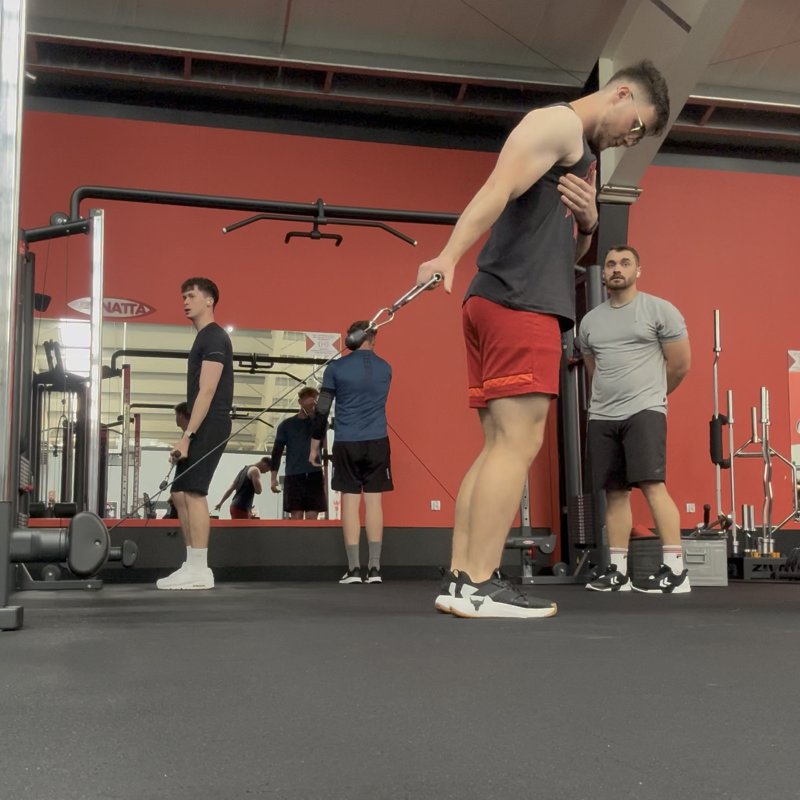
Watch 3 video demonstrations
Find more video demonstrations in the Gravitus app
How to do an incline dumbbell curl
- Set an adjustable bench to 45 to 60 degrees. Sit back with your head, upper back and hips on the pad and your feet flat.
- Let a dumbbell hang straight down from each shoulder, palms facing forward. Your upper arms now sit behind your torso, which stretches the biceps.
- Keep your upper arms vertical and still. Curl both dumbbells toward your shoulders by bending only at the elbows.
- Stop just before your elbows start to move forward, and squeeze for a second.
- Lower over 2 to 3 seconds until your arms are fully straight, with your shoulders still on the pad.
Which bench angle to use
With your arms hanging straight down, the bench angle sets how far behind your body they sit: 90 degrees minus the bench angle. A 45-degree bench puts them 45 degrees back, close to the 43 degrees the average participant could pull an arm back on their own in one trial (Larsen 2026). A more upright bench gives less stretch, not more.
Where the incline curl is hardest
A dumbbell pulls straight down, so a curl is hardest when your forearm is level with the floor and easiest with your arm straight, where the dumbbell hangs under your elbow. On an incline bench your arms still hang straight down, so the bench angle does not move the hard part of the rep. It changes how stretched the biceps is all the way through.
Straighten your arms fully every rep for the stretch, but expect little load there. Pulling your elbows back behind vertical makes the bottom lighter still. For load in the stretched position, pair the incline curl with a preacher or Bayesian curl.
How much weight should you incline dumbbell curl?
On Gravitus, the median man lifts 30 lb (14 kg) per dumbbell for 10 reps on the incline dumbbell curl, and the median woman 17.5 lb (8 kg).
- Most lift
- 25 to 35 lb
- Top 10% lift
- 45 lb or more
- Starting out
- under 25 lb
- Most lift
- 17.5 to 22.5 lb
- Top 10% lift
- 30 lb or more
- Starting out
- under 17.5 lb
- Most lift
- 11 to 16 kg
- Top 10% lift
- 19 kg or more
- Starting out
- under 11 kg
- Most lift
- 7 to 10 kg
- Top 10% lift
- 14 kg or more
- Starting out
- under 7 kg
What the research says
In an 8-week trial, 63 young women trained with either incline curls or preacher curls twice a week. The incline group grew more in the upper part of the elbow flexors, near the shoulder, and the preacher group grew more near the elbow. Each group gained more strength on its own exercise (Kassiano 2025).
Arm position alone may not explain that split. The two curls also load different parts of the rep, as the chart above shows. When a 10-week cable trial matched the resistance and changed only the arm, curling with it pulled 43 degrees back or at the side grew the elbow flexors by the same 6% to 9% (Larsen 2026). Training only the bottom half of a preacher curl grew the biceps near the elbow more than training the top half (Pedrosa 2023).
Four common claims the research does not back:
- It loads the biceps at the stretch. With your arms hanging, the dumbbell sits straight under your elbow at the bottom, so the most stretched point carries almost no load.
- A steeper bench gives more stretch. The opposite. The flatter the bench, the further behind your body your arms sit.
- It isolates the long head. Both heads cross the shoulder, so both lengthen with your arm behind you. The trials above measured the elbow flexors as a whole, and none showed a long-head effect.
- It works the biceps harder than a standing curl. Biceps activity followed the same pattern through the rep in incline and standing dumbbell curls (Oliveira 2009).
Muscles worked
Incline vs standing vs preacher curl
| Attribute | Incline dumbbell curl | Standing dumbbell curl | Preacher curl |
|---|---|---|---|
| Upper arm | Behind your body | At your side | In front of your body |
| Hardest point | Halfway | Halfway | A third of the way up |
| Stretch at the bottom | Most | Some | Least |
| Cheating | Hard, the bench holds your back | Easy to swing | Hard, the pad holds your arm |
Neither wins outright. Over 8 weeks the incline curl grew the upper part of the elbow flexors more and the preacher curl the lower part (Kassiano 2025). If you have room for two curls, pick one of each.
Sets, reps and progression
Stop each set 0 to 2 reps short of failure. Sets taken close to failure build muscle across a wide range of reps (Schoenfeld 2021), so pick a range you can keep strict.
A 5 lb (2.5 kg) jump is big on a light dumbbell. Add reps first: when every set reaches the top of your range, move up one dumbbell and drop back to the bottom of the range.
Common mistakes
-
Bench too flatBelow 45 degrees most shoulders run out of range and the front of the shoulder takes the strain. Raise the bench until your arms hang without pulling.
-
Elbows drifting forwardYour front delts start to help and your arms leave the stretched position. Keep your upper arms vertical.
-
Stopping short at the bottomThe stretch is the reason to do this curl. Straighten your arms fully every rep.
-
Shoulders rolling off the padShrugging forward shortens the biceps at the shoulder. Keep your shoulder blades on the bench.
-
Going as heavy as your standing curlYou end up swinging off the pad. Start a dumbbell lighter and lower over 2 to 3 seconds.
Incline curl variations
Questions people ask
What angle should the bench be for incline dumbbell curls?
45 to 60 degrees. At 45 your arms hang 45 degrees behind your body, about as far as most shoulders go. Use 60 if 45 pinches the front of your shoulder. Flatter than 45 asks for more shoulder range than most people have.
What head does incline curls work?
Both heads of the biceps, plus the brachialis. Both heads cross the shoulder, so both are stretched. In an 8-week trial, incline curls grew the upper part of the elbow flexors more than preacher curls did (Kassiano 2025), but no study has shown they favor the long head.
Are incline dumbbell curls better than standing?
They are different, not better. The incline puts the biceps under more stretch and the bench stops you swinging; the standing curl takes more weight. Biceps activity followed the same pattern through the rep in both (Oliveira 2009).
Do incline curls and preacher curls work the same muscle?
Yes, the biceps and brachialis, but different parts grew more. Incline curls grew the elbow flexors more near the shoulder and preacher curls more near the elbow (Kassiano 2025).
Why do incline curls hurt my shoulders?
Usually the bench is too flat. Your arm gets pulled further back than your shoulder can go, which strains the front of the shoulder, where the long head's tendon runs. Raise the bench to 60 degrees and go lighter.
How much weight should I incline dumbbell curl?
For 10 reps, the median on Gravitus is 30 lb (14 kg) per dumbbell for men and 17.5 lb (8 kg) for women. The strongest quarter lifts 35 lb (16 kg) and 22.5 lb (10 kg) or more.
Log every set and see your percentile on every lift, incline dumbbell curl included.
Get Gravitus