How to Do a Chest-Supported Row
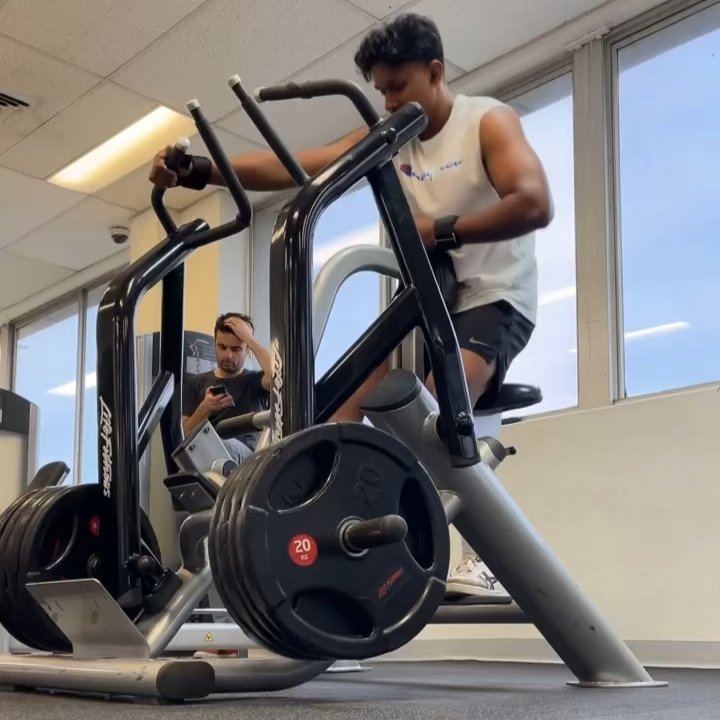
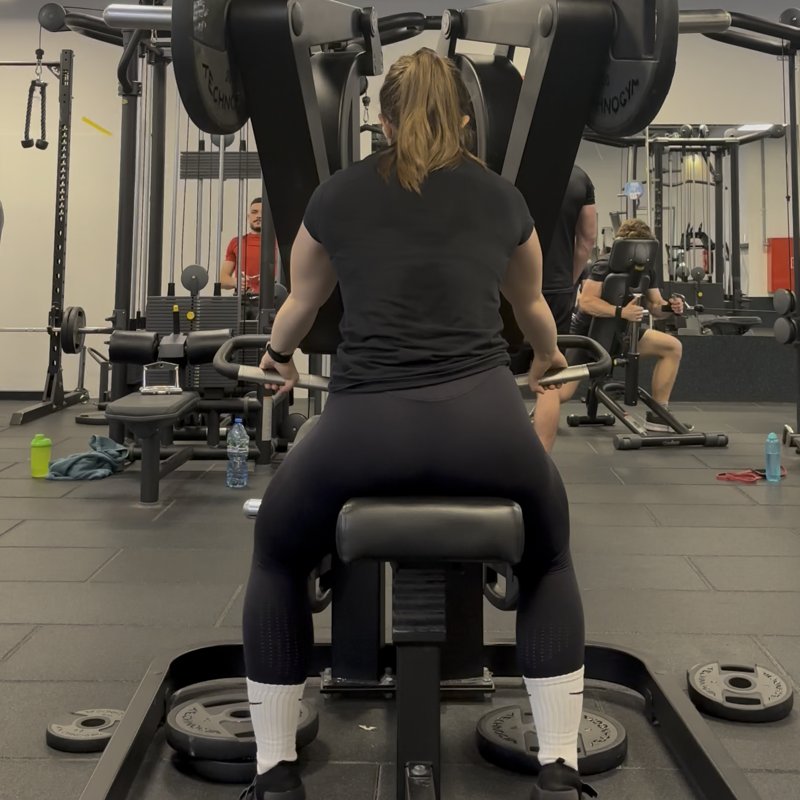
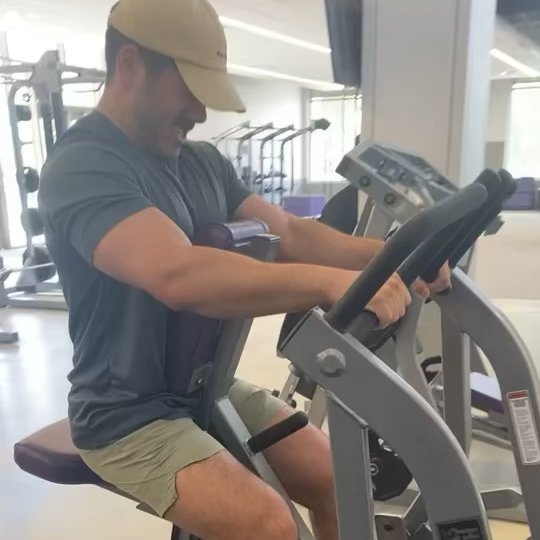
A chest-supported row is done face down on an incline bench or machine pad, so the pad holds your torso instead of your lower back. Pull the dumbbells or handles to your lower ribs with your elbows close. It trains the lats, mid traps, rhomboids and rear delts. Most lifters do 3 to 4 sets of 8 to 12 reps.
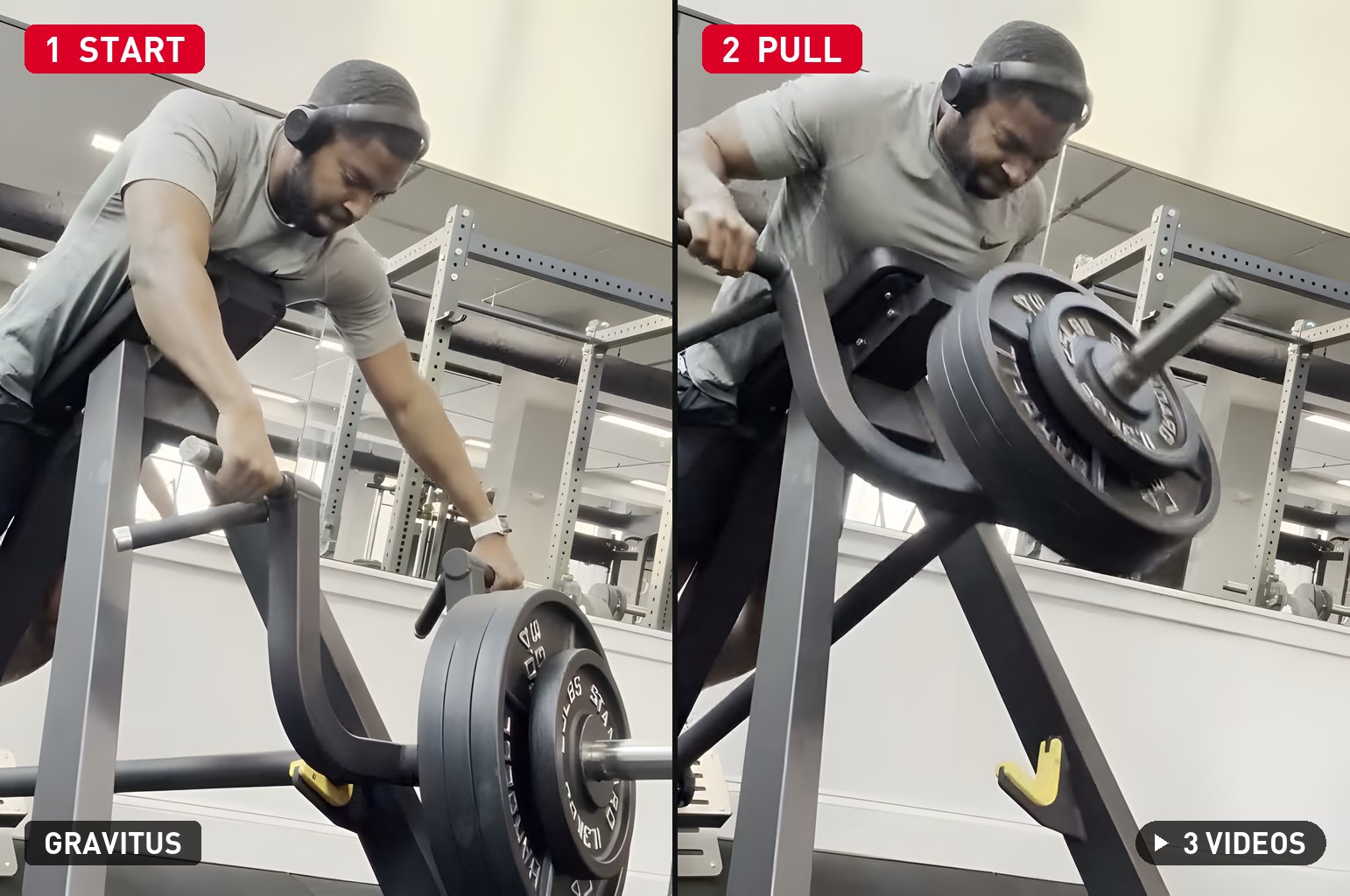
- 1Start. Chest and upper stomach on the pad, feet planted, arms hanging straight from the handles with your shoulder blades pulled forward.
- 2Pull. Drive your elbows back toward your hips until the handles reach your lower ribs, keeping your chest on the pad. Lower under control.
Watch 3 video demonstrations
Find more video demonstrations in the Gravitus app
How to do a chest-supported row
- Set an incline bench to 30 degrees and place a dumbbell on each side of it. On a T-bar or row machine, set the pad so your arms hang straight to the handles.
- Lie face down with your chest and upper stomach on the pad and your chin just past the top. Plant your feet on the floor or the footplate.
- Take the dumbbells or handles with your palms facing each other. Let your arms hang straight and your shoulder blades slide forward.
- Drive your elbows back toward your hips until your hands reach your lower ribs. Keep your chest on the pad and your shoulders down.
- Lower over 2 to 3 seconds until your arms are straight again, without letting the weights touch the floor.
What bench angle to use
The dumbbells always hang straight down, but your torso tilts with the bench. On a flat bench the whole load pulls straight across your torso, the same pull as an upright seated cable row. Tilt the bench and part of the load pulls along your torso toward your hips, so your shoulders have to shrug against it. At 30 degrees that part is half the load. At 45 degrees it matches the row part.
Set the bench at 30 degrees, or as flat as its height allows without the dumbbells touching the floor. A 45-degree bench pulls on your torso the way a seated cable row does when you lean back 45 degrees. In that row, leaning back only 20 degrees nearly tripled upper trap activity and cut lower trap activity by a quarter (Park 2022). A flatter bench also lets your arms reach further forward at the bottom, a longer stretch for the lats.
How much weight should you use for chest-supported rows?
On Gravitus, the median man lifts 90 lb (40 kg) for 10 reps on the chest-supported row, and the median woman 40 lb (18 kg).
- Most lift
- 55 to 135 lb
- Top 10% lift
- 185 lb or more
- Starting out
- under 55 lb
- Most lift
- 27.5 to 65 lb
- Top 10% lift
- 90 lb or more
- Starting out
- under 27.5 lb
- Most lift
- 25 to 60 kg
- Top 10% lift
- 85 kg or more
- Starting out
- under 25 kg
- Most lift
- 12 to 30 kg
- Top 10% lift
- 40 kg or more
- Starting out
- under 12 kg
Dumbbells vs row machine vs T-bar
| Attribute | Dumbbells on a bench | Chest-supported machine | Chest-supported T-bar |
|---|---|---|---|
| Pad angle | You set it, 30 degrees | Fixed, the pull runs level with your torso | Fixed by the frame |
| Path | Free, each arm on its own | Fixed arc, one or both arms | Fixed arc, both hands on one lever |
| Loading | 5 lb (2.5 kg) jumps per dumbbell | Stack pins or plates | Plates |
| Best for | Home gyms and choosing your elbow path | The heaviest weight with the least setup | Heavy rowing with wide or close handles |
All three take the lower back out of holding you up, so pick by what your gym has. Dumbbells let you set the angle and move each arm freely. A seated row machine with a chest pad pulls level with your torso, like a flat bench. Whichever you use, set your elbows for the muscle you want: close to your sides for the lats, flared out for the upper back and rear delts (Vasconcelos 2023).
Muscles worked
Three chest-supported row claims the research does not back
- The pad takes the lower back out completely. It takes out most of the job, not all of it. In a free-weight bent-over row, lower back muscle activity was 34% higher than in a machine row (Saeterbakken 2015), and the bent-over row put the most load on the lower spine of three rows tested (Fenwick 2009). In a three-lifter pilot, dumbbell rows on a 47-degree bench drew less lower back activity than standing bent-over rows, but not zero, and with three lifters the differences were not significant (García-Jaén 2021).
- A 45-degree bench trains the rear delts. A steeper bench adds shrug work for the upper traps, as the chart above shows. The rear delts respond to your elbows: rows with the elbows flared 60 to 90 degrees drew more rear delt activity than rows with the elbows close (Vasconcelos 2023).
- An underhand grip trains the lower lats. In the same study, the upper and lower lats both worked harder with the elbows close to the body than flared, with an overhand, underhand or neutral grip alike (Vasconcelos 2023). The underhand and neutral grips mostly added biceps work.
Sets, reps and progression
Use the chest-supported row as the main row on a pull day, or after a vertical pull like the lat pulldown. Because your lower back is not holding you up, it also fits late in a session or the day after heavy deadlifts. Stop each set 0 to 2 reps short of failure. Sets taken close to failure build muscle across a wide range of reps (Schoenfeld 2021), so pick a range you can keep strict.
Add reps before weight. When every set reaches 12 with your chest on the pad, move up one dumbbell size or plate and drop back to 8.
Common mistakes
-
Lifting your chest off the padYour lower back takes over and the row turns into a bent-over row. Go lighter until your chest stays down.
-
Setting the bench too steepAbove 45 degrees most of the load pulls your shoulders toward your hips, and the row becomes a shrug. Drop the bench to 30 degrees.
-
Shrugging at the topYour shoulders ride up toward your ears. Pull your elbows toward your hips and keep your shoulders down.
-
Cutting the bottom shortLet your arms straighten and your shoulder blades slide forward every rep. If the dumbbells hit the floor, raise the bench.
-
Craning your neckRest your chin just past the top of the pad and look at the floor a little ahead of you.
-
Kicking with your legs on a T-barYour knees drive the lever up. Keep your legs still and let your back move the weight.
Chest-supported row variations
Questions people ask
What angle for chest supported rows?
30 degrees, or as flat as the bench height allows. At 45 degrees and steeper, more of the load pulls your shoulders toward your hips, which turns part of the row into a shrug for the upper traps.
What muscles do chest supported rows work?
The lats, middle and lower traps and rhomboids, with the rear delts and biceps helping. Your forearms grip the weight, and your lower back does far less than in a bent-over row.
Does chest supported row work traps?
Yes. It works the middle and lower traps most. A steep bench shifts work to the upper traps, and flaring your elbows out adds upper and middle trap work (Vasconcelos 2023).
Where should you feel chest supported row?
Between and below your shoulder blades and along the sides of your back. If you feel it mostly at the top of your shoulders, lower the bench and keep your shoulders down. If you feel it mostly in your biceps, lead with your elbows.
Is the chest supported row better than the barbell row?
Neither is better overall. They train the same upper back muscles, but the barbell row also makes your lower back hold you bent over, and it put the most load on the lower spine of three rows tested (Fenwick 2009). Use the chest-supported row when you want the back work without that load.
How to do chest supported row at home?
Set an adjustable bench to 30 degrees, lie face down with your chin just past the top and row a pair of dumbbells to your lower ribs. If the dumbbells touch the floor at the bottom, raise the bench on a sturdy step or plates.
How much weight should I chest supported row?
For 10 reps, the median on Gravitus is 90 lb (40 kg) for men and 40 lb (18 kg) for women. The strongest quarter lifts 135 lb (60 kg) and 65 lb (30 kg) or more.
Log every set and see your percentile on every lift, chest-supported row included.
Get GravitusRelated exercises
- Park and Kim 2022. J Musculoskelet Sci Technol 6(1):22-31.
- Vasconcelos et al. 2023. Int J Strength Cond 3(1).
- Saeterbakken et al. 2015. Int J Sports Med 36(11):900-905.
- Fenwick, Brown and McGill 2009. J Strength Cond Res 23(2):350-358.
- García-Jaén et al. 2021. J Phys Educ Sport 21(4):1871-1877.
- Schoenfeld et al. 2021. Sports 9(2):32.