How to Do Seated Lateral Raises
A seated lateral raise is a dumbbell lateral raise done sitting on a bench, so your legs cannot help. Sit tall, dumbbells at your sides, and raise your arms out to shoulder height, elbows slightly bent. It trains the side delts. Most lifters do 3 to 4 sets of 10 to 20 reps, about a sixth lighter than standing.
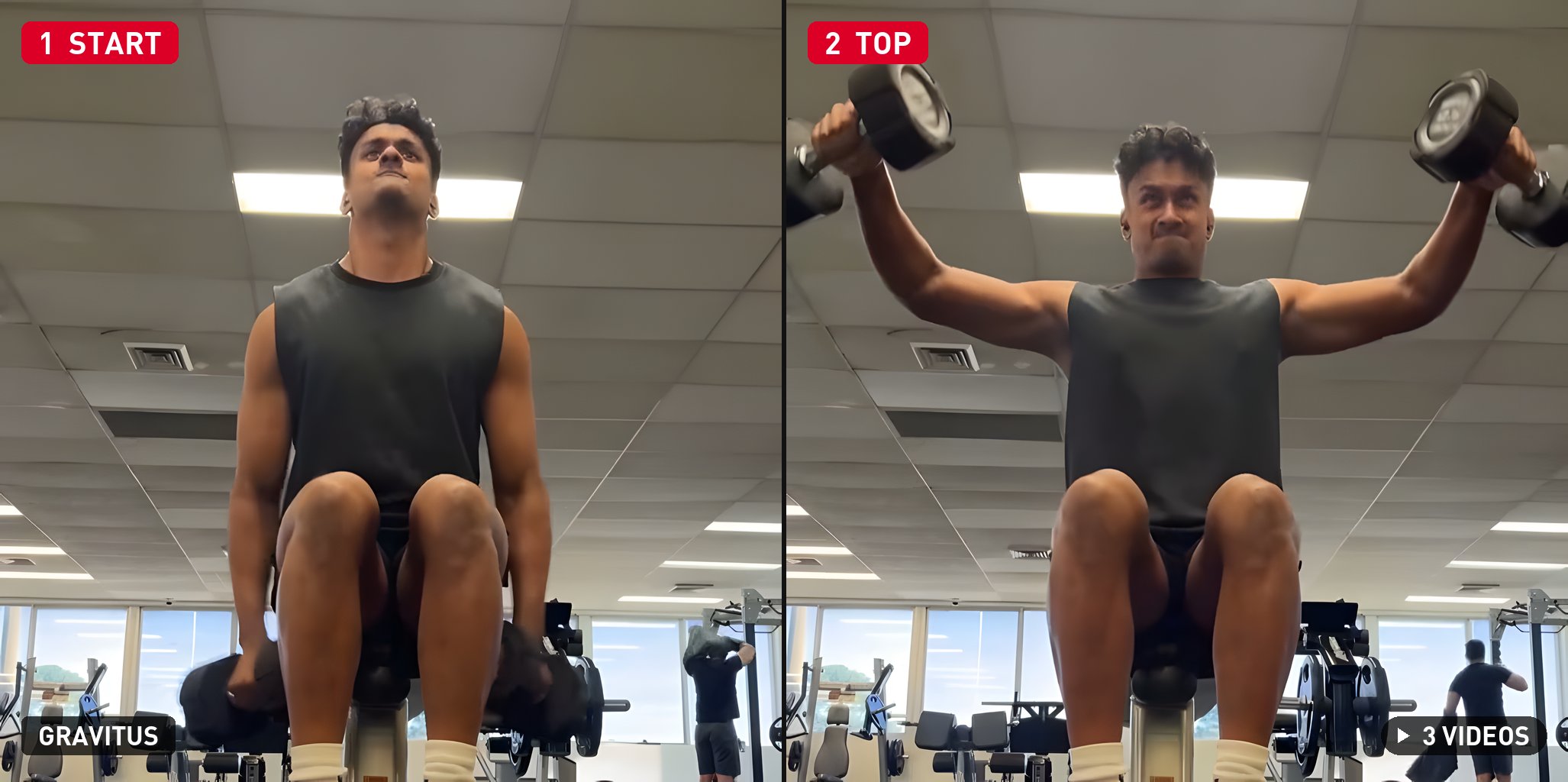
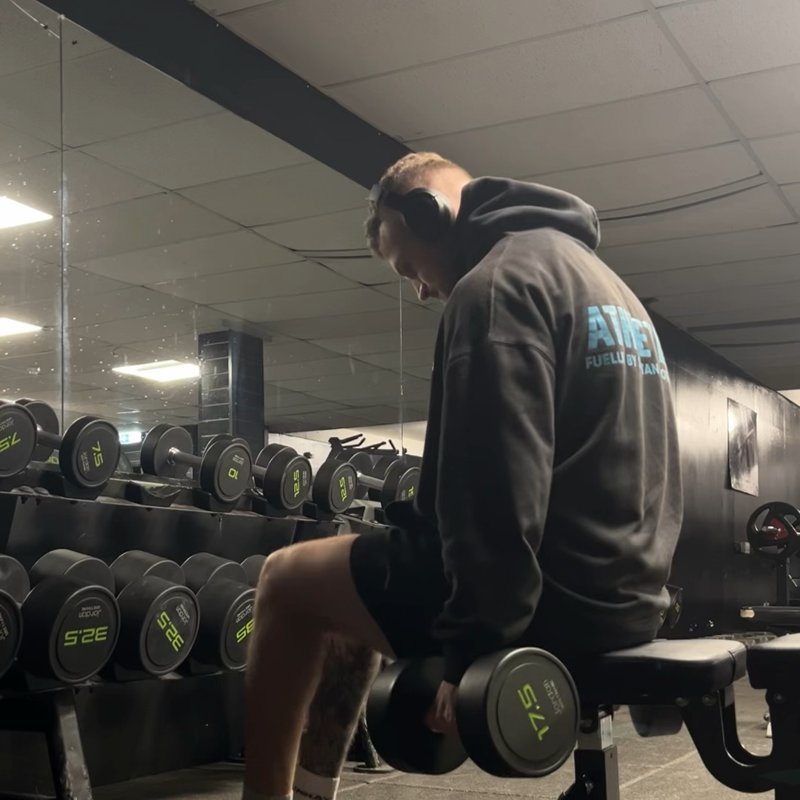
- 1Start. Sit tall on the end of a bench, feet flat, with a dumbbell hanging at each side and your palms facing in.
- 2Top. Keep your torso still and raise your arms out to the sides until your elbows reach shoulder height, then lower over 2 to 3 seconds.
Watch 3 video demonstrations
How to do a seated lateral raise
- Sit on the end of a flat bench, or on an adjustable bench with the back pad set upright. Plant your feet flat, hip-width apart.
- Start one dumbbell size lighter than you use standing. Let the dumbbells hang beside the bench, palms facing in, with a slight bend in your elbows.
- Brace your abs and sit tall. On a back pad, keep your upper back against it for the whole set.
- Raise your arms out to the sides, leading with your elbows, until your hands reach shoulder height. Your palms face the floor at the top, thumbs forward.
- Lower over 2 to 3 seconds until the dumbbells hang beside the bench again. Start the next rep without resting them on the seat.
Seated vs standing: how much less can you lift?
Most lifters raise about 83% as much seated as standing. We compared the best estimated max of 4,600+ men and 590+ women who log both the seated and the standing dumbbell lateral raise in Gravitus (Sep 2026). The median man's seated max was 83% of his standing max, and the median woman's was 80%. 7 in 10 lifters log less seated. Among lifters whose two bests came within 90 days of each other, the median was 86%.
The gap grows with the weight. Lifters with a standing max under 30 lb (12.5 kg) raise 93% as much seated, and lifters at 45 lb (20 kg) or more raise 75%. Heavier standing raises get more help from the hips and legs, and the bench takes that help away. If you raise 25 lb (12.5 kg) dumbbells for 10 standing, start seated with 20 lb (10 kg).
Pressing works the other way. In one study, men's dumbbell shoulder press max was 10% lower standing than seated (Saeterbakken 2013). A seat steadies a press, while in a raise it removes the swing. These figures compare each lifter's best logged set on each lift, converted to a one-rep max with the Brzycki formula.
Average seated lateral raise weight
On Gravitus, the median man lifts 25 lb (11 kg) per dumbbell for 10 reps on the seated lateral raise, and the median woman 17.5 lb (8 kg).
- Most lift
- 20 to 30 lb
- Top 10% lift
- 45 lb or more
- Starting out
- under 20 lb
- Most lift
- 15 to 25 lb
- Top 10% lift
- 40 lb or more
- Starting out
- under 15 lb
- Most lift
- 9 to 14 kg
- Top 10% lift
- 20 kg or more
- Starting out
- under 9 kg
- Most lift
- 7 to 11 kg
- Top 10% lift
- 18 kg or more
- Starting out
- under 7 kg
Muscles worked
Which seat to use
The bench blocks the last few inches at the bottom of the rep, where your arms would hang straight down. You lose almost nothing there, because a dumbbell barely loads your side delt until your arm moves out from your side, as the dumbbell lateral raise resistance chart shows.
Seated lateral raise myths
Four claims about the seated version that most guides repeat, including our old one:
- Sitting gives constant tension. The seat changes nothing about the dumbbell. It still pulls straight down, so the rep has no load with your arms at your sides and is hardest at shoulder height, seated or standing.
- The seat lets you lift more because you are more stable. That holds for presses, where men's dumbbell press max was 10% higher seated (Saeterbakken 2013). In a raise, the seat takes away help from your legs, and Gravitus lifters raise a median of 83% of their standing weight.
- You cannot cheat sitting down. You can. Leaning back, rocking forward or bouncing the dumbbells off the seat still starts the rep for you. An upright back pad stops the lean.
- Pour the water at the top. The EMG study behind most lateral raise advice tested seated raises. Tipping the thumbs down raised upper trap activity, and the side delt worked hardest with the palm facing the floor (Coratella 2020).
Seated vs standing vs machine lateral raise
| Attribute | Seated | Standing | Machine |
|---|---|---|---|
| Leg and hip help | None | Possible, and more as the weight goes up | None |
| Torso swing | Possible without a back pad | Possible | Blocked by the pads |
| Weight | 83% of standing, in Gravitus logs | Heavier than seated | Not comparable between machines |
| Hardest point | Shoulder height | Shoulder height | Set by the cam |
| Best for | Strict sets, late in a workout | Training anywhere, no bench needed | Stable sets to failure |
Same lift, same resistance curve. We found no study comparing seated and standing raises for growth, so sit when your standing reps start to swing, and stand when they stay strict. See the dumbbell lateral raise for how high to raise and the lateral raise machine for the pad-guided version.
Sets, reps and progression
Stop each set 0 to 2 reps short of failure. Sets taken close to failure build muscle across a wide range of reps (Schoenfeld 2021), so pick a range you can keep strict, usually 10 to 20.
The seat helps most at the end of a workout, when tired lifters start to swing. Do your standing raises first and finish with seated sets, or sit for all of them. Add reps before weight: when every set reaches the top of your range, move up one dumbbell size and drop back to the bottom of the range.
Common mistakes
-
Using your standing weightMost lifters raise less seated. Start one dumbbell size lighter and work up.
-
Leaning back to start the repYour torso lifts the weight. Sit against an upright back pad, or go lighter.
-
Resting the dumbbells on the seatEach rep gets a break at the bottom. Stop just above the bench and go straight into the next rep.
-
Slumping forwardA forward lean turns the raise toward your rear delts. Sit tall with your chest up.
-
ShruggingYour upper traps take over. Keep your shoulders down, away from your ears.
-
Tipping the thumbs downMore upper trap, not more side delt (Coratella 2020). Keep your palms facing the floor at the top.
Seated lateral raise variations
Questions people ask
Is seated lateral raise better than standing?
Not for the side delt itself. The dumbbell loads it the same way in both, and no study has compared them for growth. Seated is stricter because your legs cannot help. Standing lets you use more weight. Sit if your standing reps swing.
Can you lift more weight on lateral raises seated or standing?
Standing. Among 5,000+ Gravitus lifters who log both, the median seated max was 83% of the same lifter's standing max, and 7 in 10 lifted less seated. The gap is bigger for lifters with heavier standing raises.
Can I do lateral raises while sitting?
Yes. Sit on the end of a flat bench or against an upright back pad, feet flat, and raise the dumbbells out to shoulder height. Start one dumbbell size lighter than you use standing.
Should I use a back rest or sit on the edge of the bench for seated lateral raises?
Either. The end of a flat bench leaves the dumbbells room to hang. An upright back pad stops you leaning back to start the rep, so use it if your torso moves.
Why are seated lateral raises so hard?
The seat takes away the help your hips and legs give you standing, so your side delts lift the whole weight. That is why most lifters use lighter dumbbells seated.
What muscles does the seated lateral raise work?
The side delts, with the front delts, supraspinatus and upper traps helping. Your core and forearms hold you still. Your legs do nothing.
How much weight should I use for seated lateral raises?
For 10 reps, the median on Gravitus is 25 lb (11 kg) per dumbbell for men and 17.5 lb (8 kg) for women. The strongest quarter lifts 30 lb (14 kg) and 25 lb (11 kg) or more.
Log every set and see your percentile on every lift, seated lateral raise included.
Get Gravitus