How to Do a Single-Leg Press
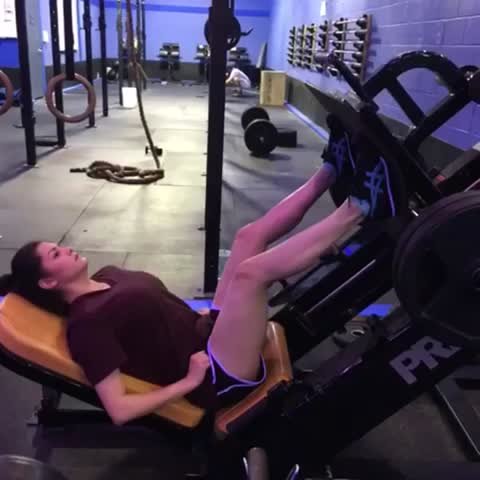
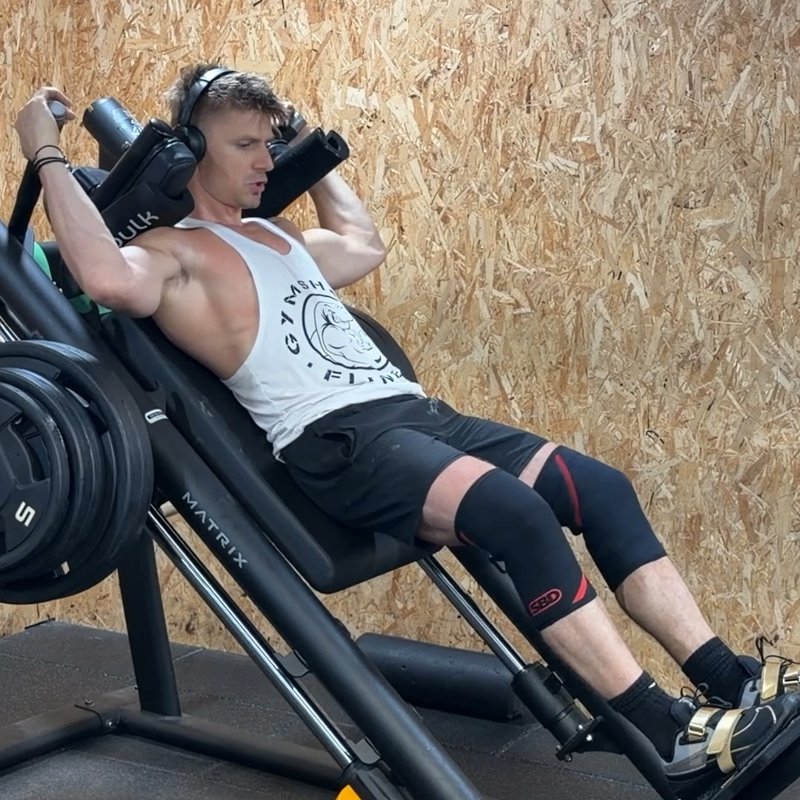
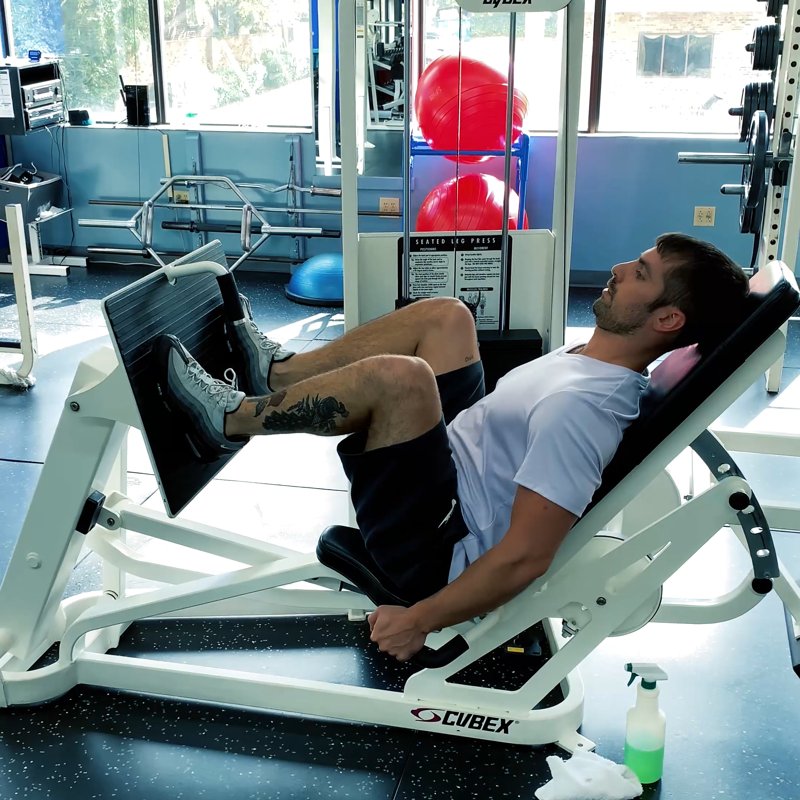
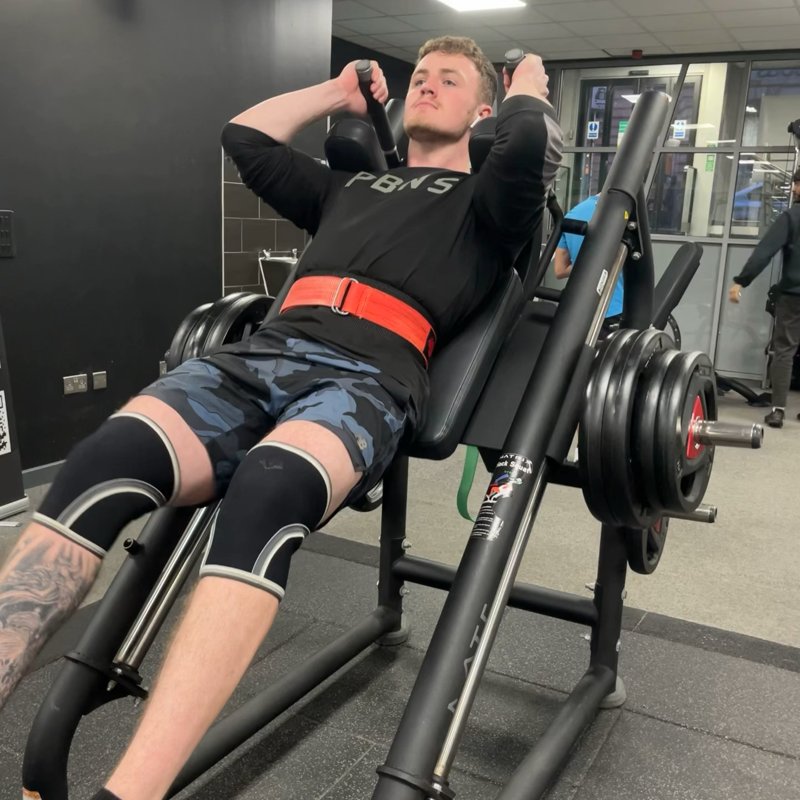
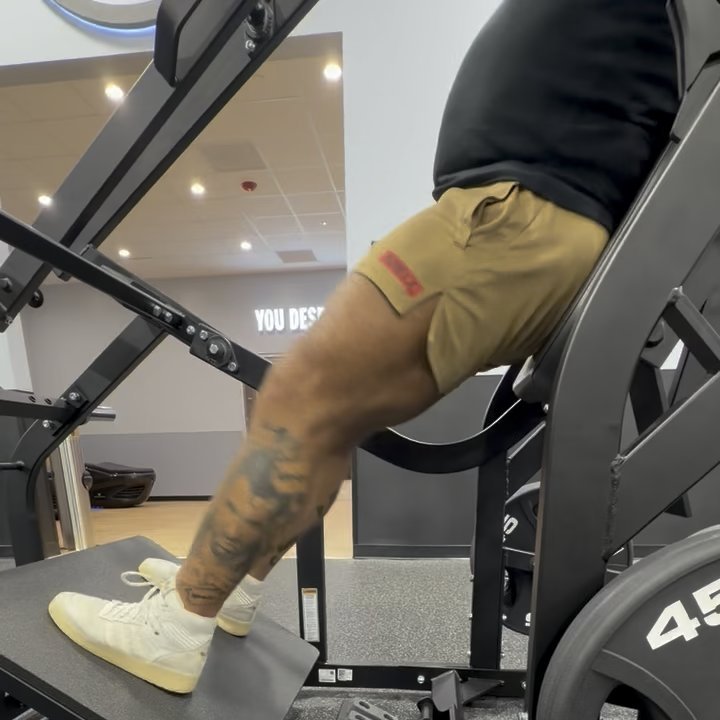
A single-leg press is a leg press done one leg at a time. Put one foot in the middle of the platform, in line with your hip, and lower until your knee passes 90 degrees, stopping before your hip curls off the pad. It trains the quads, glutes and adductors of each leg on their own. Most lifters do 3 sets of 8 to 12 reps per leg.
How to do a single-leg press
- Load less than you think you need, and set the safety stops just below the bottom of your rep if they adjust. Sit with your back and hips flat on the pad.
- Put both feet on the platform, press it up an inch and release the safety handles.
- Move your working foot to the middle of the platform, in line with your hip, toes turned out slightly. Take the other foot off and rest it on the frame or the floor.
- Lower over 2 seconds with your knee tracking over your toes, until your knee passes 90 degrees or just before your hip starts to curl off the pad.
- Drive through your whole foot until your leg is almost straight. After the last rep, put both feet back on the platform and lock the sled before you switch legs.
Single leg press foot placement
No study has tested foot placement on the single-leg press, so these come from two-leg presses. Low feet drew more quad activity and high feet more glute activity in heavy sets (Da Silva 2008). Foot angle changed nothing, and foot height did not change the forces on the knee (Escamilla 2001). Start in the middle, then move your foot lower for quads as far as your heel stays flat.
How deep to go on a single-leg press
Lower until your knee passes 90 degrees, and stop the moment your hip starts to curl up off the pad, whichever comes first.
You do not need extreme depth for the quads. In 23 trained lifters, single-leg presses to about 100 degrees of knee bend grew the quads as much as presses as deep as each lifter could go, over 8 weeks of 4 sets to failure twice a week (Larsen 2025). Deeper reps do more for the glutes and adductors, which grew 2 to 3 times as much from full squats as from half squats (Kubo 2019).
Stop an inch higher, or move your foot a little wider so your thigh passes beside your ribs instead of into them. Past that point your pelvis tucks under and your lower back rounds while it holds the sled.
How much weight should you single-leg press?
On Gravitus, the median man lifts 145 lb (65 kg) per leg for 10 reps on the single-leg press, and the median woman 90 lb (40 kg).
- Most lift
- 95 to 200 lb
- Top 10% lift
- 265 lb or more
- Starting out
- under 95 lb
- Most lift
- 60 to 130 lb
- Top 10% lift
- 180 lb or more
- Starting out
- under 60 lb
- Most lift
- 42.5 to 90 kg
- Top 10% lift
- 120 kg or more
- Starting out
- under 42.5 kg
- Most lift
- 27.5 to 60 kg
- Top 10% lift
- 82.5 kg or more
- Starting out
- under 27.5 kg
Single-leg press weight vs your two-leg press
Do not just halve your two-leg number. In a leg press study, two legs pressing together lifted about 12% less than the two legs' one-leg maxes added up (Magnus 2008). That gap shrinks with practice: untrained people showed it and trained weightlifters showed the opposite (Howard 1991). Strength follows what you train, so one-leg training raises one-leg strength most and two-leg training two-leg strength most (Kassiano 2025).
On a plate-loaded sled the sled counts too. One leg pushes the whole sled, so if you log only the plates, your one-leg number looks smaller than the work it is.
For your first session, try about a third of your usual two-leg plates on each leg, then let the reps decide. Log each leg as its own weight, and never double it to compare.
Muscles worked
Single-leg press vs leg press vs Bulgarian split squat
| Attribute | Single-leg press | Leg press | Bulgarian split squat |
|---|---|---|---|
| Weight you log | One leg | Both legs | One dumbbell per hand |
| Balance needed | None | None | Moderate |
| Shows a side gap | Yes | No | Yes |
| Load on the spine | Little, you sit | Little, you sit | Low, weights at your sides |
| Best for | Evening out sides, hard one-leg sets | Most leg volume, fastest | Whole leg plus balance |
Pick by goal, not by muscle growth. Over 10 weeks in untrained men, single-leg and two-leg leg press training raised the two-leg press the same, 14.7% and 13.4%, and the single-leg group gained more single-leg strength (Sato 2026). In adolescent rugby players, 5 weeks of single-leg presses raised the one-leg 5-rep max 20.2% against 12.4% for two-leg presses (Zhao 2023).
Sets, reps and progression
Stop each set 1 to 2 reps short of failure. Sets taken close to failure build muscle across a wide range of reps (Schoenfeld 2021). In the trained-lifter study, 4 sets per leg to failure, twice a week, grew the quads in 8 weeks (Larsen 2025).
Start each round with your weaker leg and match its reps on the other side. Add reps first. When both legs reach 12 at the same depth, add 10 lb (5 kg) and go back to 8.
Common mistakes
-
Foot in the center of the platformYour knee angles across your body. Set your foot in line with your hip so it pushes straight.
-
Hip curling off the padYour lower back rounds at the bottom. Stop just above that point, or move your foot a little wider.
-
Knee caving inKeep your knee over your middle toes. Go lighter if it still drifts in.
-
Resting foot helpingKeep the other foot on the frame or the floor, off the platform.
-
Switching legs on an unlocked sledPut both feet back on the platform and turn the safety handles in before you change legs.
-
Stronger leg firstIt sets a target the weaker leg cannot match. Start every round with the weaker leg.
Single-leg press variations
Questions people ask
Where should your foot be on a single leg press?
In the middle of the platform, in line with your hip, toes turned out slightly. Move it lower for more quads and higher for more glutes (Da Silva 2008). Foot angle does not change the muscles (Escamilla 2001).
What are the benefits of the single leg press?
Each leg does its own work, so a weaker side cannot hide behind the stronger one. It builds as much muscle as two-leg training (Kassiano 2025) and more single-leg strength (Sato 2026). Your back is supported and there is nothing to balance, so you can push each leg close to failure. If one leg is hurt, training the other makes the resting leg stronger too, by 16.4% on average in leg studies (Manca 2017).
Is the single leg press better than the leg press?
Not for muscle size. One-limb and two-limb training grew muscle the same (Kassiano 2025), and both raised the two-leg press the same in a 10-week trial (Sato 2026). Use one leg to see and close a gap between sides, two legs to get more work done.
Is single leg press weight per leg? Should I double it?
Log what one leg pushes and compare it only with your own one-leg log. Doubling it does not give your two-leg number: two legs together pressed about 12% less than two single legs added up in one study (Magnus 2008), and one leg pushes the whole sled.
How deep should you go on a single leg press?
Until your knee passes 90 degrees, stopping before your hip curls off the pad. In trained lifters, single-leg presses to about 100 degrees grew the quads as much as the deepest reps each could do (Larsen 2025).
What muscles does the single leg press work?
Mainly the quads and glutes of the working leg, with the adductors helping. The glute medius keeps your knee in line, and the other leg rests.
How much weight should I single-leg press?
For 10 reps, the median on Gravitus is 145 lb (65 kg) per leg for men and 90 lb (40 kg) for women. The strongest quarter lifts 200 lb (90 kg) and 130 lb (60 kg) or more.
Log every set and see your percentile on every lift, single-leg press included.
Get GravitusRelated exercises
- Da Silva et al. 2008. J Strength Cond Res 22(4):1059-1065.
- Escamilla et al. 2001. Med Sci Sports Exerc 33(9):1552-1566.
- Larsen et al. 2025. J Sports Sci 43(10):986-994.
- Kubo et al. 2019. Eur J Appl Physiol 119(9):1933-1942.
- Magnus and Farthing 2008. Appl Physiol Nutr Metab 33(6):1132-1139.
- Howard and Enoka 1991. J Appl Physiol 70(1):306-316.
- Kassiano et al. 2025. Sports Med 55(4):923-936.
- Sato et al. 2026. J Strength Cond Res 40(9):1035-1042.
- Zhao et al. 2023. J Hum Kinet 86:235-246.
- Manca et al. 2017. Eur J Appl Physiol 117(11):2335-2354.
- Schoenfeld et al. 2021. Sports 9(2):32.