How to Squat With a Barbell
A barbell back squat is a squat with the bar across your upper back. Brace your trunk, keep the bar over the middle of your feet and bend your hips and knees together until your hip crease drops below your knees. It trains the quads, glutes and adductors. Most lifters do 3 to 5 sets of 5 to 10 reps.
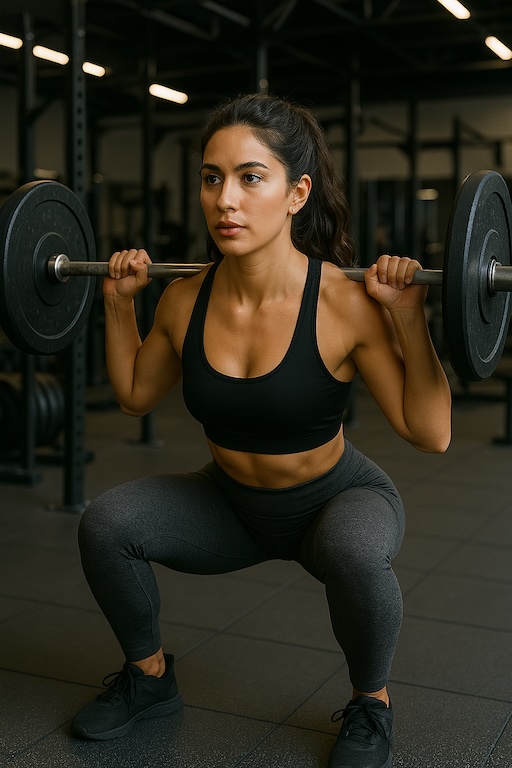
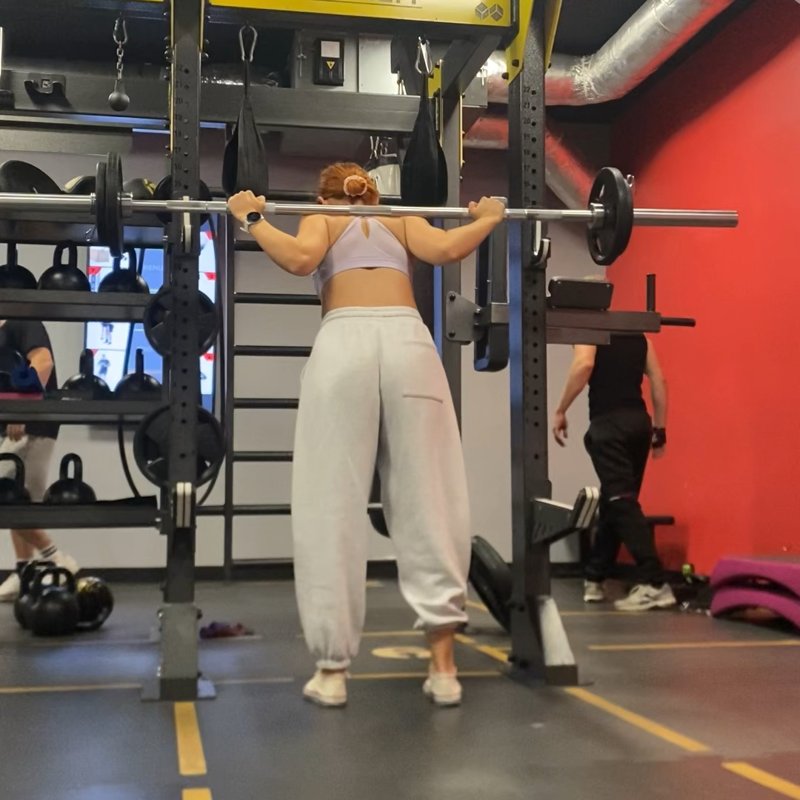
- 1Start. Bar across your upper back, hands just outside your shoulders, feet about shoulder-width with toes turned out slightly. Take a big breath and brace before every rep.
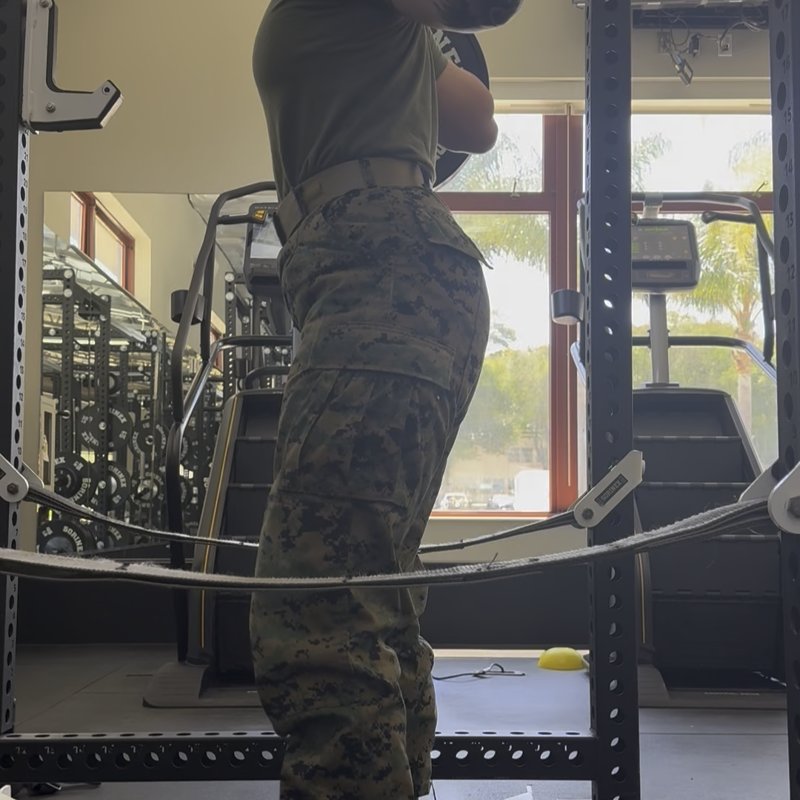
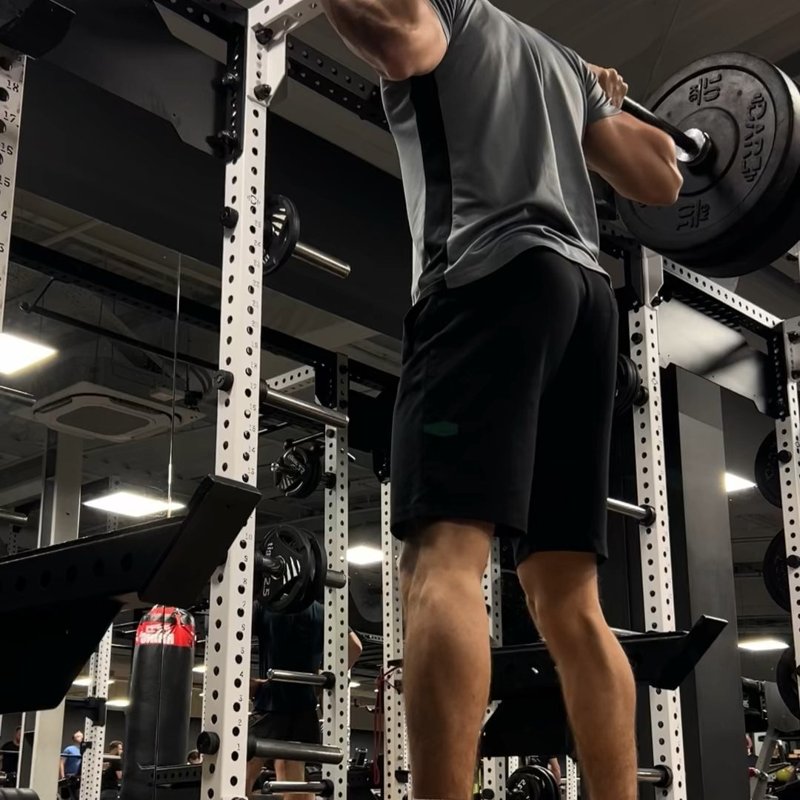
- 2Bottom. Bend your hips and knees together, keeping the bar over the middle of your feet, until your hip crease is below your knees. Then drive up through your whole foot.
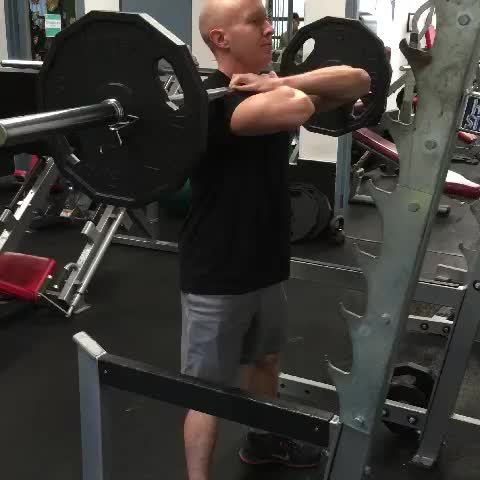
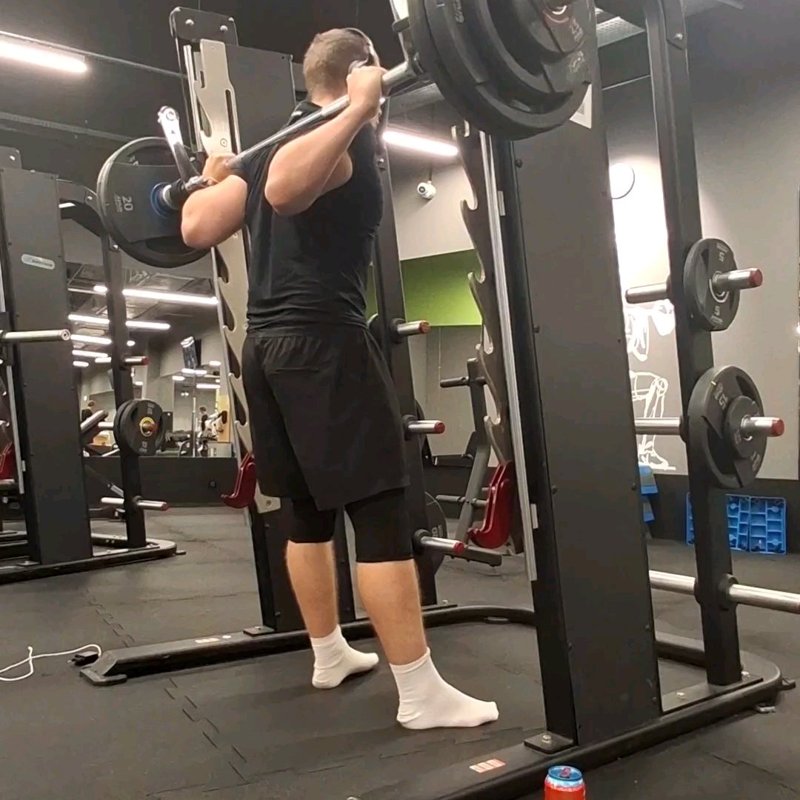
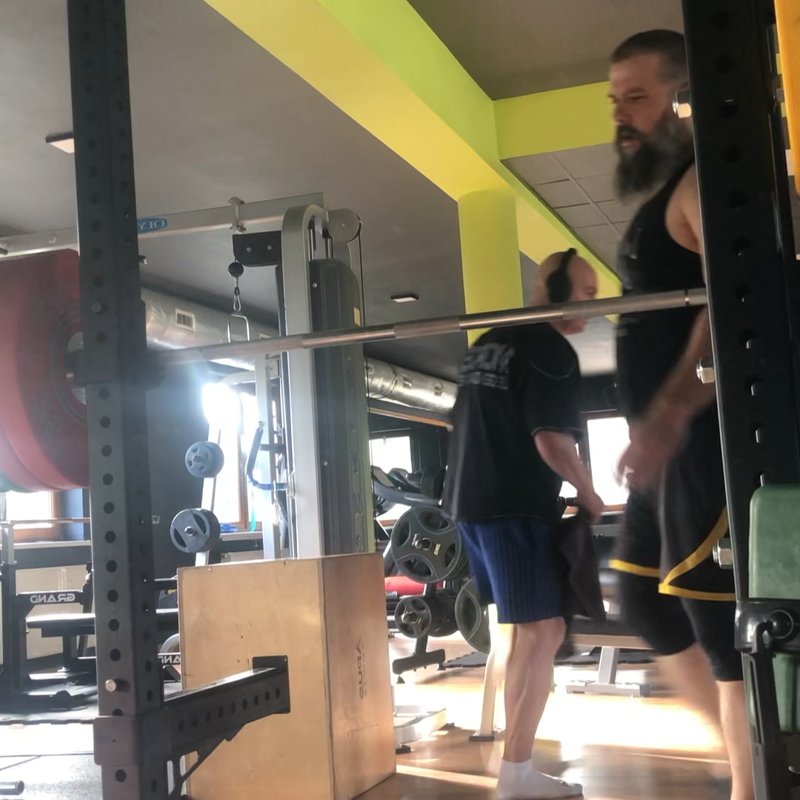
Watch 3 video demonstrations
Find more video demonstrations in the Gravitus app
How to squat with a barbell
- Set the bar in the rack at mid-chest height and the safety pins just below the bottom of your squat.
- Step under the bar and rest it on your upper traps (high bar) or a few inches lower, across your rear delts (low bar). Grip it just outside your shoulders and pull your elbows down.
- Stand up to lift the bar off the hooks, take two or three steps back and set your feet about shoulder-width apart, toes turned out slightly.
- Take a big breath into your belly, brace your abs as if about to be punched and hold that breath.
- Bend your hips and knees at the same time. Let your knees travel forward and out over your toes, keep the bar over your mid-foot and go down until your hip crease is below your knees.
- Drive up through your whole foot, with your hips and shoulders rising together. Breathe out at the top, then take a new breath before the next rep.
High bar vs low bar squat: what changes
| Attribute | High bar | Low bar | Front squat |
|---|---|---|---|
| Bar sits | On your upper traps | On your rear delts, 2 to 3 inches lower | On your front delts |
| Torso | Fairly upright | Leans forward more | Most upright |
| Weight you can lift | Baseline | About 4.5% more | Less |
| Quads | More at the same weight | A little less, or the same | Same as a back squat |
| Glutes and hamstrings | Less | More in powerlifters | Same as a back squat |
| Best for | Most lifters, quads, depth | Lifting the most weight | Upright torso, easier on the knees |
Squat high bar unless you want the biggest possible number. The bar has to stay over your mid-foot, so a lower bar means more forward lean, and more lean moves work from the knees to the hips (Straub 2021). Recreational lifters lifted 4.2 kg (9 lb) more for 3 reps with a low bar (Kristiansen 2021). At the same weight, high bar drew more quad activity (van den Tillaar 2020); in powerlifters it drew 17 to 25% less glute activity on the way down (Murawa 2020). The front squat recruited the legs as much as the back squat with less force on the knee (Gullett 2009).
How deep to squat
Squat until your hip crease is below the top of your knees, as long as your heels stay flat and your lower back does not tuck under. That is the powerlifting depth standard.
Depth grows more muscle. Over 12 weeks, deep squats to 120 degrees of knee bend grew the front of the thigh 4 to 7% more than shallow squats to 60 degrees (Bloomquist 2013). Over 10 weeks, full squats and half squats grew the quads by the same amount, but full squats grew the glutes 6.7% vs 2.2% and the adductors 6.2% vs 2.7%. Full squat training also raised the full squat max 32%, against 11% for half squat training (Kubo 2019).
Deep squats are not bad for healthy knees. A review of over 160 papers found that stress behind the kneecap peaks around 90 degrees and falls as the knee bends further, and that half and quarter squats with heavier loads are the bigger long-term risk to the knees and spine (Hartmann 2013).
Your knees will travel past your toes at the bottom, and that is fine. In a barbell squat study, stopping the knees at the toes cut knee torque by 22% but raised hip torque more than tenfold, from 28 to 303 Nm (Fry 2003).
Squat stance
Stance width changes the glutes and adductors, not the quads. With narrow, shoulder-width and wide stances, quad activity changed only with load (McCaw 1999), and across three widths only the glutes rose, at the widest stance (Paoli 2009). Pick the stance where your heels stay down and you reach full depth.
Breathing, belts and safety pins
Breathe in at the top, brace and hold your breath through the hardest part of the rep. Holding a breath against a braced trunk (the Valsalva maneuver) raises the pressure inside your abdomen, which helps keep your spine rigid under the bar. It also raises blood pressure briefly, and a review found the health risks of doing it during lifting unconfirmed (Hackett 2013).
A belt is optional. It gives your abs something to push against. Use it for your heaviest sets of 1 to 5. At 90% of their max, lifters squatted faster with a belt, with the same muscle activity and joint angles as without one (Zink 2001). Learn to brace without it first.
Squat inside a rack with the safety pins set just below your lowest point. If you miss a rep, sit down onto the pins and step out from under the bar.
Stop 2 or more reps short of failure, or have a spotter stand behind you with their arms under yours.
How much weight should you squat?
On Gravitus, the median man lifts 190 lb (85 kg) for 10 reps on the back squat, and the median woman 105 lb (47.5 kg).
- Most lift
- 150 to 230 lb
- Top 10% lift
- 275 lb or more
- Starting out
- under 150 lb
- Most lift
- 75 to 130 lb
- Top 10% lift
- 160 lb or more
- Starting out
- under 75 lb
- Most lift
- 67.5 to 105 kg
- Top 10% lift
- 125 kg or more
- Starting out
- under 67.5 kg
- Most lift
- 32.5 to 60 kg
- Top 10% lift
- 72.5 kg or more
- Starting out
- under 32.5 kg
Squat muscles worked
Squat advice that does not hold up
- "Keep your knees behind your toes." Holding them back cut knee torque by 22% but raised hip torque more than tenfold (Fry 2003). Holding them back moves the load onto your hips and lower back.
- "Push your hips back first, as if sitting in a chair." The bar has to stay over your mid-foot, so if your hips go back first your chest tips forward to stay balanced. Bend your hips and knees at the same time.
- "Drive through your heels." Push through your whole foot. Rocking onto your heels moves the bar behind your mid-foot, and rocking onto your toes moves it in front.
- "Deep squats are bad for your knees." Stress behind the kneecap peaks around 90 degrees of knee bend and falls as you go deeper (Hartmann 2013).
- "A narrow stance hits the outer quads, a wide stance the inner quads." Stance width did not change quad activity in either study that tested it (McCaw 1999, Paoli 2009).
- "Squats build your hamstrings." They steady the knee, but 10 weeks of full or half squats did not grow them (Kubo 2019). Add a Romanian deadlift or a leg curl for the hamstrings.
Back squat vs front squat vs leg press
| Attribute | Back squat | Front squat | Leg press |
|---|---|---|---|
| Where the load sits | On your upper back | On your front delts | On a sled, back on a pad |
| Trunk work | High | High | Low |
| Knee force | More than a front squat | Less than a back squat | Rises with depth |
| What limits the weight | Legs, hips, bracing | Upper back, staying upright | Legs only |
| Best for | Heaviest free-weight loads | Quads with an upright torso | Leg volume without balancing |
All three build the legs. The front squat recruited the muscles as well as the back squat with less compressive force on the knee (Gullett 2009). Over 8 weeks, full squats on a machine and with a barbell grew the quads within 2% of each other (Hernández-Belmonte 2023). Train the back squat if you want a bigger back squat. The front squat vs back squat and squat vs leg press comparisons go further.
Sets, reps and progression
Squat once to three times a week, first in a leg or lower-body workout. Stop each set 1 to 3 reps short of failure, and further from it without safety pins or a spotter. Sets taken close to failure build muscle across a wide range of reps (Schoenfeld 2021), so heavy 5s and lighter 10s both work.
Add reps first. When every set reaches the top of your range at full depth, add 5 to 10 lb (2.5 to 5 kg) and go back to the bottom of the range. To see how your max compares with lifters your bodyweight, sex and age, use the squat standards or the average squat page.
Common mistakes
-
Bar on your neckThe bar sits on bone and rolls. Rest it on the muscle of your upper traps, or lower on your rear delts for a low bar.
-
Hips shooting up firstYour legs straighten first and your lower back lifts the weight. Drive your upper back into the bar so hips and shoulders rise together, and go lighter until they do.
-
Knees caving inPush your knees out over your toes on the way up. Go lighter if they still drift in.
-
Heels liftingYour ankles run out of bend and the bar drifts forward. Widen your stance a little or raise your heels on squat shoes or a small plate.
-
Stopping above parallelHalf squats grow the glutes and adductors less than full ones. Go until your hip crease is below your knees.
-
Squatting heavy without safetiesA missed rep has nowhere to go. Set the safety pins just below your lowest point before the first set.
Squat variations
Questions people ask
What muscles does the barbell squat work?
Mainly the quads and glutes, with the adductors helping at the bottom. Your spinal erectors and abs hold your torso rigid, and the hamstrings and calves steady the knee and ankle. The hamstrings work but did not grow from squat training (Kubo 2019).
How deep should I squat?
Until your hip crease is below the top of your knees, as long as your heels stay flat and your lower back does not tuck under. Deep squats grew the thighs more than shallow ones (Bloomquist 2013), and full squats grew the glutes three times as much as half squats (Kubo 2019).
Is it bad if your knees go past your toes when squatting?
No. Your knees have to travel forward for you to squat deep with the bar over your mid-foot. Holding them behind your toes cut knee torque by 22% but raised hip torque more than tenfold (Fry 2003).
Is it ok to lean forward when squatting?
Yes, some. Your torso leans enough to keep the bar over your mid-foot, which is more with a low bar and long legs. A forward lean moves work from your knees to your hips (Straub 2021). Leaning more as you stand up, with your hips rising first, is the mistake to fix.
High bar vs low bar squat: which is better?
High bar for most lifters, low bar to lift the most weight. Recreational lifters lifted about 4.5% more for 3 reps with a low bar (Kristiansen 2021). At the same weight, high bar drew more quad activity (van den Tillaar 2020).
Should I wear a belt when squatting?
For heavy sets, if you want to. At 90% of their max, lifters squatted faster with a belt with the same muscle activity (Zink 2001). Learn to brace without one first, and use it for your heaviest sets of 1 to 5.
Do squats make my butt bigger?
Yes, if you squat deep. Over 10 weeks, full squats grew the glutes 6.7% and half squats 2.2% (Kubo 2019). A wider stance adds glute activity (Paoli 2009).
How much weight should I squat?
For 10 reps, the median on Gravitus is 190 lb (85 kg) for men and 105 lb (47.5 kg) for women. The strongest quarter lifts 230 lb (105 kg) and 130 lb (60 kg) or more.
Log every set and see your percentile on every lift, back squat included.
Get GravitusRelated exercises
- Straub et al. 2021. J Sport Rehabil 30(6):899-904.
- Kristiansen et al. 2021. Int J Environ Res Public Health 18(16):8351.
- van den Tillaar, Knutli and Larsen 2020. Front Sports Act Living 2:604177.
- Murawa et al. 2020. PeerJ 8:e9256.
- Gullett et al. 2009. J Strength Cond Res 23(1):284-292.
- Bloomquist et al. 2013. Eur J Appl Physiol 113(8):2133-2142.
- Kubo et al. 2019. Eur J Appl Physiol 119(9):1933-1942.
- Hartmann, Wirth and Klusemann 2013. Sports Med 43(10):993-1008.
- Fry et al. 2003. J Strength Cond Res 17(4):629-633.
- McCaw and Melrose 1999. Med Sci Sports Exerc 31(3):428-436.
- Paoli et al. 2009. J Strength Cond Res 23(1):246-250.
- Hackett and Chow 2013. J Strength Cond Res 27(8):2338-2345.
- Zink et al. 2001. J Strength Cond Res 15(2):235-240.
- Clark et al. 2019. J Strength Cond Res 33(7S):S60-S69.
- Escamilla et al. 1998. Med Sci Sports Exerc 30(4):556-569.
- Hernández-Belmonte et al. 2023. Med Sci Sports Exerc 55(12):2316-2327.
- Schoenfeld et al. 2021. Sports 9(2):32.