How to Do a Dumbbell Shoulder Press
A dumbbell shoulder press is an overhead press with a dumbbell in each hand. Sit on an upright bench, start with the dumbbells at shoulder height and press up until your arms are straight. It trains the front delts, with the side delts, triceps and upper chest helping. Most lifters do 3 to 4 sets of 8 to 12 reps.
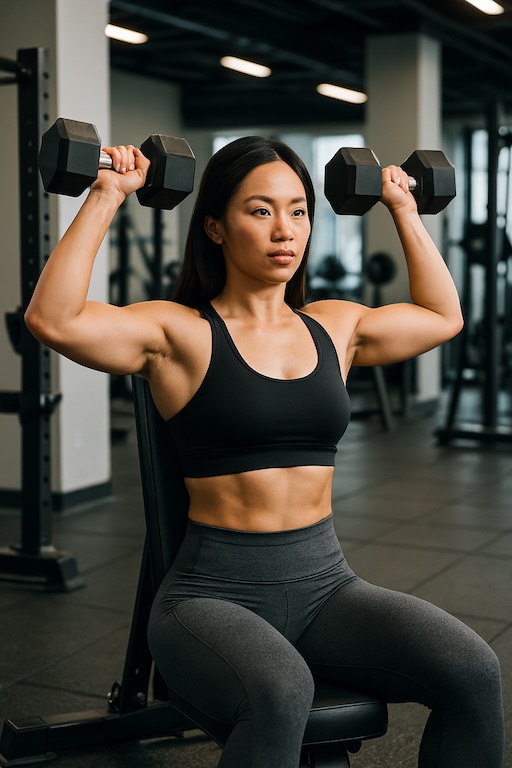
- 1Start. Back on a near-upright bench, dumbbells at shoulder height, elbows just below your shoulders and slightly in front of your body.
- 2Top. Press until your arms are straight over your shoulders, then lower the dumbbells back to shoulder height under control.
Watch 3 video demonstrations
Find more video demonstrations in the Gravitus app
How to do a dumbbell shoulder press
- Set an adjustable bench upright or one notch back. Sit with a dumbbell standing on each thigh, just above your knees.
- Kick one knee up to lift that dumbbell to your shoulder, then the other. Sit back with your back and head on the pad.
- Hold the dumbbells at shoulder height, palms forward or turned partway in, with your elbows slightly in front of your body and your wrists stacked over your elbows. Plant your feet and brace your abs.
- Press the dumbbells up and slightly in until your arms are straight over your shoulders. Let your shoulder blades rise and rotate with your arms at the top.
- Lower over 2 to 3 seconds until the dumbbells are back at shoulder height. After the last rep, bring them down to your thighs before you stand up.
Neutral grip or palms forward?
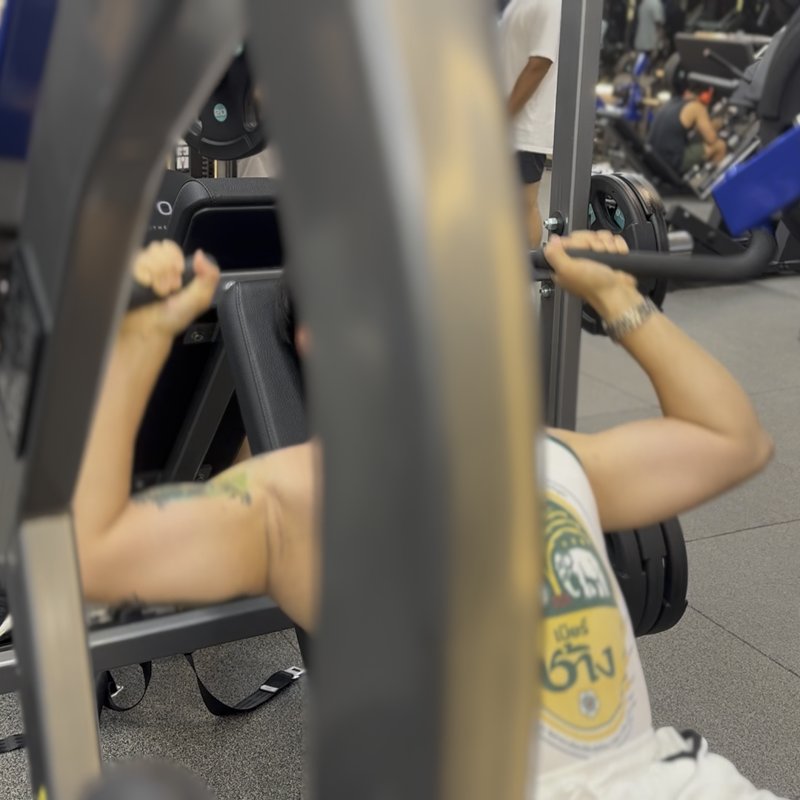
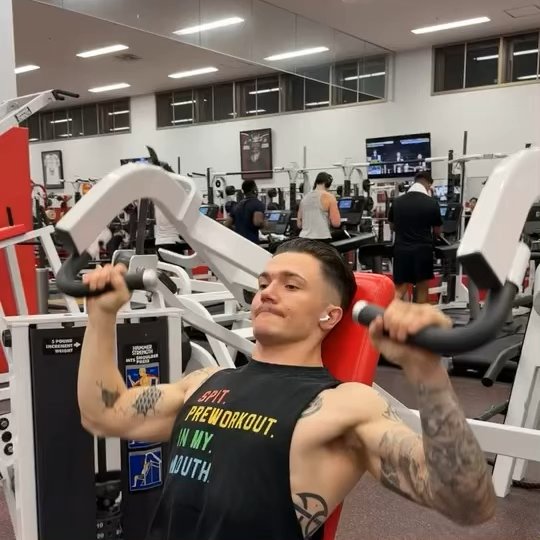
We found no study comparing grips on the dumbbell shoulder press. On a machine, a neutral press in front of the face drew more upper chest activity and a wide overhand press behind the head drew more side and rear delt (Coratella 2022), but the two presses also followed different paths. Pick the grip that feels best on your shoulders, and keep your elbows slightly in front of your body with any of them.
Bench angle: upright or one notch back
Seated is the usual choice. The backrest takes your legs and lower back out of the lift, so you can move more weight: men pressed 10% less with dumbbells standing than seated (Saeterbakken 2013). Standing makes the shoulders work harder at the same relative load. In the same study, seated dumbbell presses drew 15% less side delt and 24% less rear delt activity than standing ones.
How low should you go?
Lower the dumbbells to shoulder height, with the handles about level with your chin and your elbows just below your shoulders. Dumbbells can go lower than a barbell, which stops at your chin, so go as deep as your shoulders stay comfortable. Stopping at ear or forehead height cuts off the bottom of the rep.
At the top, press until your arms are straight. In a seated military press study, pressing to straight arms drew more delt, trap and triceps activity than stopping with the elbows bent at 90 or 135 degrees (Paoli 2010). Let the dumbbells come in over your head at the top, but do not knock them together.
Full reps: dumbbells down to shoulder height, arms straight at the top, 2 to 3 seconds on the way down.
How much weight should you dumbbell shoulder press?
On Gravitus, the median man lifts 50 lb (22.5 kg) per dumbbell for 10 reps on the dumbbell shoulder press, and the median woman 25 lb (11 kg).
- Most lift
- 37.5 to 60 lb
- Top 10% lift
- 75 lb or more
- Starting out
- under 37.5 lb
- Most lift
- 20 to 32.5 lb
- Top 10% lift
- 45 lb or more
- Starting out
- under 20 lb
- Most lift
- 17 to 27.5 kg
- Top 10% lift
- 35 kg or more
- Starting out
- under 17 kg
- Most lift
- 9 to 15 kg
- Top 10% lift
- 20 kg or more
- Starting out
- under 9 kg
Dumbbell vs barbell shoulder press: how the weights compare
Each dumbbell is about 55% of your barbell overhead press, so the pair adds up to a little more than the bar. We compared the best estimated max of 12,000+ men and 2,500+ women who log both lifts in Gravitus (Sep 2026). The median man's dumbbell max, per hand, was 55% of his barbell max, and the median woman's was 56%. A 100 lb (45 kg) barbell press predicts dumbbells of about 55 lb (25 kg) each for one rep.
That is a bigger share than on the bench press, where each dumbbell is about 40% of the bar. Position explains most of it. In a lab, standing dumbbell presses were 7% lighter than a standing barbell press and 10% lighter than seated dumbbell presses (Saeterbakken 2013). Most lifters press dumbbells seated and the barbell standing, which puts the pair ahead in the logs.
Dumbbell shoulder press muscles worked
Should you keep your shoulders down and stop short of lockout?
No to both. As your arms go overhead, your collarbones rise and your shoulder blades rotate up and tilt back (Ludewig 2009). That movement makes room for the arm, so pinning your shoulders down and back through the whole rep works against it. What to avoid is shrugging before the press starts, with your shoulders up by your ears at the bottom.
Stopping short of straight arms to "keep tension" does not help either. Pressing to straight arms drew more delt, trap and triceps activity than stopping with the elbows bent (Paoli 2010).
Three other claims that do not hold up:
- A neutral grip prevents impingement. No study has shown that. A neutral grip brings your elbows forward, which most people find more comfortable. If palms forward feels fine, keep using it.
- The pec minor helps you press. It pulls the shoulder blade forward and down, the opposite of what the shoulder blade does as your arms go overhead.
- Dumbbells build bigger shoulders than a barbell. Dumbbells drew more front delt activity (Saeterbakken 2013), but activity is not growth, and we found no training study comparing the two for shoulder size. Choose the press you can keep adding weight to.
Dumbbell shoulder press vs barbell overhead press vs shoulder press machine
| Attribute | Dumbbell shoulder press | Barbell overhead press | Shoulder press machine |
|---|---|---|---|
| Path | You choose it | Curves back around your face | Set by the machine |
| Balance needed | Most, each arm alone | Some, one free bar | Least |
| Weight jumps | 5 lb (2.5 kg) per hand | 2.5 lb (1.25 kg) or less | One pin |
| Best for | Range of motion, one arm at a time | Free-weight pressing strength | Sets close to failure, drop sets |
A tie for growth: free weights and machines build muscle equally, but strength carries over best to the equipment you train on (Haugen 2023). Use dumbbells if one side is weaker or a bar bothers your shoulders, and a barbell if you want a bigger barbell press.
Sets, rep range and progression
Stop each set 0 to 2 reps short of failure. Sets taken close to failure build muscle across a wide range of reps (Schoenfeld 2021), so anything from 6 to 15 works. 8 to 12 keeps the dumbbells light enough to get into position safely.
Dumbbell jumps are big: going up one pair, from 30 to 35 lb (12.5 to 15 kg), adds 17 to 20%. Add reps first. When every set reaches 12 clean reps, move up one pair and drop back to 8. The press works the front delts most, so pair it with lateral raises for the side delts and a rear delt exercise.
Common mistakes
-
Arching off the padYour chest takes over and it becomes an incline press. Brace your abs and keep your back and head on the pad.
-
Elbows flared straight outThe front of the shoulder takes the strain. Bring your elbows slightly in front of your body, or turn your palms partway in.
-
Stopping at your earsThe bottom of the rep is gone. Lower until the dumbbells are back at shoulder height.
-
Shrugging before you pressYour traps start the rep and your neck tightens. Start with your shoulders relaxed and let them rise only as your arms go up.
-
Knocking the dumbbells togetherThe dumbbells swing off line and you lose control at the top. Bring them in over your head until they almost touch.
Dumbbell shoulder press variations
Questions people ask
What muscles does dumbbell shoulder press work?
The front delts most, with the side delts, triceps and upper chest helping. Pressing standing makes your core, side delts and rear delts work harder (Saeterbakken 2013).
Seated vs standing dumbbell shoulder press?
Seated for most people. Men pressed 10% more weight seated, while standing drew more side and rear delt activity (Saeterbakken 2013). Press seated to load the shoulders heavy, and standing if you also want core work.
Is the dumbbell shoulder press better than the barbell overhead press?
Neither is better for growth. Dumbbells drew more front delt activity and let each arm work alone, while a barbell drew more triceps activity (Saeterbakken 2013) and takes smaller weight jumps. In Gravitus logs, each dumbbell is about 55% of a lifter's barbell press.
How to get dumbbells up for shoulder press?
Sit with a dumbbell standing on each thigh, just above your knees. Kick one knee up to lift that dumbbell to your shoulder, then the other, and sit back against the pad. With heavy dumbbells, kick both up together as you sit back.
Should I use a neutral grip or palms forward on dumbbell shoulder press?
Either works. A neutral grip brings your elbows forward, which most shoulders find more comfortable, while palms forward lets the elbows go wider. We found no study comparing the two on dumbbells, so use the one that feels best and keep your elbows slightly in front of your body.
How low should you go on dumbbell shoulder press?
Down to shoulder height, with the handles about level with your chin and your elbows just below your shoulders. Go deeper only if your shoulders stay comfortable. Stopping at ear height cuts off the bottom of the rep.
How much weight should I dumbbell shoulder press?
For 10 reps, the median on Gravitus is 50 lb (22.5 kg) per dumbbell for men and 25 lb (11 kg) for women. The strongest quarter lifts 60 lb (27.5 kg) and 32.5 lb (15 kg) or more.
Log every set and see your percentile on every lift, dumbbell shoulder press included.
Get GravitusRelated exercises
- Saeterbakken and Fimland 2013. J Strength Cond Res 27(7):1824-1831.
- Paoli, Marcolin and Petrone 2010. J Strength Cond Res 24(6):1578-1583.
- Coratella et al. 2022. Front Physiol 13:825880.
- Ludewig et al. 2009. J Bone Joint Surg Am 91(2):378-389.
- Haugen et al. 2023. BMC Sports Sci Med Rehabil 15:103.
- Schoenfeld et al. 2021. Sports 9(2):32.