How to Do the Arnold Press
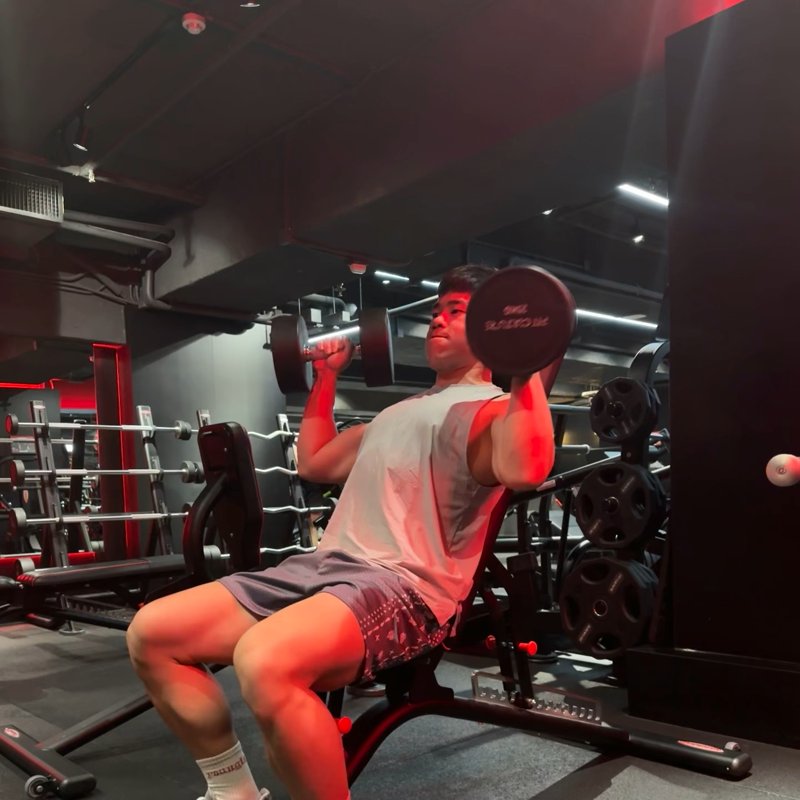
The Arnold press is a dumbbell shoulder press with a turn. Start with the dumbbells in front of your chin, palms facing you, then press them overhead while turning your palms forward. It trains the front delts most, with the side delts and triceps helping. Most lifters do 3 to 4 sets of 8 to 12 reps.
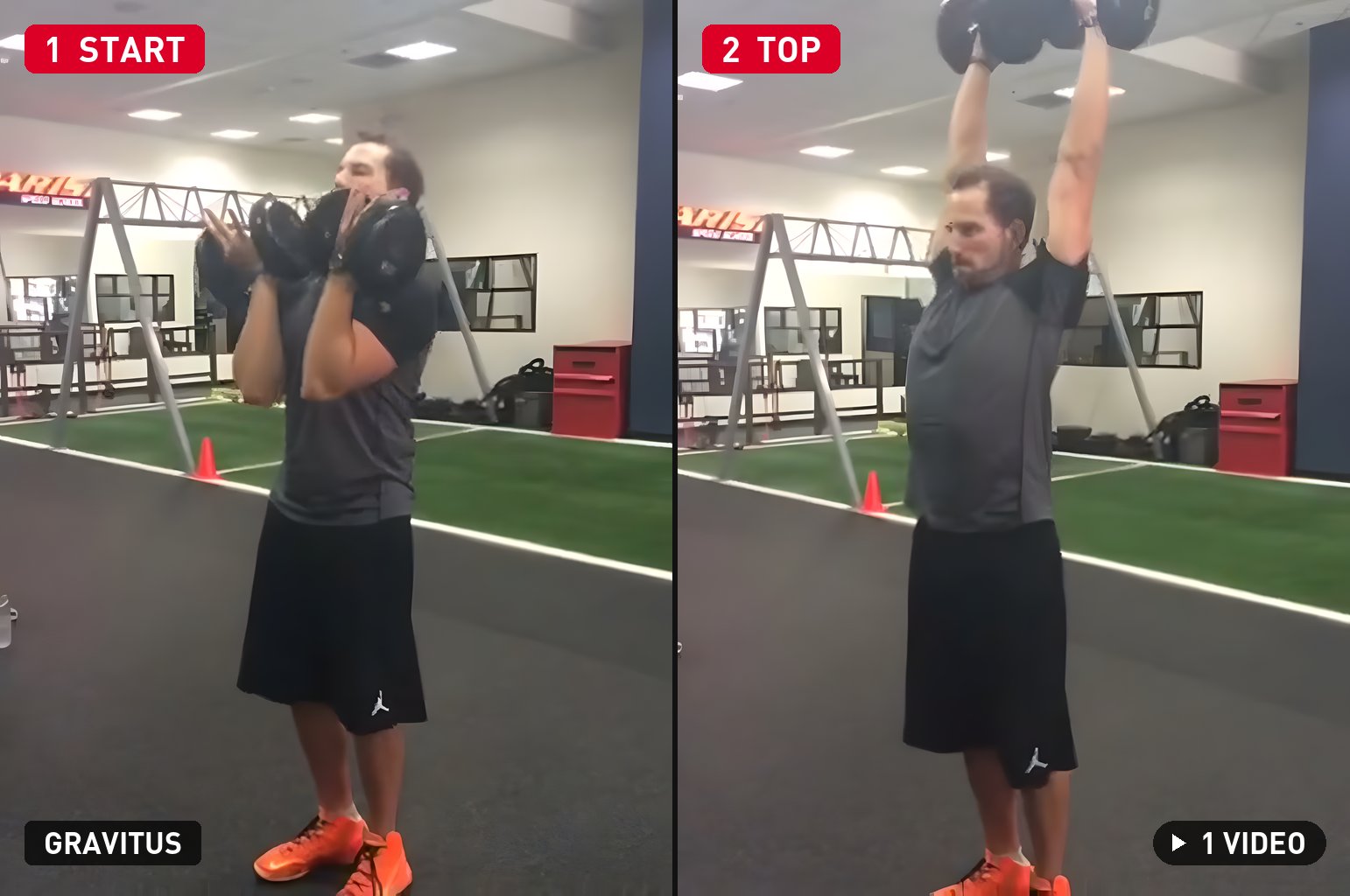
- 1Start. Dumbbells in front of your chin, palms facing you and elbows in front of your body, like the top of a curl.
- 2Top. Press up and turn your palms forward as you go, finishing with straight arms and palms facing away. Reverse the turn on the way down.
Watch 1 video demonstration
How to do an Arnold press
- Set an adjustable bench upright or one notch back. Sit with a dumbbell standing on each thigh, then kick them up one at a time to your shoulders.
- Hold the dumbbells in front of your chin, palms facing you and elbows pointing down, in front of your body. It looks like the top of a curl. Brace your abs and keep your back and head on the pad.
- Press the dumbbells up. As they rise, swing your elbows out to the sides and turn your palms forward. Press and turn in one smooth movement, not turn first and then press.
- Finish with your arms straight over your shoulders and your palms facing forward.
- Lower over 2 to 3 seconds and reverse the turn, so the dumbbells end in front of your chin with your palms facing you again.
Arnold press vs dumbbell shoulder press: how the weights compare
Expect to Arnold press about 25 to 30% less than you press on a standard dumbbell shoulder press. We compared the best estimated max of 2,700+ men and 650+ women who log both lifts in Gravitus (Sep 2026). The median man's Arnold press was 70% of his dumbbell shoulder press, and the median woman's was 75%. If you press 50 lb (22.5 kg) dumbbells for 10 reps, start the Arnold press with 35 lb (15 kg).
The spread is wide: the middle half of men landed between 57% and 83%. The rep starts lower, with your elbows in front of your body, and the turn takes control, so some lifters lose more weight to it than others. Find your own number with a light first set rather than copying your shoulder press weight.
How much weight should you Arnold press?
On Gravitus, the median man lifts 35 lb (16 kg) per dumbbell for 10 reps on the Arnold press, and the median woman 20 lb (9 kg).
- Most lift
- 30 to 45 lb
- Top 10% lift
- 55 lb or more
- Starting out
- under 30 lb
- Most lift
- 17.5 to 25 lb
- Top 10% lift
- 32.5 lb or more
- Starting out
- under 17.5 lb
- Most lift
- 14 to 20 kg
- Top 10% lift
- 25 kg or more
- Starting out
- under 14 kg
- Most lift
- 8 to 12 kg
- Top 10% lift
- 15 kg or more
- Starting out
- under 8 kg
Arnold press muscles worked
Does the Arnold press work all three delts?
Not in any useful way. Many guides say the turn brings in the rear delts, but no study has measured rear delt activity in an Arnold press. Swinging your elbows from in front of you out to the sides is a rear delt motion. The dumbbells pull straight down, though, so that sideways swing carries almost no load. In barbell presses, pressing in front of the face drew far less rear delt activity than pressing behind the neck (Coratella 2022). Train the rear delts with reverse flyes or face pulls.
The "29% more front delt" figure many sites quote comes from one study of 10 men (Raizada 2017). It found more front and side delt activity in the Arnold press than in a standard dumbbell press, 1,346 vs 1,043 microvolts for the front delt. The paper reports raw readings and does not say whether the two presses used the same weight. More activity is also not the same as more growth, and we found no training study comparing the two presses for shoulder size.
Two other claims that do not hold up:
- The Arnold press is dangerous. We found no study on injury risk. Use less weight than on your normal press, keep the turn smooth, and if it pinches, switch to a standard dumbbell press with your palms turned partway in.
- You should go as heavy as your shoulder press. Gravitus lifters Arnold press 25 to 30% less. Matching your shoulder press weight usually means a shortened, jerky turn.
Arnold press vs dumbbell shoulder press vs barbell overhead press
| Attribute | Arnold press | Dumbbell shoulder press | Barbell overhead press |
|---|---|---|---|
| Start position | Dumbbells in front of your chin, palms facing you | Dumbbells at shoulder height, palms forward or turned in | Bar on your front delts, hands just outside shoulder width |
| Weight | 25 to 30% less than a dumbbell press | Each dumbbell about 55% of your barbell press | The heaviest of the three |
| Weight jumps | 5 lb (2.5 kg) per hand | 5 lb (2.5 kg) per hand | 2.5 lb (1.25 kg) or less |
| Best for | Front delts, a longer range, variety | Heavier dumbbell pressing, one arm at a time | Pressing strength in small jumps |
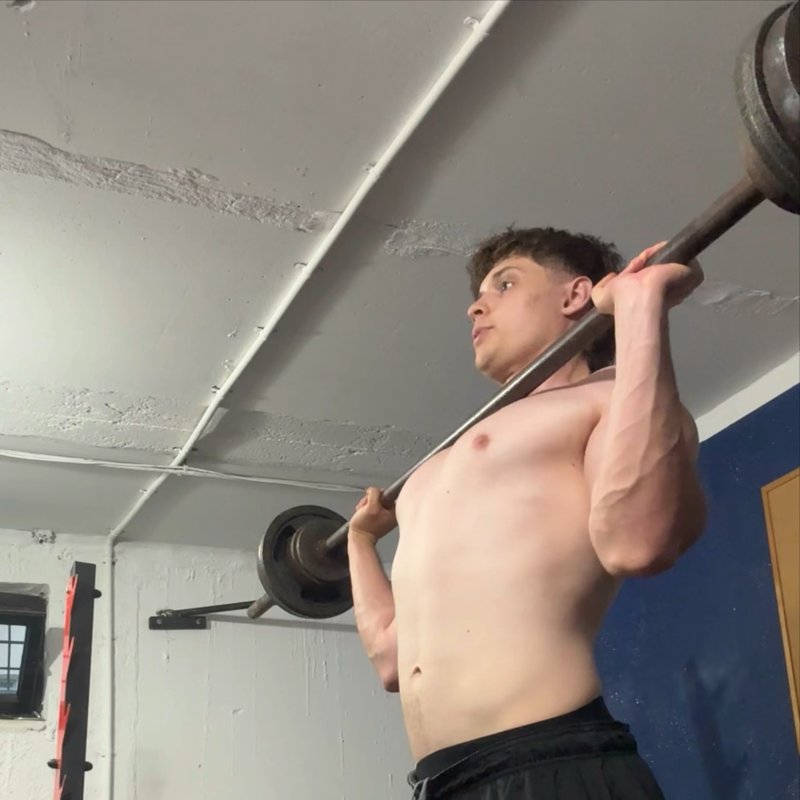
No study has compared them for growth. Dumbbells drew 11 to 15% more front delt activity than a barbell (Saeterbakken 2013), and the Arnold press drew more again in one small study (Raizada 2017). Use the Arnold press as a variation, or as your main press if the start position feels better on your shoulders.
Sets, rep range and progression
Stop each set 0 to 2 reps short of failure. Sets taken close to failure build muscle across a wide range of reps (Schoenfeld 2021), so anything from 6 to 15 works. 8 to 12 keeps the dumbbells light enough to control the turn.
Dumbbell jumps are big: going from 25 to 30 lb (10 to 12.5 kg) adds 20 to 25%. Add reps first. When every set reaches 12 clean reps, move up one pair and drop back to 8. Do the Arnold press in place of your dumbbell shoulder press, not on top of it, and pair it with lateral raises for the side delts.
Common mistakes
-
Turning first, then pressingThe turn happens at the bottom and the press becomes a normal shoulder press. Turn your palms gradually as the dumbbells rise.
-
Elbows flared out at the startIt turns into a standard shoulder press. Start with your elbows in front of your body and the dumbbells in front of your chin.
-
Going as heavy as your shoulder pressThe turn gets cut short and you lean back. Start at about 70% of your dumbbell shoulder press weight.
-
Arching off the padYour upper chest takes over. Brace your abs and keep your back and head on the pad.
-
Dropping the dumbbells on the way downHalf of the rep goes to waste. Lower over 2 to 3 seconds and reverse the turn all the way.
Arnold press variations and alternatives
Questions people ask
What muscles does the Arnold press work?
The front delts most, with the side delts, triceps and upper chest helping. The rotator cuff controls the turn, and your core holds you still, more so when you stand.
Is the Arnold press better than a shoulder press?
Not for growth, as far as the research shows. One small study found more front and side delt activity in the Arnold press (Raizada 2017), but no study has compared the two for shoulder size. Gravitus lifters Arnold press 25 to 30% less weight, so use it as a variation or if the start position suits your shoulders.
Does Arnold press work rear delts?
Very little. No study has measured it, and the dumbbells pull straight down, so the sideways swing of your elbows carries almost no load. Use reverse flyes or face pulls for the rear delts.
Is the Arnold press hard on the shoulders?
Not for most people. We found no study on injury risk. Start lighter than your normal press and keep the turn smooth. If the turn pinches, switch to a standard dumbbell press with your palms turned partway in.
Arnold press seated or standing?
Seated for most people, since the backrest keeps your shoulders doing the work. Standing takes about 10% off a dumbbell press and makes your core and rear delts work harder (Saeterbakken 2013).
Is Arnold press compound or isolation?
Compound. It moves both the shoulder and the elbow, and trains the delts, triceps and upper chest together.
How heavy should Arnold press be?
For 10 reps, the median on Gravitus is 35 lb (16 kg) per dumbbell for men and 20 lb (9 kg) for women. The strongest quarter lifts 45 lb (20 kg) and 25 lb (12 kg) or more.
Log every set and see your percentile on every lift, Arnold press included.
Get Gravitus