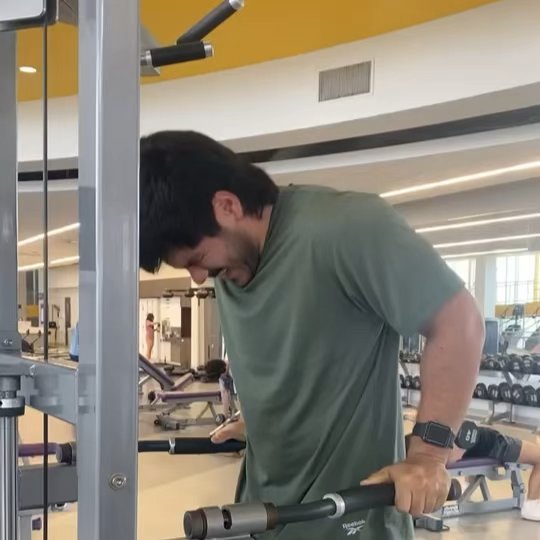
How to Use the Assisted Dip Machine
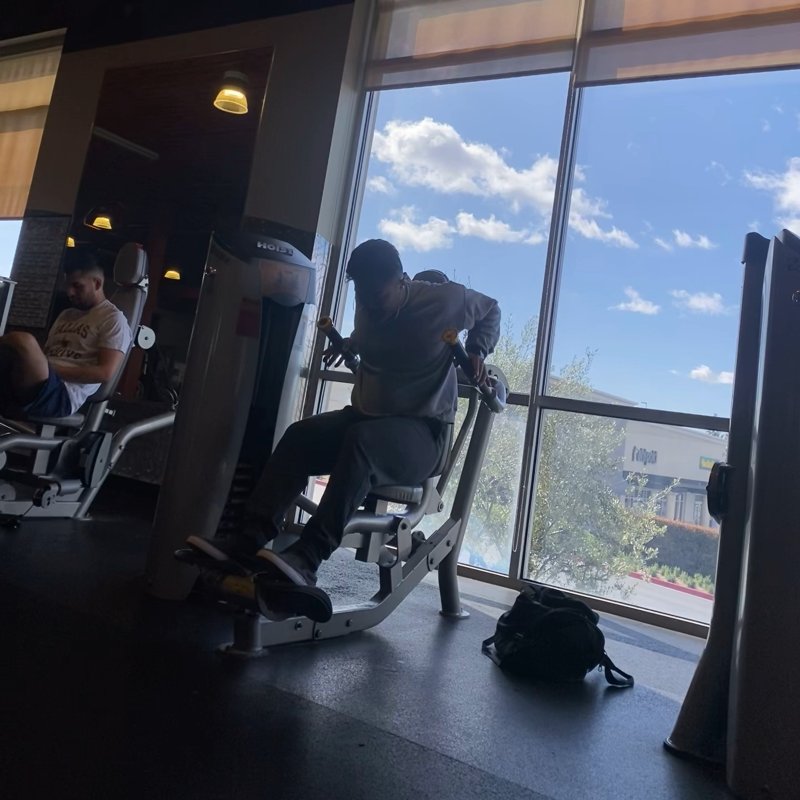
An assisted dip is a dip with help: a machine counterweight under your knees or feet carries part of your bodyweight. On the machine, more weight means more help. Lower from straight arms until your shoulders are level with your elbows, then press back up. It trains the triceps, chest and front delts. Most lifters do 3 to 4 sets of 8 to 12 reps.
Find more video demonstrations in the Gravitus app
How to use the assisted dip machine
- Set the pin. The weight you pick is help, so more weight makes the rep easier. Start near half your bodyweight.
- Climb onto the foot rests and grab the dip handles with your palms facing in. Put one knee on the pad at a time, or both feet on a standing platform, and push it down until it carries you at straight arms.
- Hold straight arms with your shoulders pulled down, away from your ears, and your chest tipped slightly forward.
- Bend your elbows and lower over 2 seconds, elbows travelling back rather than out. Stop when your shoulders are level with or just below your elbows.
- Press through your palms to straight arms. After the last rep, finish at the top and step back onto the foot rests while the pad is raised.
How much weight to use on the assisted dip machine
The number on an assisted dip machine is how much of your bodyweight it takes off, so the rep gets easier as the number goes up. What you press is your bodyweight minus the assistance. A 200 lb (90 kg) lifter with 50 lb (22.5 kg) of assistance presses 150 lb (67.5 kg), three quarters of their bodyweight.
Start near half your bodyweight, then move the pin until you get 8 to 12 reps to full depth with 1 or 2 left in the tank. Progress runs backwards from other lifts: the same reps with a lower number is a PR.
Machines differ in friction and design, and many combine the dip and pull-up stations, so a setting on one machine will not match another. Compare yourself to your own log on the same machine.
Write down the assistance and your bodyweight. Losing 5 lb (2.5 kg) of bodyweight has the same effect on the rep as taking 5 lb of assistance off.
Assisted dip weight chart by bodyweight
| Attribute | You lift | 130 lb (60 kg) lifter | 180 lb (80 kg) lifter |
|---|---|---|---|
| Assist 50% | Half your bodyweight | 65 lb (30 kg) | 90 lb (40 kg) |
| Assist 35% | Two thirds | 45 lb (20 kg) | 65 lb (27.5 kg) |
| Assist 20% | Four fifths | 25 lb (12.5 kg) | 35 lb (15 kg) |
| No assist | All of it | A full dip | A full dip |
When you can do 8 reps to full depth with assistance of 20% of your bodyweight. By the Brzycki formula, 8 reps with a load predicts a one-rep max about 1.24 times that load (Brzycki 1993). So 8 reps while lifting 80% of your bodyweight puts your one-rep max at about your bodyweight. No study has tested this cut-off on the dip itself, so treat it as a starting point.
From assisted to your first dip
The machine keeps the bar dip body position while taking weight off your arms. In 13 experienced men, the bar dip took the shoulder to 88% of its tested extension range, while the bench dip went past it, to 101% (McKenzie 2022a). That makes the assisted machine, not the bench dip, the gentler first step.
Muscles worked
Assisted dip machine vs band-assisted dip vs seated dip machine
| Attribute | Assisted dip machine | Band-assisted dip | Seated dip machine |
|---|---|---|---|
| Help through the rep | The same at every point | Most at the bottom, least at the top | None, you push a weight stack |
| Body position | Like a bar dip | Like a bar dip | Seated, handles move |
| Make it harder | Take a plate off | Use a thinner band | Add a plate |
| Tracking | A number on the stack | Band colors differ by brand | A number on the stack |
| Best for | Measurable progress toward a dip | Home gyms, the last step | Triceps work at any strength level |
Use the assisted machine when your goal is a bodyweight dip, because it keeps the bar dip position and gives you a number to beat. Use a band where there is no machine; it stretches most at the bottom, where the dip is hardest. Use the seated dip machine for triceps work that has nothing to do with lifting your own body.
Sets, reps and progression
Stop each set 1 to 2 reps short of failure, with every rep from straight arms to shoulders level with your elbows. Sets taken close to failure build muscle across a wide range of reps (Schoenfeld 2021).
If a first dip is your goal, train it 2 to 3 times a week. Take a plate off when every set reaches 12 reps, and go back to 8. If you want triceps and chest size rather than a bodyweight dip, keep the assistance that lets you finish 8 to 12 reps and treat it like any other press. Once you can do bodyweight dips, see the dip guide.
Common mistakes
-
Too much assistanceIf 15 reps feel easy, the machine is doing the work. Take a plate off.
-
Half repsLower until your shoulders reach elbow height on every rep. Plenty of assistance makes a full rep possible.
-
Sinking as deep as you canEven a bodyweight bar dip takes the shoulder close to its limit (McKenzie 2022a). Stop with your shoulders level with or just below your elbows.
-
Shrugging at the bottomPush the handles down and keep your neck long, so the front of your shoulder does not take the strain.
-
Pushing with your legsOn a standing platform it is easy to straighten your knees. Keep them still so your arms do the work.
-
Stepping off at the bottomThe pad springs up when your weight leaves it. Finish at the top and step off while the pad is raised.
Assisted dip variations and next steps
Questions people ask
Does more weight on the assisted dip machine make it easier or harder?
Easier. The weight is assistance, so more of it takes more of your bodyweight off. Progress means using less assistance for the same reps.
What weight should I use on the assisted dip machine?
Start near half your bodyweight, then adjust until you get 8 to 12 reps to full depth with 1 or 2 left. A 160 lb (72.5 kg) lifter would start near 80 lb (35 kg).
What are the benefits of assisted dips?
They let you train the full dip, triceps, chest and front delts together, before you can press your whole bodyweight. The number on the stack gives you a clear way to progress toward your first dip. They keep the bar dip position, which took the shoulder less far into extension than a bench dip (McKenzie 2022a).
Are assisted dips effective?
Yes, if you keep taking assistance off. They train the same muscles as a dip with a load you can lift for full reps. Test a real dip once you reach 8 reps with 20% assistance.
What muscles do assisted dips work?
Mainly the triceps and chest, with the front delts helping. The rotator cuff steadies the shoulder, and the forearms hold the handles.
How do I log assisted dips?
Log the assistance as the weight, along with reps and your bodyweight. A lower assistance number for the same reps is progress. What you lift is your bodyweight minus the assistance.
Log every set and see your percentile on every lift, assisted dip included.
Get Gravitus