How to Do the Incline Dumbbell Press
An incline dumbbell press is a chest press on a bench set between 15 and 45 degrees. Lower a dumbbell in each hand to your upper chest, then press both up. It trains the upper chest and front delts, with the triceps helping. Most lifters do 3 to 4 sets of 8 to 12 reps on a 30 degree bench.
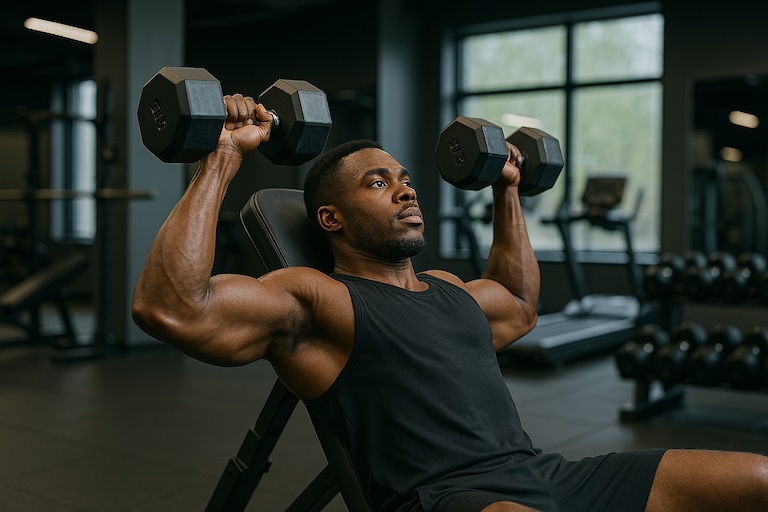
- 1Bottom. Dumbbells beside your upper chest, forearms vertical, shoulder blades pinned to the bench.
- 2Top. Press until your arms are straight over your upper chest, then lower over 2 to 3 seconds.
Watch 3 video demonstrations
Find more video demonstrations in the Gravitus app
How to do an incline dumbbell press
- Set the bench to 30 degrees. Sit with your back against the pad and a dumbbell standing on each thigh.
- Lie back and use your knees to kick the dumbbells up to your shoulders as your back reaches the pad.
- Plant your feet, pull your shoulder blades back and down, and press the dumbbells up over your upper chest, palms forward or turned slightly in.
- Lower over 2 to 3 seconds until the dumbbells sit beside your upper chest. Your elbows stay 45 to 60 degrees out from your sides, with your forearms vertical.
- Press back up until your arms are straight, without knocking the dumbbells together. After the last rep, bring them to your chest, lift your knees and sit up with the dumbbells on your thighs.
Bench angle: what 15, 30, 45 and 60 degrees change
The cards come from one barbell study that tested all five angles in 30 trained lifters at 60% of their max (Rodríguez-Ridao 2020). The weight figures are their one-rep maxes at each angle against flat. Upper chest activity at 15 and 30 degrees was the same, and at 45 degrees it was back to flat levels. Other studies disagree on where the upper chest peaks: 44 degrees on a Smith machine (Trebs 2010), and 30 and 45 degrees alike in the middle of the press (Lauver 2016). Every study agrees that the front delts do more and the middle and lower chest less as the bench rises. The only training study used 44 degrees: over 8 weeks, incline pressing grew the upper chest more than flat pressing (Chaves 2020). Set the bench anywhere from 15 to 45 degrees and keep it there, so your log compares like with like.
How much weight should you incline dumbbell press?
On Gravitus, the median man lifts 60 lb (27.5 kg) per dumbbell for 10 reps on the incline dumbbell press, and the median woman 27.5 lb (13 kg).
- Most lift
- 50 to 75 lb
- Top 10% lift
- 95 lb or more
- Starting out
- under 50 lb
- Most lift
- 22.5 to 37.5 lb
- Top 10% lift
- 50 lb or more
- Starting out
- under 22.5 lb
- Most lift
- 22.5 to 35 kg
- Top 10% lift
- 42.5 kg or more
- Starting out
- under 22.5 kg
- Most lift
- 10 to 17 kg
- Top 10% lift
- 22.5 kg or more
- Starting out
- under 10 kg
Incline dumbbell press muscles worked
Incline press claims the research does not back
- "30 degrees is proven best." It is a good default, not a proven optimum. In the five-angle study, 15 and 30 degrees gave the same upper chest activity, and 30 degrees was not significantly above flat (Rodríguez-Ridao 2020). Another study found the peak at 44 degrees (Trebs 2010).
- "Dumbbells work the chest harder because you have to stabilize them." Chest activity with dumbbells matched the barbell even though lifters used 17% less weight; the biceps worked harder and the triceps less (Saeterbakken 2011). One study found slightly more chest activity with dumbbells (Farias 2017). Neither measured growth.
- "Bring the dumbbells together at the top to squeeze the chest." Dumbbells are pulled straight down. With your arms vertical, touching them adds no load to the chest.
- "Incline pressing only works the upper chest." It trains the whole chest. The middle and lower chest just do less as the bench rises (Rodríguez-Ridao 2020).
Incline dumbbell press vs flat dumbbell press vs incline barbell press
| Attribute | Incline dumbbell press | Flat dumbbell press | Incline barbell press |
|---|---|---|---|
| Upper chest growth | More | Less | More |
| Weight you can lift | Least | More, flat is stronger | More, a bar is stronger |
| Triceps | Less | Less | More |
| Best for | Upper chest, one arm at a time | Whole chest | Heaviest loads, small jumps |
Use an incline press and a flat press in the same week. Over 8 weeks, incline pressing grew the upper chest more than flat pressing, with the same strength gains (Chaves 2020). Between dumbbells and a barbell, pick the one you can keep adding weight to.
Sets, reps and progression
Do incline dumbbell presses once or twice a week, first or second in a chest, push or upper-body workout. Stop each set 1 to 2 reps short of failure. Sets taken close to failure build muscle across a wide range of reps (Schoenfeld 2021), so pick a range you can keep strict.
Dumbbells usually go up 5 lb (2.5 kg) per hand, which is 10 lb (5 kg) more in total. Add reps first: when every set reaches 12, move up one dumbbell size and drop back to 8.
Common mistakes
-
Bench set too steepPast 45 degrees the upper chest does less and the front delts take over. Drop the bench a notch or two.
-
Elbows flared straight outThe front of the shoulder takes the strain. Keep your elbows 45 to 60 degrees from your sides.
-
Stopping short at the bottomThe chest is stretched and working hardest there. Lower until the dumbbells sit beside your upper chest.
-
Knocking the dumbbells togetherIt adds nothing for the chest and makes the dumbbells harder to control. Stop with them a few inches apart.
-
Hips lifting off the seatIt flattens the angle you set. Keep your glutes on the seat and your feet flat.
Incline dumbbell press variations
Questions people ask
What does incline dumbbell press work?
The chest, most of all its upper (clavicular) head, and the front delts, with the triceps helping. The rotator cuff and biceps keep the dumbbells steady.
What angle for incline dumbbell press?
15 to 30 degrees for most lifters. Upper chest activity was the same at both and fell off at 60 degrees, while the front delts did more at every step up (Rodríguez-Ridao 2020). A 45 degree bench still works if that is the notch your bench has.
Does incline press work front delts?
Yes. The front delts help at every angle and do more as the bench rises. At 45 and 60 degrees they were the most active muscle measured (Rodríguez-Ridao 2020).
Is incline dumbbell press better than incline barbell press?
Not for chest activity; it was the same with dumbbells and a barbell, with 17% less weight on the dumbbells (Saeterbakken 2011). The barbell loads heavier with smaller jumps. Dumbbells let each arm work alone and let your wrists turn to a comfortable angle.
How to spot incline dumbbell press?
Stand behind the bench and spot at the lifter's wrists, not the elbows. Pushing the elbows can tip the dumbbells toward the lifter's face. A spotter can also hand the dumbbells up at the start of a heavy set.
How much weight should I incline dumbbell press?
For 10 reps, the median on Gravitus is 60 lb (27.5 kg) per dumbbell for men and 27.5 lb (13 kg) for women. The strongest quarter lifts 75 lb (35 kg) and 37.5 lb (17 kg) or more.
Log every set and see your percentile on every lift, incline dumbbell press included.
Get GravitusRelated exercises
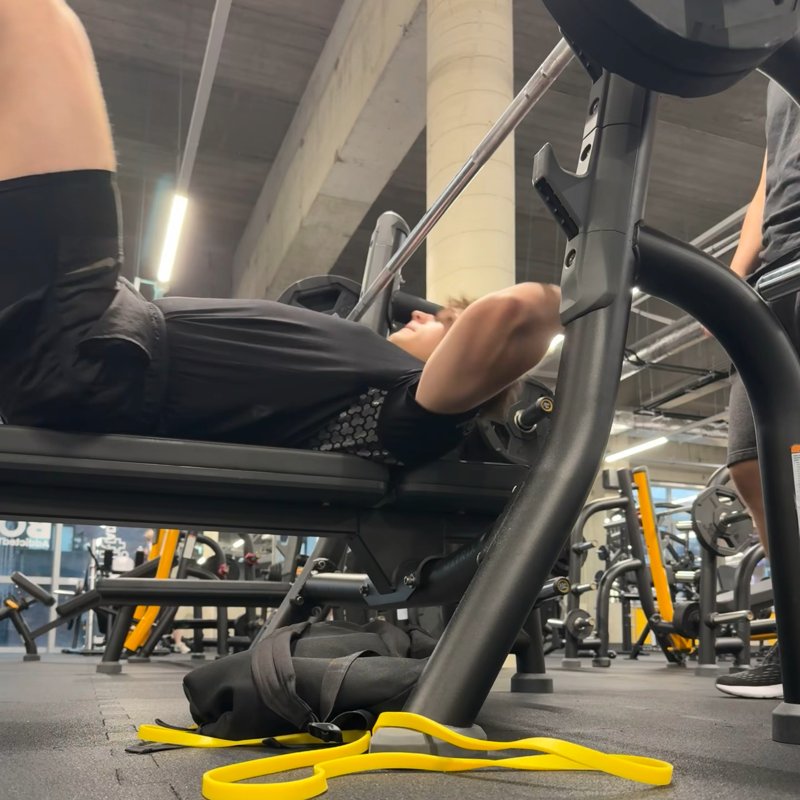 Bench PressAnterior deltoids, pectoralis major
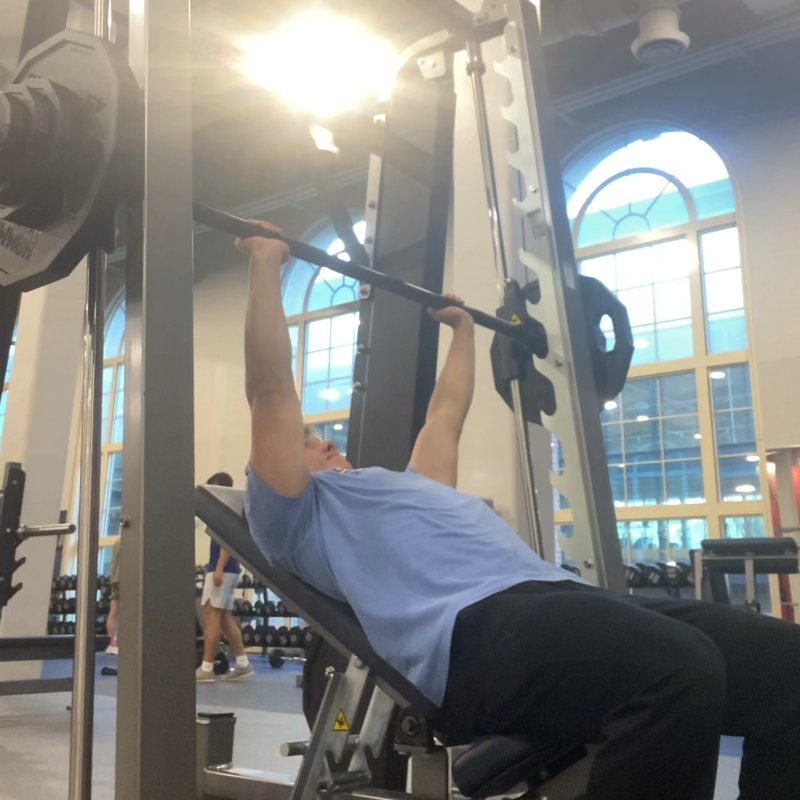 Smith Machine Incline Bench PressAnterior deltoids, pectoralis major
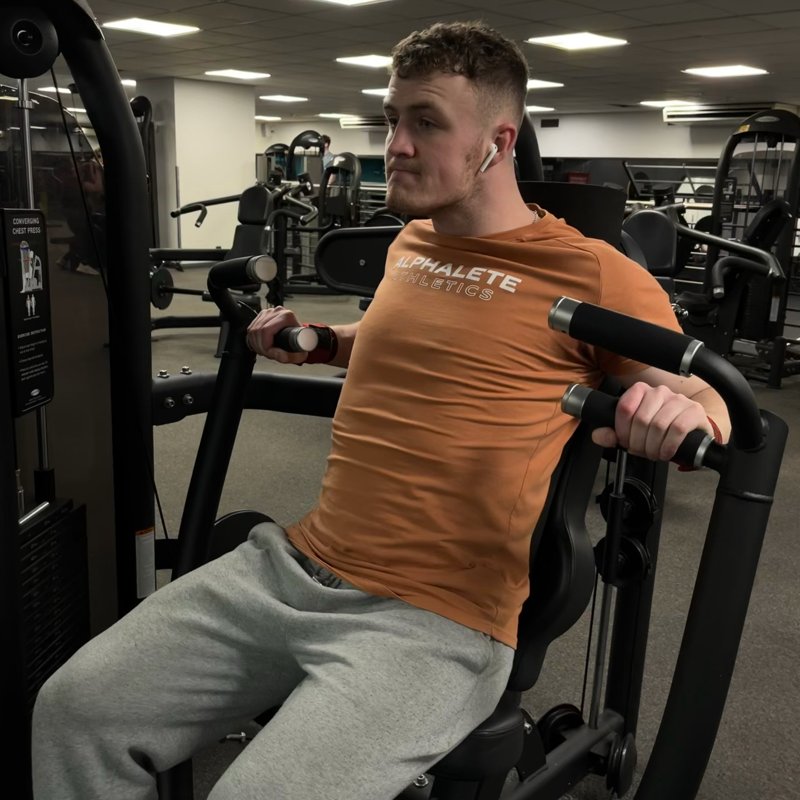 Chest Press MachineAnterior deltoids, pectoralis major
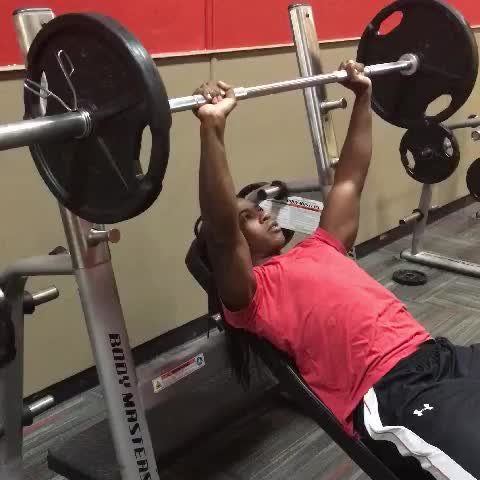 Incline Bench PressAnterior deltoids, pectoralis major
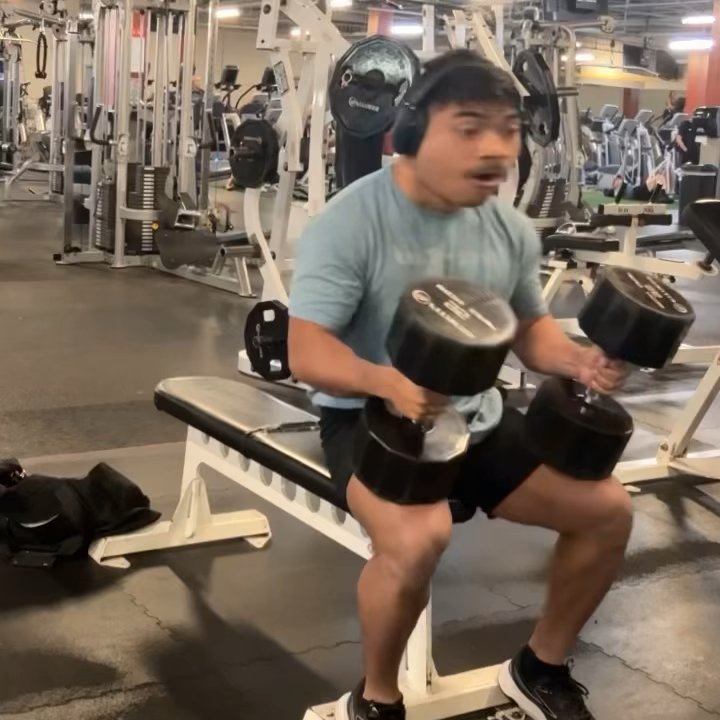 Dumbbell Bench PressAnterior deltoids, pectoralis major
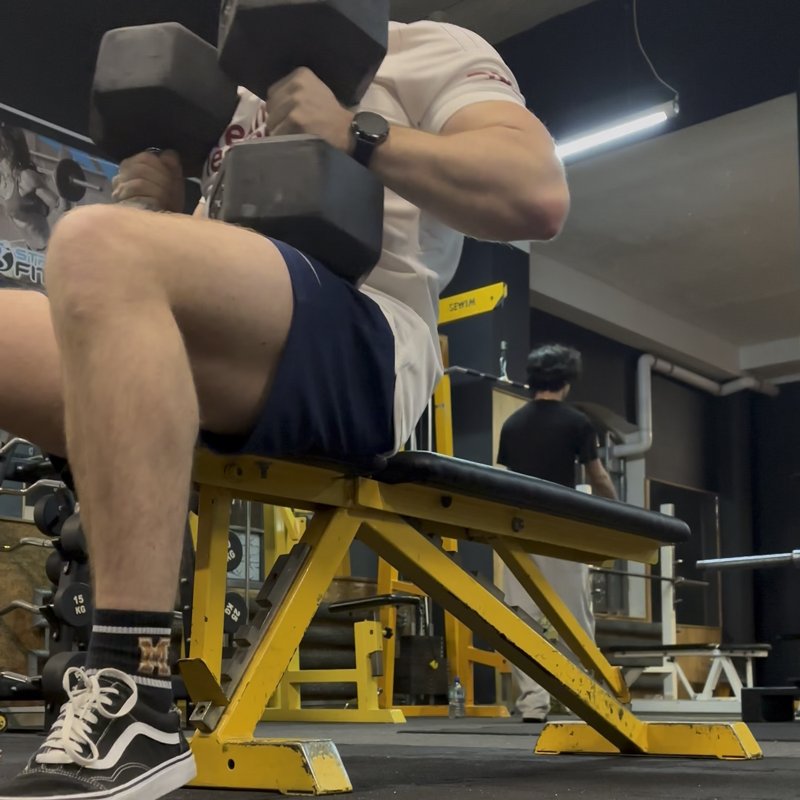 Dumbelll Bench PressAnterior deltoids, pectoralis major
- Rodríguez-Ridao et al. 2020. Int J Environ Res Public Health 17(19):7339.
- Trebs, Brandenburg and Pitney 2010. J Strength Cond Res 24(7):1925-1930.
- Lauver, Cayot and Scheuermann 2016. Eur J Sport Sci 16(3):309-316.
- Chaves et al. 2020. Int J Exerc Sci 13(6):859-872.
- Saeterbakken, van den Tillaar and Fimland 2011. J Sports Sci 29(5):533-538.
- Farias et al. 2017. J Strength Cond Res 31(7):1879-1887.
- Schoenfeld et al. 2021. Sports 9(2):32.