How to Deadlift
A conventional deadlift lifts a barbell from the floor with your feet hip-width apart and your hands outside your legs. Set the bar over your mid-foot, pull the slack out with straight arms and push the floor away until you stand tall. It trains the glutes, hamstrings and spinal erectors. Most lifters do 3 sets of 3 to 6 reps.
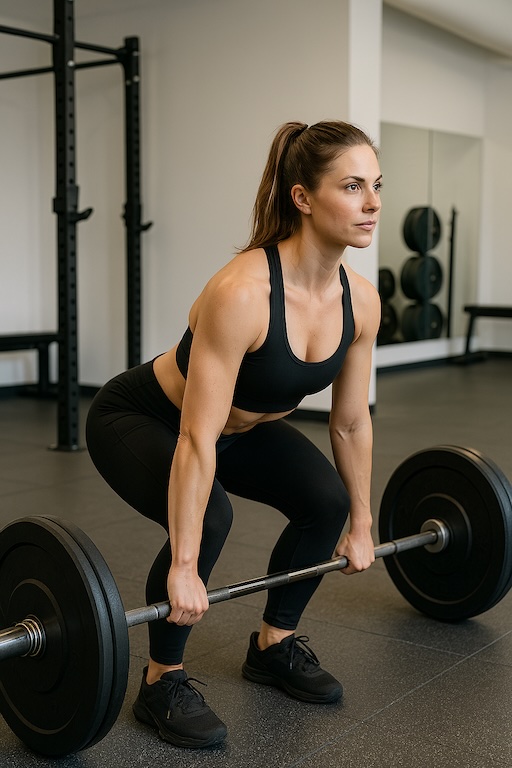
- 1Start. Bar over your mid-foot, shins on the bar, hips above your knees and shoulders just in front of the bar, arms straight.
- 2Lockout. Push the floor away and keep the bar on your legs until your hips and knees are straight. Stand tall without leaning back.
Watch 3 video demonstrations
Find more video demonstrations in the Gravitus app
How to do a deadlift
This is the conventional style. For a wide stance with your hands inside your knees, see the sumo deadlift. For a hinge that starts standing and never touches the floor, see the Romanian deadlift.
- Stand with your feet hip-width apart and the bar over the middle of your feet, about 1 inch (2.5 cm) from your shins.
- Bend over with straight legs and grip the bar just outside your legs, palms facing you.
- Bend your knees until your shins touch the bar, without moving the bar. Lift your chest until your back is flat. Your hips end up above your knees and your shoulders just in front of the bar.
- Take a big breath, brace your abs and pull your shoulders down. Pull on the bar with straight arms until it takes the weight, without lifting it yet.
- Push the floor away and keep the bar against your legs. Once it passes your knees, drive your hips forward and stand tall.
- Lower the bar by pushing your hips back first, then bend your knees once it passes them. Set it down and reset before the next rep.
How to set up a conventional deadlift
At a national powerlifting championship, conventional pullers stood with their feet 32 cm (13 in) apart, turned their toes out 14 degrees and gripped the bar with their hands 55 cm (22 in) apart (Escamilla 2000). Hip height depends on your leg and torso lengths, so set it by moving your shins to the bar, not by copying an angle.
Set up in the same order every rep: feet, grip, shins to the bar, chest up, slack out, then push. If your hips rise before the bar leaves the floor, you started them too low.
Grip, straps and mixed grip
In 25 biceps tendon ruptures filmed during deadlifts, 24 happened with a mixed grip, and every one tore on the palm-up arm (Kapicioglu 2021). In 29 trained lifters, the mixed grip felt easiest at every load and did not change bar speed (Pratt 2020). Straps added reps with no loss of bar speed in women (Trahey 2023), and made strapped sets faster and easier in men (Jukic 2021).
Pull double overhand for warm-ups and switch to straps when the bar slips. If you compete or train without straps, use a hook grip, or a mixed grip with the palm-up arm locked straight and the hands swapped between sets.
How much weight should you deadlift?
On Gravitus, the median man lifts 225 lb (102.5 kg) for 10 reps on the deadlift, and the median woman 120 lb (55 kg).
- Most lift
- 180 to 280 lb
- Top 10% lift
- 330 lb or more
- Starting out
- under 180 lb
- Most lift
- 90 to 155 lb
- Top 10% lift
- 185 lb or more
- Starting out
- under 90 lb
- Most lift
- 80 to 127.5 kg
- Top 10% lift
- 150 kg or more
- Starting out
- under 80 kg
- Most lift
- 40 to 70 kg
- Top 10% lift
- 85 kg or more
- Starting out
- under 40 kg
What your deadlift says about your other lifts
Most lifters deadlift more than they squat. Among 21,000+ Gravitus lifters who log both, the median squat max is 87% of the deadlift max: 86% for men and 90% for women (September 2026). Only 22% squat more. The median bench press is 69% of the deadlift.
The median sumo max is 94% of the same lifter's conventional max, the deficit deadlift 80% and the rack pull 99%, though rack pull heights vary between gyms.
These figures compare each lifter's best logged set on each lift, converted to a one-rep max with the Brzycki formula. To see how your max ranks by bodyweight, use the deadlift strength standards. For typical maxes by sex, see the average deadlift.
Muscles worked
Conventional vs sumo vs trap bar deadlift
| Attribute | Conventional | Sumo | Trap bar |
|---|---|---|---|
| Stance | Hip width | Wide, toes out | Hip width |
| Hands | Outside your knees | Inside your knees | At your sides |
| Works most | Glutes, hamstrings, back | Glutes, quads, adductors | Glutes, quads |
| Weight vs your deadlift | 100% | 94% | 96% |
Conventional for the hamstrings and back, the trap bar for the least load on your lower back. In powerlifters, the hex bar cut the peak moments at the lower back and hip, raised the moment at the knee and allowed a heavier max, 265 kg against 245 kg (Swinton 2011). Gravitus lifters, most of whom train conventional more, pull a median 96% as much with a trap bar. For more, see sumo vs conventional deadlift and squat vs deadlift.
Deadlift claims the research does not back
Four common deadlift claims are wrong or overstated:
- Deadlifts build muscle by raising testosterone and growth hormone. The rise is real but short, and it does not add growth. Over 15 weeks, arms trained just before a hard leg session, which raised growth hormone, IGF-1 and testosterone, grew 10%. Arms trained without it grew 12% (West 2010).
- A mixed grip is harmless. Every mixed-grip biceps tear in a review of 24 filmed cases was on the palm-up arm (Kapicioglu 2021). The risk is small but one-sided, so keep that elbow straight or use straps.
- Straps are cheating. They let the target muscles do more work: strapped sets gave more reps and less grip fatigue at the same bar speed (Trahey 2023, Jukic 2021). Keep a few strapless sets if you want a stronger grip.
- You can always lift more with a trap bar. Powerlifters pulled 8% more with a hex bar (Swinton 2011), but only 40% of Gravitus lifters who log both pull more with the trap bar. Most of them log far more conventional work, which likely explains the gap.
Sets, reps and progression
5 is the most logged deadlift rep count on Gravitus, followed by 3 and 8. Stop each set 1 to 3 reps short of failure, before your back rounds or your hips shoot up first. Deadlift once or twice a week; a second day can be a lighter session or a variation like the Romanian deadlift.
When every set reaches the top of your range, add 5 to 10 lb (2.5 to 5 kg) and drop back to 3 reps. For muscle rather than a bigger max, sets of 6 to 10 work too, with straps so your grip does not end the set first.
Common mistakes
-
Starting with the bar too far outThe bar swings forward around your knees and pulls you onto your toes. Set it over your mid-foot, about 1 inch (2.5 cm) from your shins.
-
Squatting the bar upHips set too low have to rise before the bar moves. Bring your shins to the bar and leave your hips where that puts them.
-
Yanking the bar off the floorPull the slack out with straight arms until the bar presses into the plates, then push the floor away.
-
Letting your hips shoot up firstThe rep turns into a stiff-leg deadlift and your back takes over. Keep your chest up and your hips and shoulders rising together.
-
Rounding your lower backBrace with a big breath before every rep. If your back still rounds, the weight is too heavy for that set.
-
Leaning back at lockoutStand tall with your hips and knees straight. Leaning back loads your lower back and adds nothing.
Deadlift variations
Questions people ask
What muscles does the deadlift work?
The glutes, hamstrings and spinal erectors do most of the work. The quads straighten your knees off the floor and the adductor magnus helps extend the hip. Your lats, upper back and forearms hold the bar. Biceps femoris activity was 28% higher in the barbell deadlift than the hex bar deadlift (Andersen 2018).
How high should my hips be in a deadlift setup?
Above your knees and below your shoulders, at whatever height puts your shins on the bar with the bar over your mid-foot and your shoulders just in front of it. Find it by bending your knees until your shins touch the bar without moving the bar. If your hips rise before the bar leaves the floor, you set them too low.
Should I use mixed grip or straps for deadlifts?
Straps for most training sets. In 24 filmed biceps tendon ruptures during mixed-grip deadlifts, every one was on the palm-up arm (Kapicioglu 2021). Straps added reps and cut grip fatigue without slowing the bar (Trahey 2023, Jukic 2021). If you compete, train a hook grip, or a mixed grip with the palm-up elbow locked straight.
Is the deadlift better than the squat?
Neither; they train different things. The deadlift works the hamstrings and back harder, the squat the quads. Most lifters can deadlift more. The median Gravitus lifter squats 87% of their deadlift, and only 22% squat more. Do both if you can.
Is conventional deadlift better than sumo deadlift?
Not for everyone. Conventional works the hamstrings harder (Hanen 2025). In sumo the bar travels less, as bar travel and mechanical work were 25 to 40% greater in conventional pullers (Escamilla 2000), and the lower back takes about 10% less load (Cholewicki 1991). Most lifters pull more conventional; the median sumo max is 94% of the same lifter's conventional max.
How much weight should I deadlift?
For 10 reps, the median on Gravitus is 225 lb (102.5 kg) for men and 120 lb (55 kg) for women. The strongest quarter lifts 280 lb (127.5 kg) and 155 lb (70 kg) or more.
Log every set and see your percentile on every lift, deadlift included.
Get GravitusRelated exercises
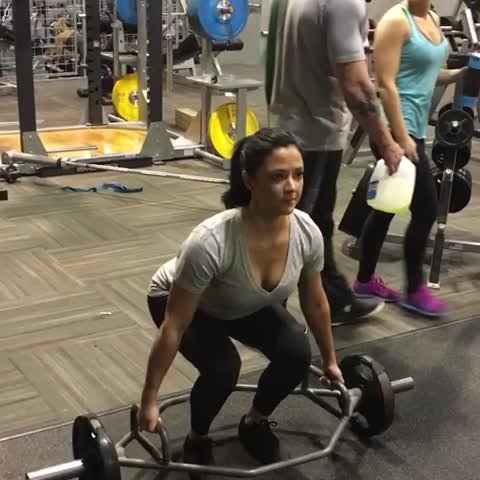 Trap Bar DeadliftErector spinae, glutes, hamstrings, quadriceps
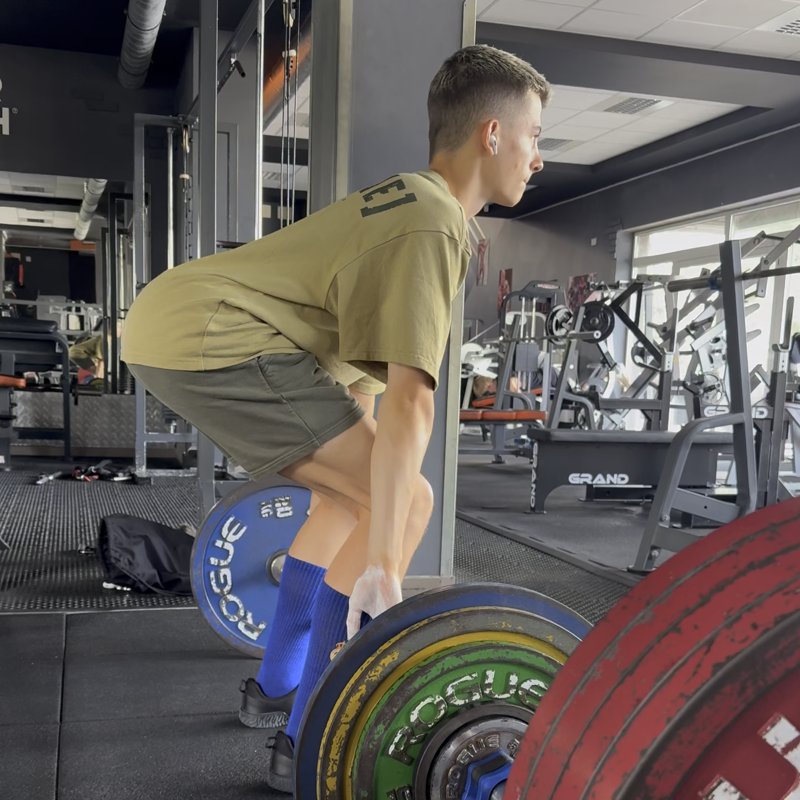 Conventional DeadliftErector spinae, glutes, hamstrings, quadriceps
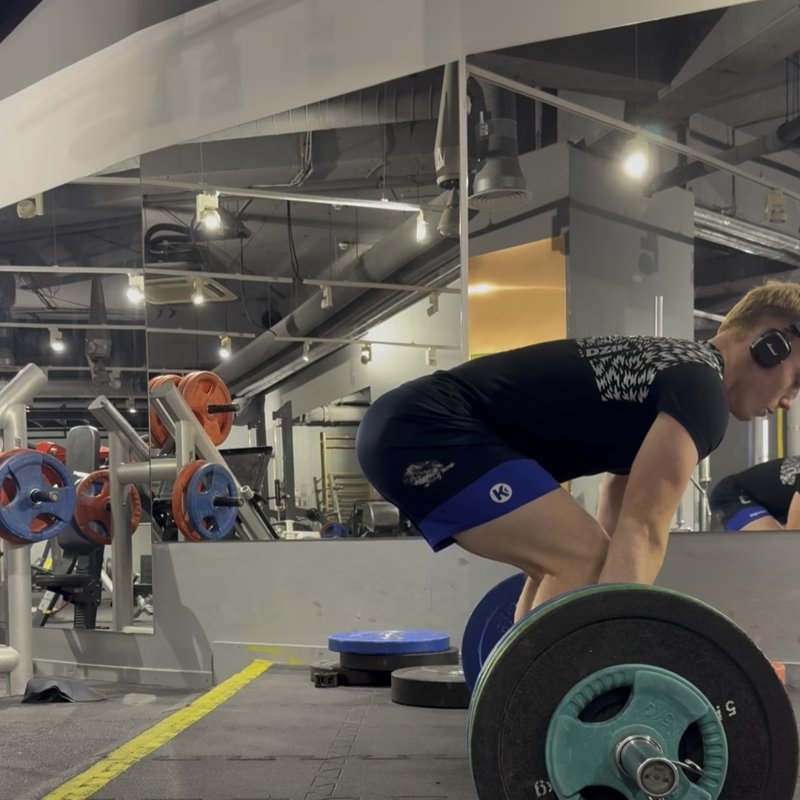 Martwy CiągErector spinae, glutes, hamstrings, quadriceps
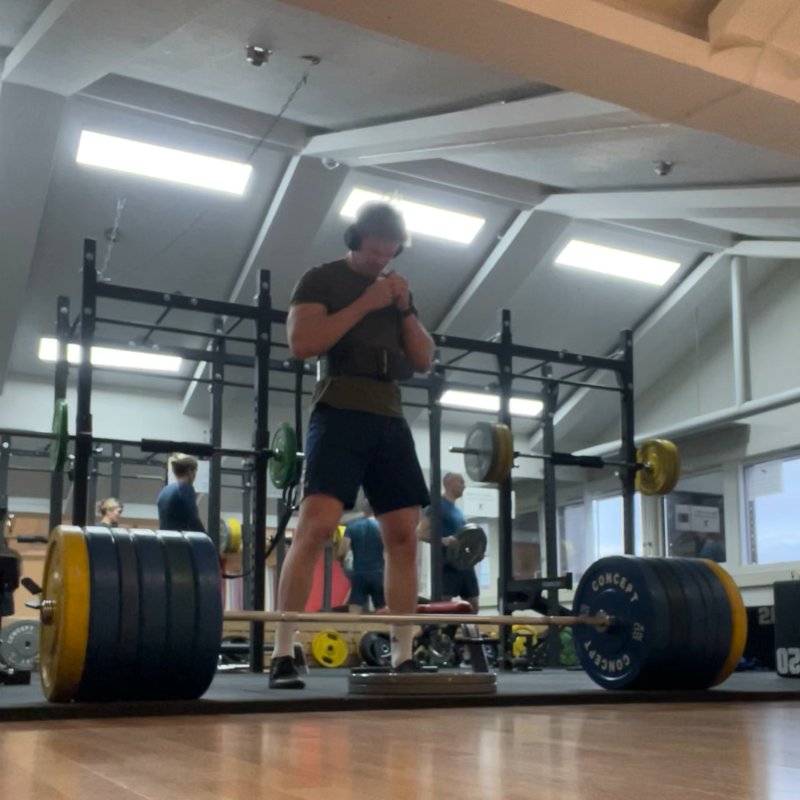 Deficit DeadliftErector spinae, glutes, hamstrings, quadriceps
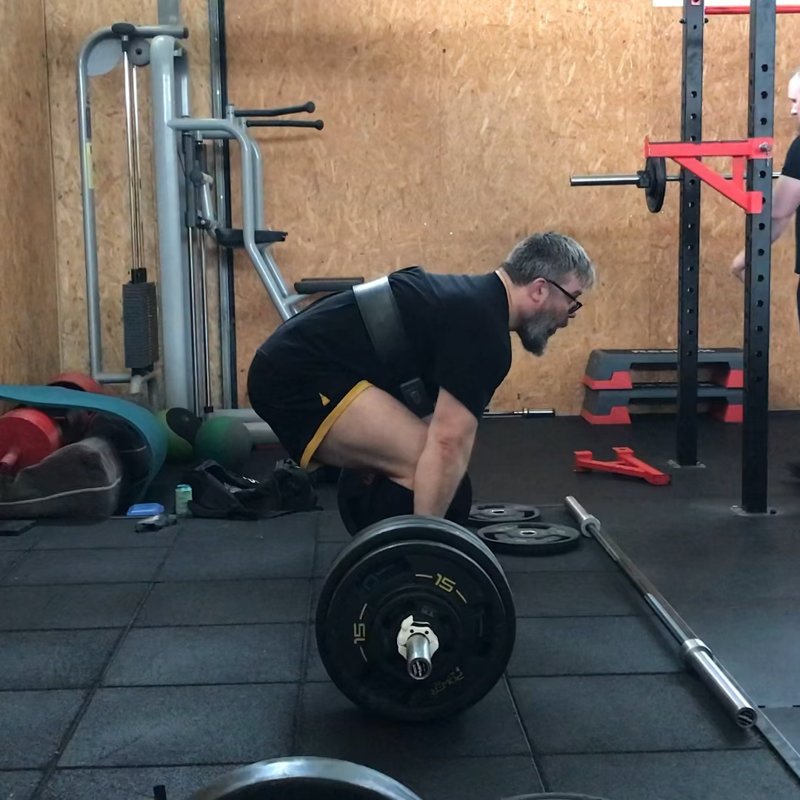 Paused DeadliftErector spinae, glutes, hamstrings, quadriceps
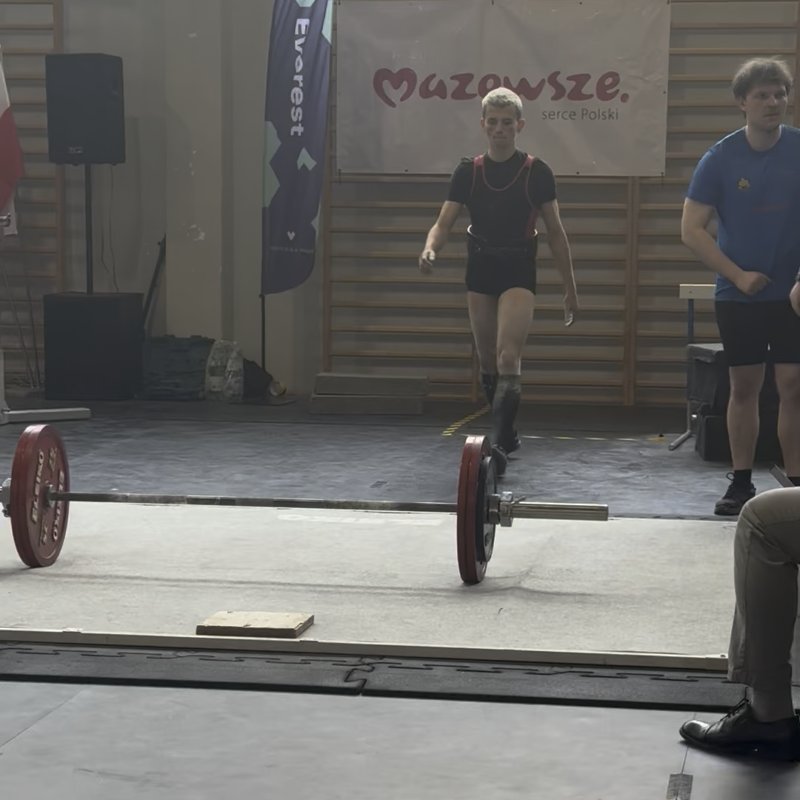 Competition DeadliftErector spinae, glutes, hamstrings, quadriceps
- Escamilla et al. 2000. Med Sci Sports Exerc 32(7):1265-1275.
- Cholewicki, McGill and Norman 1991. Med Sci Sports Exerc 23(10):1179-1186.
- Hanen et al. 2025. Front Bioeng Biotechnol 13:1597209.
- Andersen et al. 2018. J Strength Cond Res 32(3):587-593.
- Swinton et al. 2011. J Strength Cond Res 25(7):2000-2009.
- Kapicioglu et al. 2021. Orthop J Sports Med 9(3):2325967121991811.
- Pratt et al. 2020. J Electromyogr Kinesiol 53:102428.
- Trahey et al. 2023. J Strength Cond Res 37(10):1924-1928.
- Jukic et al. 2021. Physiol Behav 229:113283.
- West et al. 2010. J Appl Physiol 108(1):60-67.