How to Do Assisted Pull-Ups
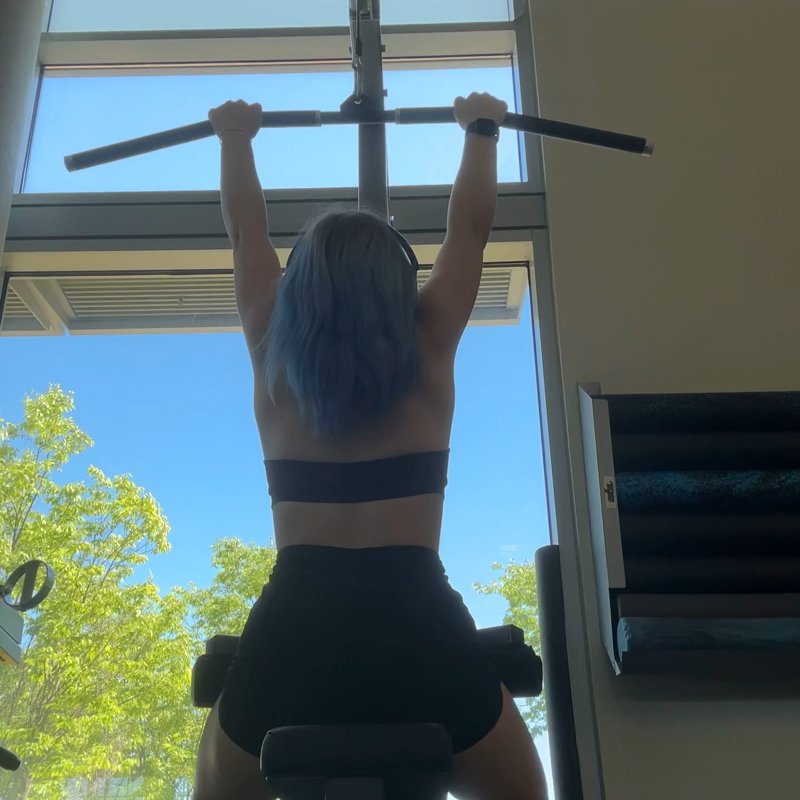
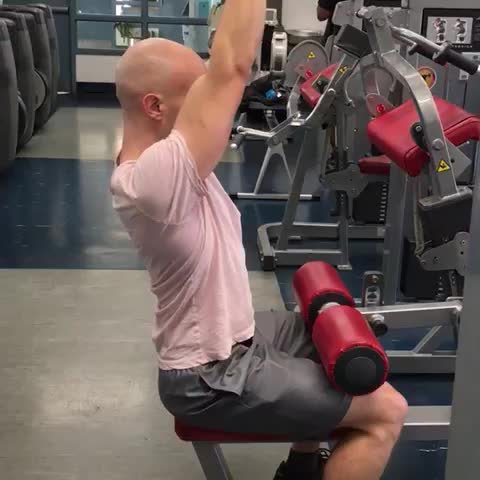
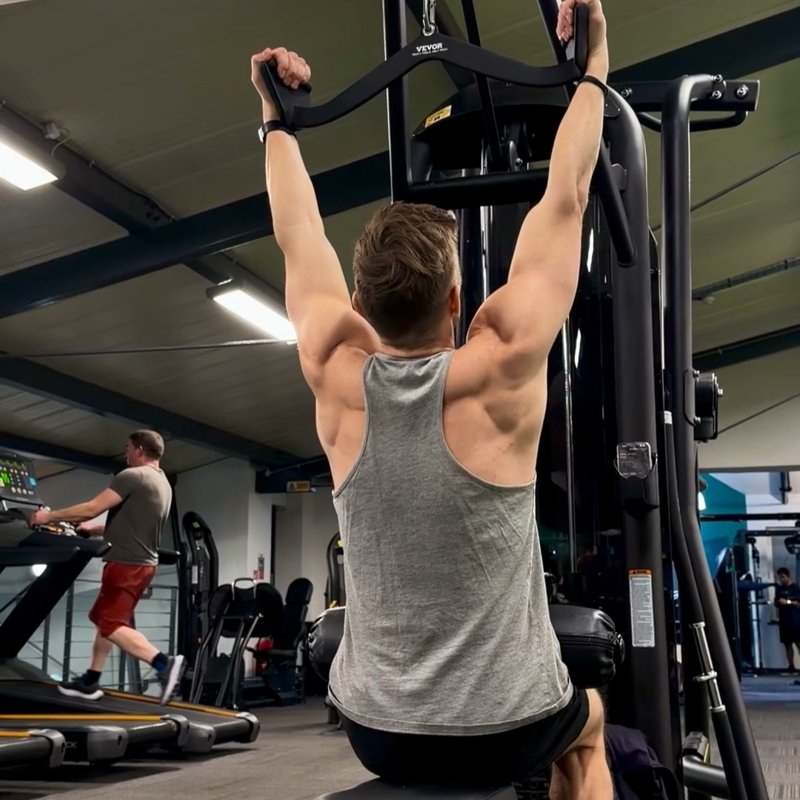
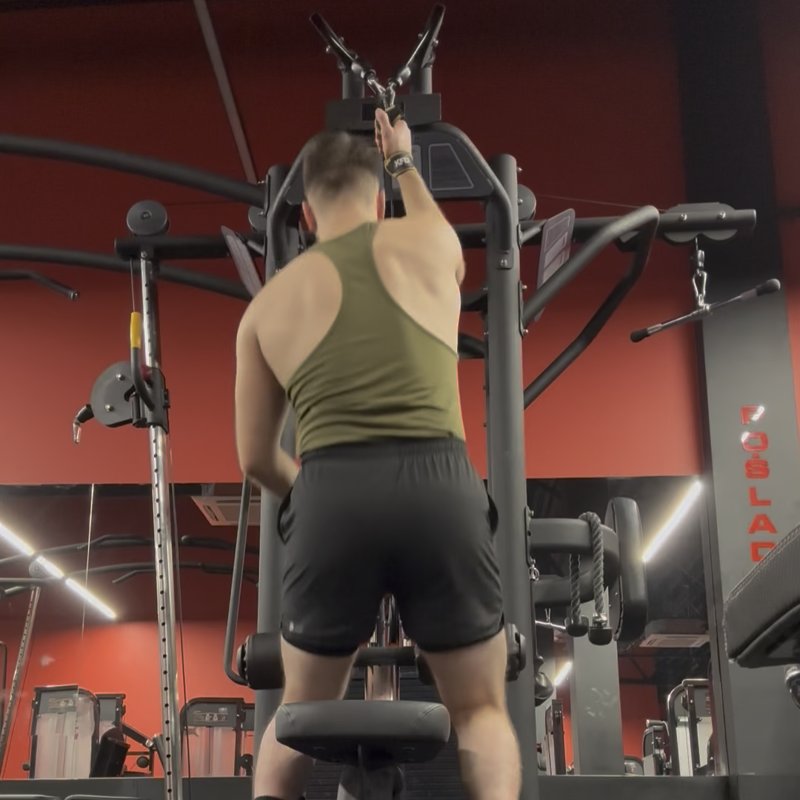
An assisted pull-up is a pull-up with help: a machine counterweight or a band carries part of your bodyweight. On the machine, more weight means more help. Pull from straight arms until your chin clears the handles, then lower slowly. It trains the lats, biceps and mid back. Most lifters do 3 to 4 sets of 6 to 12 reps.
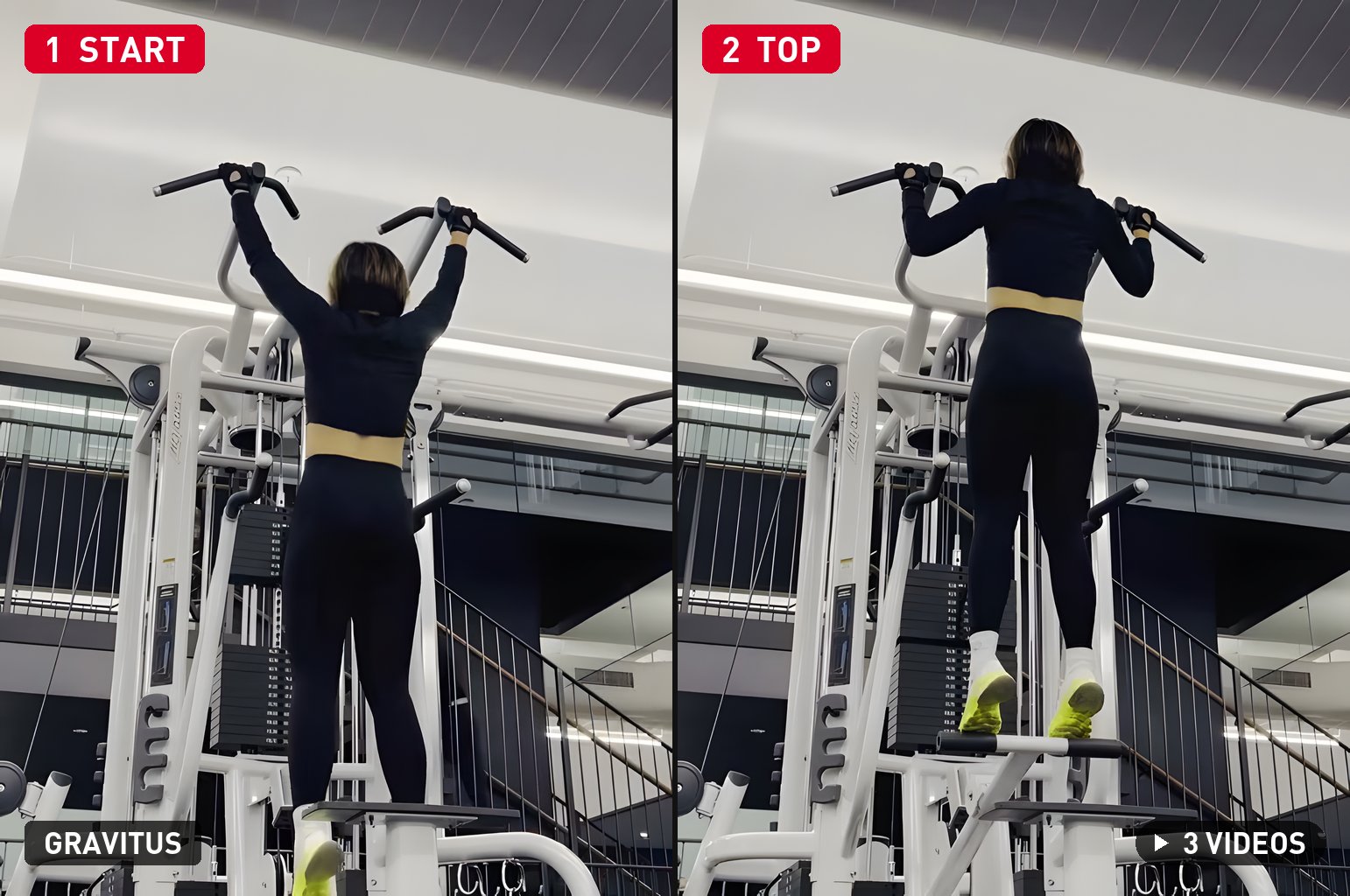
- 1Start. Stand or kneel on the pad with your arms straight and your shoulders pulled down. The counterweight carries part of your bodyweight.
- 2Top. Drive your elbows down to your sides until your chin clears the handles, then lower over 2 to 3 seconds to straight arms.
Watch 3 video demonstrations
How to use the assisted pull-up machine
- Set the pin. The weight you pick is help, so more weight makes the rep easier. Start near half your bodyweight.
- Climb onto the foot rests and grab the handles, a little wider than your shoulders or on the neutral grips. Put one knee or foot on the pad at a time and push it down until it carries you.
- Hang with your arms straight and pull your shoulders down, away from your ears.
- Drive your elbows down to your sides until your chin clears the handles. Keep your knees or feet still on the pad.
- Lower over 2 to 3 seconds to straight arms. After the last rep, finish at the top and step back onto the foot rests while the pad is raised.
How much weight to use on the assisted pull-up machine
The number on an assisted pull-up machine is how much of your bodyweight it takes off, so the rep gets easier as the number goes up. What you lift is your bodyweight minus the assistance. A 200 lb (90 kg) lifter with 50 lb (22.5 kg) of assistance lifts 150 lb (67.5 kg), three quarters of their bodyweight.
Start near half your bodyweight, then move the pin until you get 8 to 12 strict reps with 1 or 2 left in the tank. Progress runs backwards from other lifts: the same reps with a lower number is a PR.
Machines differ in friction and design, so a setting on one machine will not match another. Compare yourself to your own log on the same machine.
Write down the assistance and your bodyweight. Losing 5 lb (2.5 kg) of bodyweight has the same effect on the rep as taking 5 lb of assistance off.
Assisted pull-up weight chart by bodyweight
| Attribute | You lift | 130 lb (60 kg) lifter | 180 lb (80 kg) lifter |
|---|---|---|---|
| Assist 50% | Half your bodyweight | 65 lb (30 kg) | 90 lb (40 kg) |
| Assist 35% | Two thirds | 45 lb (20 kg) | 65 lb (27.5 kg) |
| Assist 20% | Four fifths | 25 lb (12.5 kg) | 35 lb (15 kg) |
| No assist | All of it | A full pull-up | A full pull-up |
When you can do 8 strict reps with assistance of 20% of your bodyweight. In college lifters, a load of 80% of their one-rep pull-up max allowed 8 reps in men and 10 in women (Johnson 2009). So 8 reps while lifting 80% of your bodyweight puts your one-rep max at about your bodyweight.
From assisted to your first pull-up
Strength relative to bodyweight decides your first pull-up. After a training program, the college women who could do a pull-up had greater strength for their body mass than those who could not (Flanagan 2003). Getting stronger and losing body fat both move you closer.
Muscles worked
Assisted machine vs band vs lat pulldown
| Attribute | Assisted machine | Band-assisted pull-up | Lat pulldown |
|---|---|---|---|
| Help through the rep | The same at every point | Most at the bottom, least at the top | None, you pull a weight stack |
| Make it harder | Take a plate off | Use a thinner band | Add a plate |
| Tracking | A number on the stack | Band colors differ by brand | A number on the stack |
| Best for | Measurable progress, beginners | Home gyms and the last step | Back work at any strength level |
Use the machine when you want a number to beat, and a band where there is no machine. In 33 lifters who could already do pull-ups, a band hung from the bar raised reps to failure from 11 to 18 (Piper 2023). Pulldown strength predicted pull-up strength well in men but not in women (Johnson 2009), so keep practicing the pull-up itself.
Assisted pull-up myths
"You need to lat pulldown your bodyweight before you can do a pull-up." Not in the research. College men's one-rep pulldown was 93% of their bodyweight, while their one-rep pull-up was 116% of it. For women the numbers were 55% and 73% (Johnson 2009). Pulldown numbers run lower than pull-up numbers, so a pull-up can come before your pulldown reaches your bodyweight.
"Bands match the strength curve of a pull-up." A band stretches most at the dead hang, so it helps most at the bottom and least at the top. That suits lifters who fail near the top. If you fail at the bottom, the machine's even help fits better. We found no study comparing the two for building a first pull-up.
"Assisted pull-ups work your muscles as hard as pull-ups." They train the same muscles with less load. That is the point: you get full reps now, and the load rises as you take assistance off.
"A different grip works different muscles." Only a little. Across overhand, underhand, neutral and rope pull-ups, muscle activity was similar; only the middle traps worked harder overhand than neutral (Dickie 2017). Chin-ups drew more biceps and chest, and pull-ups more lower traps (Youdas 2010). Use the handles that feel best on your elbows and shoulders.
Sets, reps and progression
Stop each set 1 to 2 reps short of failure, with every rep from straight arms to chin over the handles.
If a first pull-up is your goal, train it 2 to 3 times a week. Take a plate off when every set reaches 12 reps, and go back to 8. If you want back size rather than a pull-up, keep the assistance that lets you finish 8 to 12 strict reps and treat it like any other back exercise.
Common mistakes
-
Too much assistanceIf 15 reps feel easy, the machine is doing the work. Take a plate off.
-
Stopping short of straight armsA real pull-up starts from a dead hang. Straighten your arms on every rep.
-
Shrugging into the pullPull your shoulders down before your elbows bend, and keep your neck long.
-
Pushing with your legsOn a standing platform it is easy to straighten your knees. Keep them still so your back does the work.
-
Stepping off at the bottomThe pad springs up when your weight leaves it. Finish at the top and step off while the pad is raised.
Assisted pull-up variations and next steps
Questions people ask
Does more weight on the assisted pull-up machine make it easier or harder?
Easier. The weight is assistance, so more of it takes more of your bodyweight off. Progress means using less assistance for the same reps.
What weight to use on assisted pull up machine?
Start near half your bodyweight, then adjust until you get 8 to 12 strict reps with 1 or 2 left. A 160 lb (72.5 kg) lifter would start near 80 lb (35 kg).
What are assisted pull ups good for?
Building the strength for your first pull-up, and training the lats and biceps with full pull-up reps when you cannot yet lift your own bodyweight.
Are assisted pull ups effective?
Yes, if you keep taking assistance off. They train the same muscles as a pull-up with a load you can lift for full reps. Pair them with negatives and test a real pull-up once you reach 8 reps with 20% assistance.
What muscles do assisted pull ups work?
Mainly the lats, with the biceps, brachialis, lower and middle traps, rhomboids and lower chest helping. The forearms hold the handles and the core keeps you still.
How to log assisted pull ups?
Log the assistance as the weight, along with reps and your bodyweight. A lower assistance number for the same reps is progress. What you lift is your bodyweight minus the assistance.
Log every set and see your percentile on every lift, assisted pull-up included.
Get Gravitus