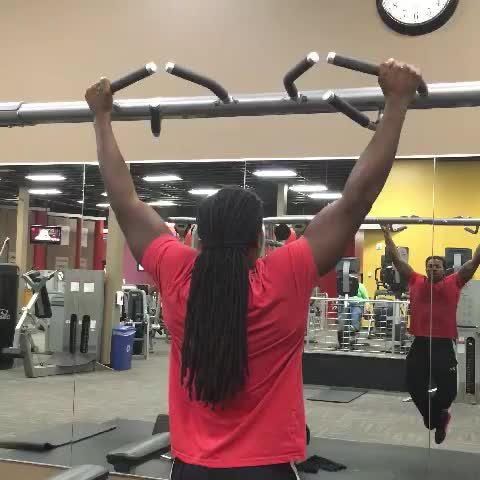
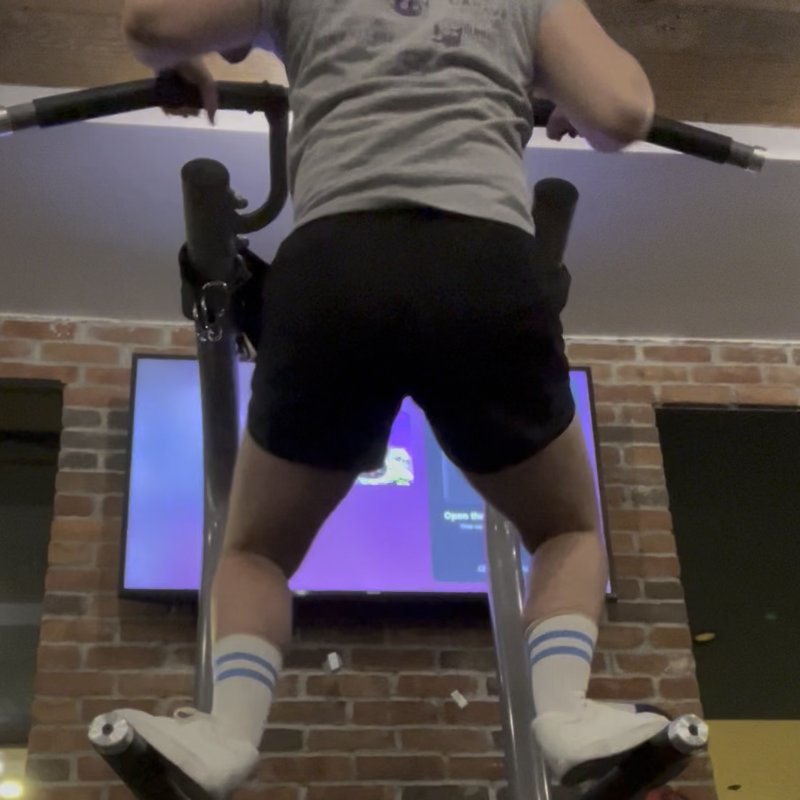
How to Do a Chin-Up
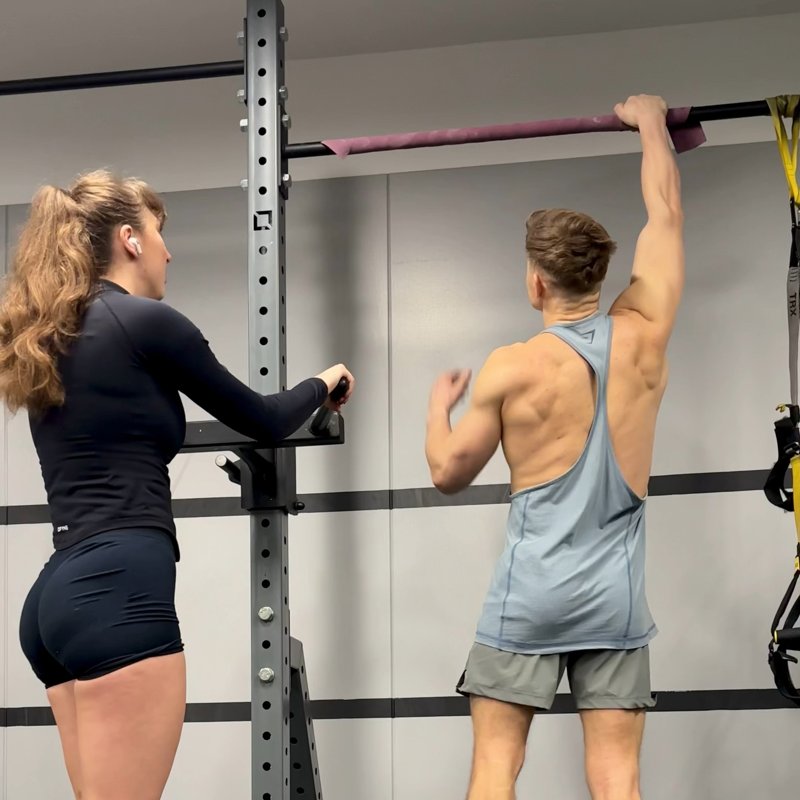
A chin-up is a bodyweight pull on an overhead bar with your palms facing you, hands shoulder width apart. Hang from straight arms, drive your elbows down in front of your body and pull your chin over the bar. It trains the lats and biceps most. Most lifters do 3 to 4 sets of 5 to 12 reps.
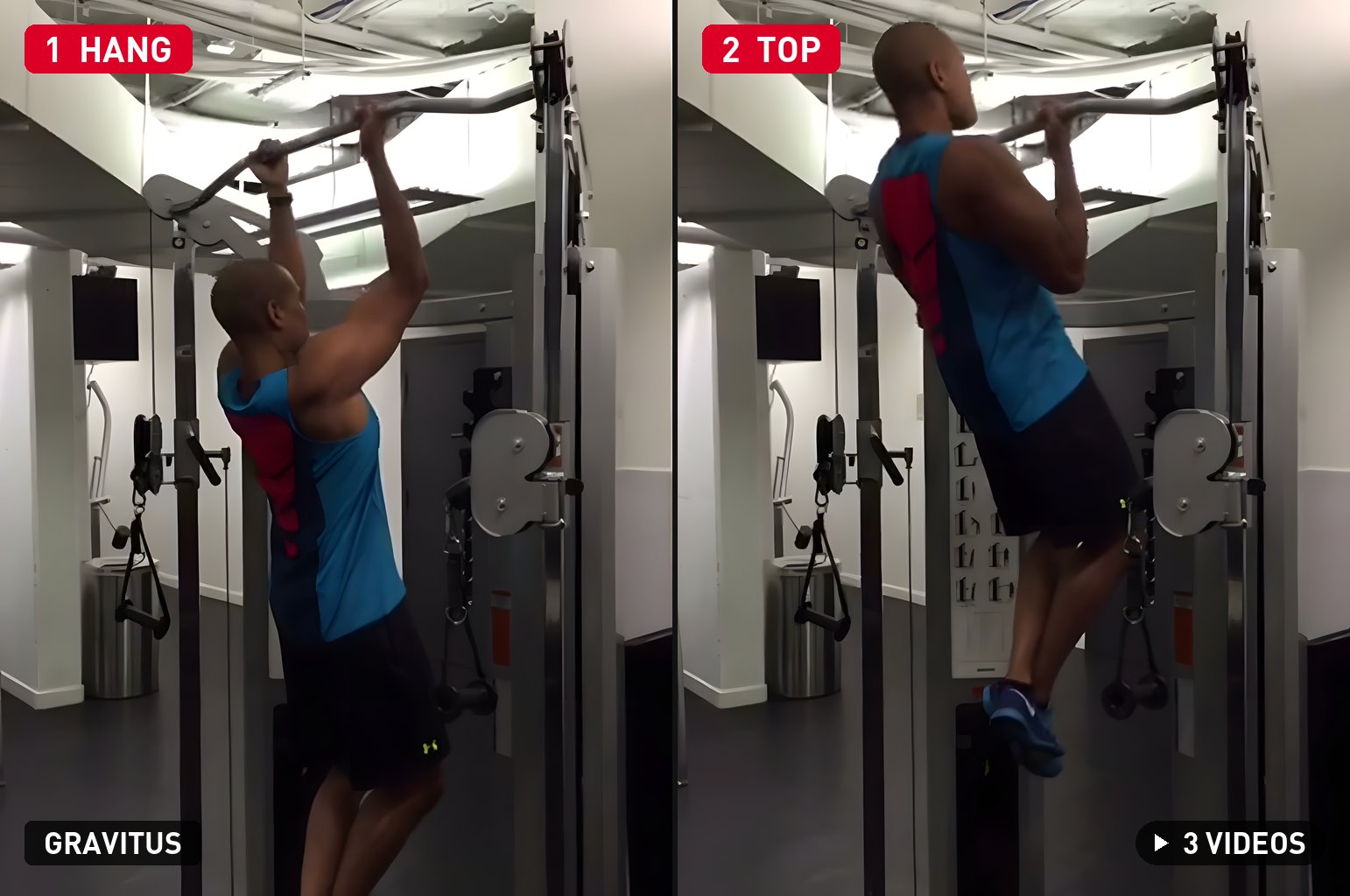
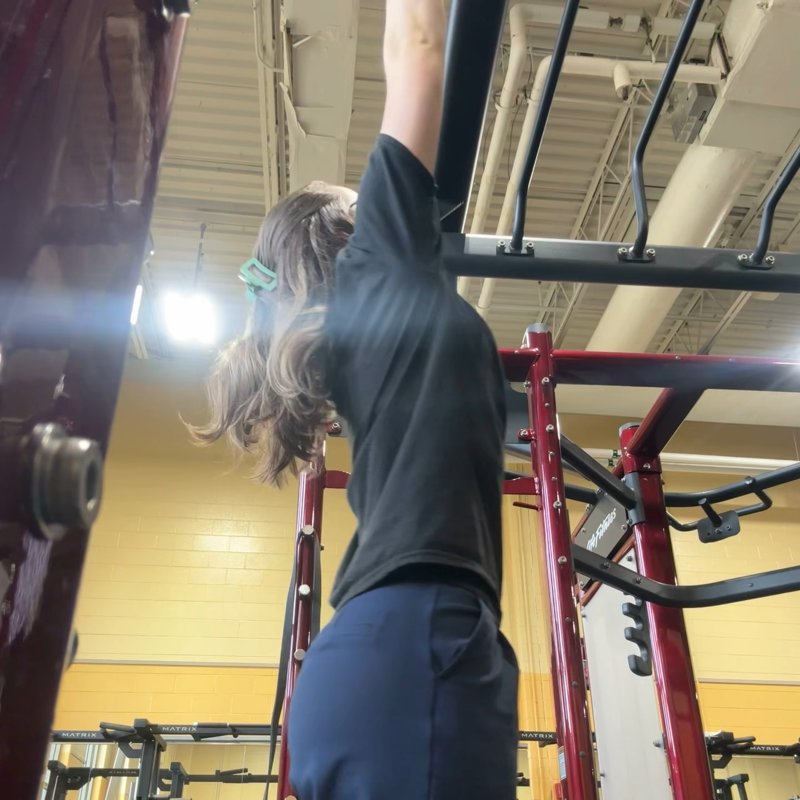
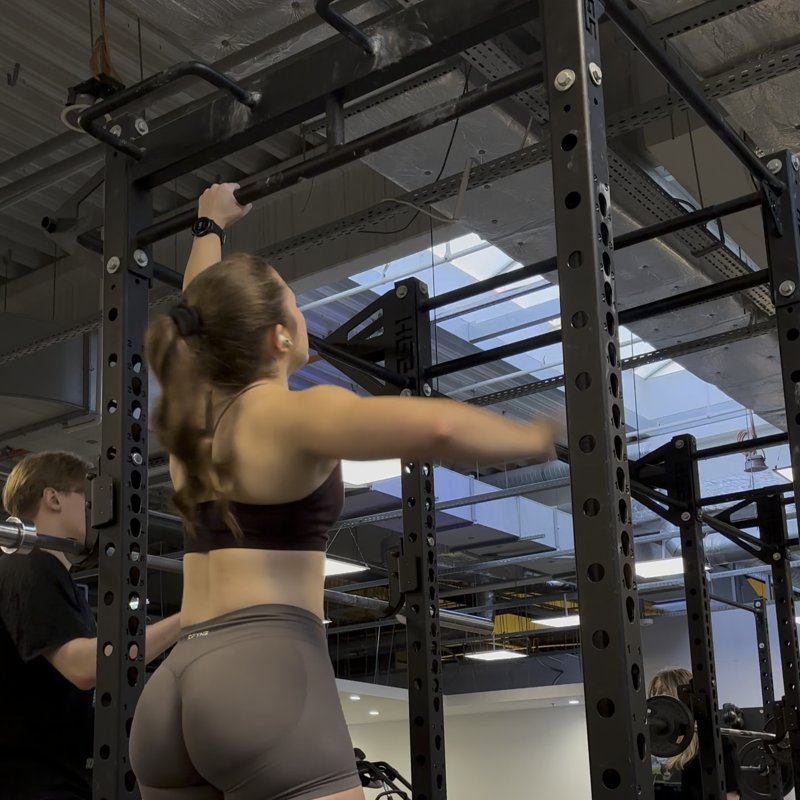
- 1Hang. Palms facing you, hands about shoulder width, arms straight and feet off the floor. Pull your shoulders down before your elbows bend.
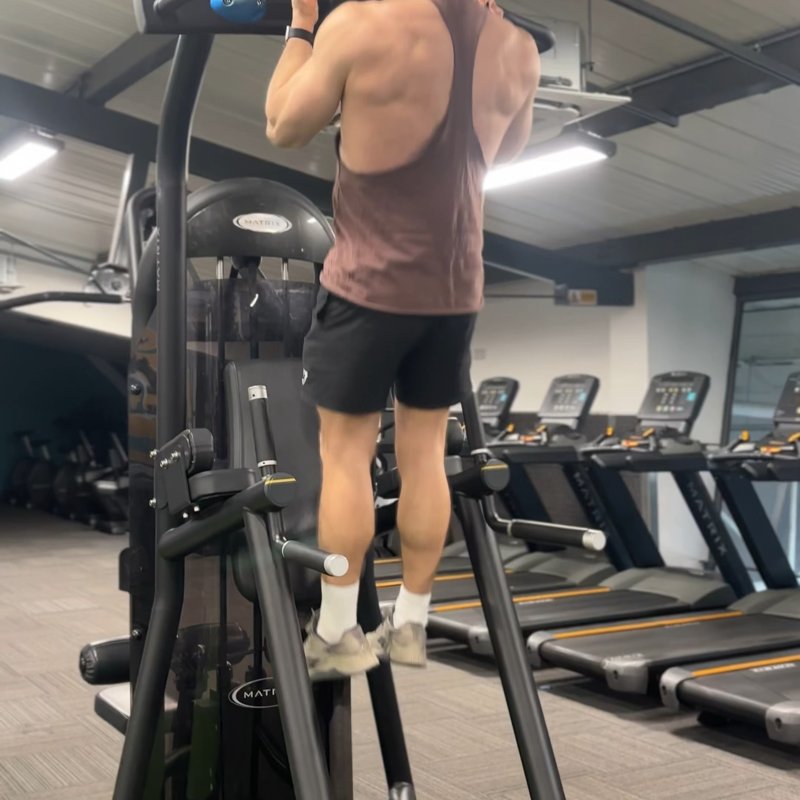
- 2Top. Drive your elbows down in front of your ribs until your chin clears the bar, then lower over 2 to 3 seconds to straight arms.
Watch 3 video demonstrations
Find more video demonstrations in the Gravitus app
How to do a chin-up with proper form
- Grab the bar with your palms facing you, hands about shoulder width apart and thumbs wrapped around the bar.
- Hang with your arms straight and your feet off the floor. Squeeze your glutes and keep your legs still, straight or crossed behind you.
- Pull your shoulders down, away from your ears, before your elbows bend.
- Drive your elbows down in front of your ribs, not out to the sides, until your chin clears the bar. Keep your neck long and lift your chest toward the bar.
- Lower over 2 to 3 seconds until your arms are straight again.
Chin-up grip width and hand position
We found no peer-reviewed study of chin-up grip width, so let your joints choose. Start with your hands at shoulder width, where your forearms hang straight up from your elbows. Bring them in a little if your shoulders pinch, and widen them or switch to neutral handles if your wrists or the inside of your elbows ache. Our pull-up guide covers the research on overhand, wide and neutral grips.
Elbows in front, not out to the sides
In a chin-up your upper arms travel down in front of your body and finish at your ribs. In a pull-up they travel down and out to the sides. Keep the chin-up's path: if your elbows flare out, your palms still face you but your shoulders turn as if you were pulling overhand, and the wrists and elbows take the strain.
The underhand grip also asks more of your elbows. In 25 lifters, the elbow bent through 101 degrees in a chin-up and 93 in a pull-up, and the biceps and lower chest were more active in the chin-up (Youdas 2010).
Underhand is not the shoulder-friendly default it is often called. Pulling underhand turned the upper arm through extreme rotation and away from the plane of the shoulder blade, a pattern linked with impingement (Prinold 2016), and a computer model put relatively more of the work on the rotator cuff with an underhand grip than with overhand grips (Urbanczyk 2020). If the bottom of the rep hurts your shoulders, stop just short of locked elbows with your shoulders pulled down, or use neutral handles.
Widen your hands an inch or two, lower more slowly, or switch to neutral handles for a few weeks. Muscle activity stays about the same across grips (Dickie 2017), so you lose little by changing.
Chin-up myths the research does not support
"The chin-up is a biceps exercise." It is a back exercise that also works the arms hard. The lats were the most active muscle in both the chin-up and pull-up, at 117 to 130% of their maximum, against 78 to 96% for the biceps (Youdas 2010). That study found more biceps activity in the chin-up. Over full reps in 19 trained men, biceps activity did not differ between underhand, overhand and neutral grips (Dickie 2017), and a computer model gave the biceps and brachialis more work with a shoulder-width overhand grip (Urbanczyk 2020).
"Chin-ups are much easier than pull-ups." Among Gravitus lifters, the median best set was 10 reps for men on both lifts. For women it was 6 on chin-ups and 8 on pull-ups (Gravitus data, September 2026). These are different groups of lifters, so the numbers do not prove either lift is harder, but they do not show the big gap most guides promise.
"A little knee kick does not matter." Adding a kip to a pull-up cut biceps activity by 27% of its maximum while the abs and hip flexors did more (Dinunzio 2019). No study has tested kipping chin-ups, but the swing moves work the same way. If you chin up for your arms, keep your legs still.
Muscles worked
Chin-up vs pull-up vs neutral-grip pull-up
| Attribute | Chin-up | Pull-up | Neutral grip |
|---|---|---|---|
| Grip | Underhand, about shoulder width | Overhand, a little wider than shoulders | Palms facing on parallel handles |
| Elbows travel | Down in front of the body | Down and out to the sides | Down in front, close to the ribs |
| Works more | Biceps and lower chest | Lower and middle traps | Close to the other two |
| Best for | More arm work | Back strength when underhand hurts | Sore wrists or elbows |
Lat activity was the same in the chin-up and pull-up (Youdas 2010), so train the grips your joints tolerate, and log each as its own exercise, since your reps will differ. The pull-up guide compares both with the lat pulldown.
How to build up to your first chin-up
Strength relative to your bodyweight decides your first rep, so getting stronger and losing body fat both help. The pull-up guide has the research on who can do one.
Sets, reps and progression
Stop each set 1 to 2 reps short of failure, with every rep from straight arms to chin over the bar. Train chin-ups 2 to 3 times a week, or swap them with pull-ups from one session to the next.
If you can do fewer than 5 strict reps, do several sets of 1 to 3 with full rest, then add assisted reps or slow negatives. When every set reaches 12, add weight with a dip belt or vest and drop back to 5 or 6 reps. Count chin-ups as back and biceps sets, and cut a curl set if your elbows get sore.
Common mistakes
-
Flaring your elbows outDrive them down in front of your ribs. Flared elbows turn the rep into a pull-up with a twisted grip.
-
Hands too close togetherIf your wrists bend or your inner elbows ache, move your hands out to shoulder width.
-
Kicking your kneesSqueeze your glutes and keep your legs still. A kip moves work from your arms to your hips (Dinunzio 2019).
-
Reaching with your chinPull until your chin clears the bar with your neck long, and lift your chest toward the bar.
-
Stopping short at the bottomStraighten your arms on every rep. If the bottom hurts, stop just short of locked elbows with your shoulders pulled down.
-
Shrugging into the pullPull your shoulders down, away from your ears, before your elbows bend.
Chin-up variations and progressions
Questions people ask
What do chin ups work?
The lats and biceps most. The brachialis, lower chest, lower and middle traps, rhomboids, rear delts and rotator cuff help, and the forearms and core hold you on the bar.
Do chin-ups work back or biceps?
Both, and the back more. The lats reached 117 to 130% of their maximum in chin-ups and pull-ups, against 78 to 96% for the biceps (Youdas 2010).
How many chinups is good?
Among Gravitus lifters who log chin-ups, the median best set was 10 reps for men and 6 for women (Gravitus data from 7,000+ men and 850+ women, September 2026). The top 10% reached 15 and 11. These are people who train, so beating the median is a good mark.
Can the average person do a chin up?
Many people cannot at first. Among Gravitus lifters who log chin-ups, 90% of men managed at least 5 reps and 90% of women at least 3, but people who cannot yet do one log assisted chin-ups instead, so the share across everyone is lower.
Are chin-ups harder than pull-ups?
Not by much for most people. Gravitus men logged a median best set of 10 reps on both lifts, while women logged 6 chin-ups and 8 pull-ups. These are different groups of lifters, so test both yourself.
Do chin ups work chest?
Yes, the lower chest helps pull your arms down from in front. The chest reached 44 to 57% of its maximum, and was more active in the chin-up than in the pull-up (Youdas 2010).
Do chin ups work abs?
A little. Your abs keep your legs still, and the external obliques reached 31 to 35% of their maximum (Youdas 2010). An L-sit chin-up adds more core work.
What grip width should I use for chin-ups?
Shoulder width, where your forearms hang straight up from your elbows. We found no study testing chin-up grip width, so move your hands in if your shoulders pinch and out if your wrists or elbows ache.
How to do chin ups for beginners?
Build up in four steps: hang from the bar with your palms toward you, do 6 to 12 band or machine-assisted reps, hold the top with your chin over the bar, then lower over 3 to 5 seconds. Try a full rep once 5 slow negatives feel solid.
Log every set and Gravitus charts your reps, times and records from week to week.
Get Gravitus