Plank: The Ultimate Guide
The Plank is a fundamental isometric core exercise that engages the entire midsection while also requiring activation from the shoulders, chest, and legs to maintain a straight, rigid position parallel to the ground.
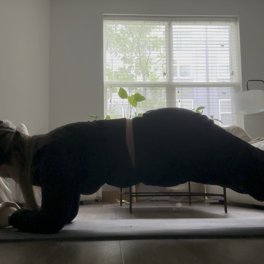
Quick Facts
| Key Benefit | Develops core strength and stability without spinal flexion |
|---|---|
| Primary Muscles | Obliques |
| Secondary Muscles | Erector Spinae, Glutes, Medial Deltoids, Pectoralis Major, Quadriceps |
| Equipment | bodyweight |
| Difficulty | Beginner |
| Type | Isometric |
In This Guide
Track Your Plank Progress
Log sets, track PRs, and see your strength gains over time.


Benefits of the Plank
The plank delivers numerous physical benefits while requiring minimal equipment and space, making it an excellent addition to any workout regimen.
Proper Form & Technique
Muscles Worked
Common Mistakes and How to Fix Them
Exercise Variations


How to Progress
Effective progression with the plank focuses primarily on increasing time under tension, improving form quality, and gradually introducing more challenging variations as your strength develops.
Beginner Level
Start with modified planks if needed (knee planks or incline planks). Focus on maintaining proper form for 3 sets of 20-30 seconds with full rest between sets. Work on building the mind-muscle connection by actively engaging your core throughout the hold. Progress by adding 5-10 seconds to your holds each week until you can maintain a standard plank for 60 seconds with good form.
Intermediate Level
Once you can hold a standard plank for 60 seconds with proper form, begin incorporating movement challenges like alternating toe taps or minimizing points of contact (lifting one foot). Introduce plank variations like side planks and high planks (arms extended) into your routine. Aim for 3-4 sets of 45-75 second holds with controlled breathing throughout. Begin experimenting with shorter, more intense holds with perfect form rather than simply increasing duration.
Advanced Level
Advanced practitioners should focus on increasing instability and resistance rather than hold time alone. Incorporate weighted planks (plate on back), unstable surface planks (feet or forearms on stability ball), or dynamic movements like plank jacks or mountain climbers from the plank position. Consider adding anti-rotation challenges like renegade rows or alternating shoulder taps. Structure your training with varied time domains—some days using longer holds (90-120 seconds) and others using shorter, more intense holds with added resistance or instability (30-45 seconds).
Frequently Asked Questions
Video Demonstrations
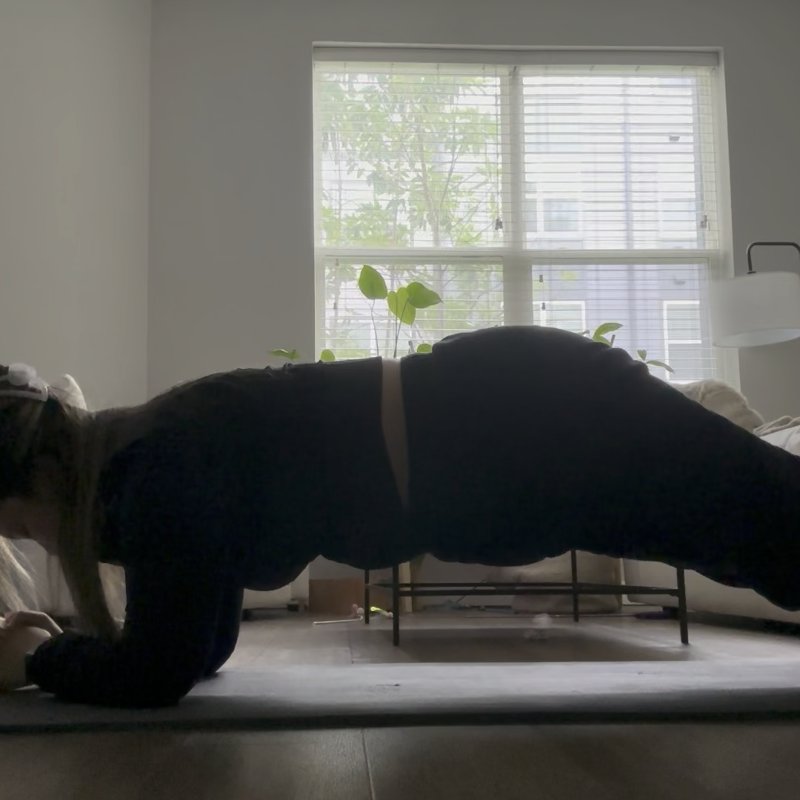
Log in to watch video demonstrations
Login to WatchReady to get serious about your Plank?
Download Gravitus to track your sets, monitor PRs, and follow structured programs built around exercises like this.

Related Exercises
Helpful Resources
One Rep Max Calculator
Find your one rep max for any exercise without maximal testing. Essential for developing effective strength training programs.
Calculate 1RMWorkout Programs
Follow structured workout programs created by fitness professionals to maximize your strength and muscle gains.
View Programs